12 Angry Men (1957)
Story overview
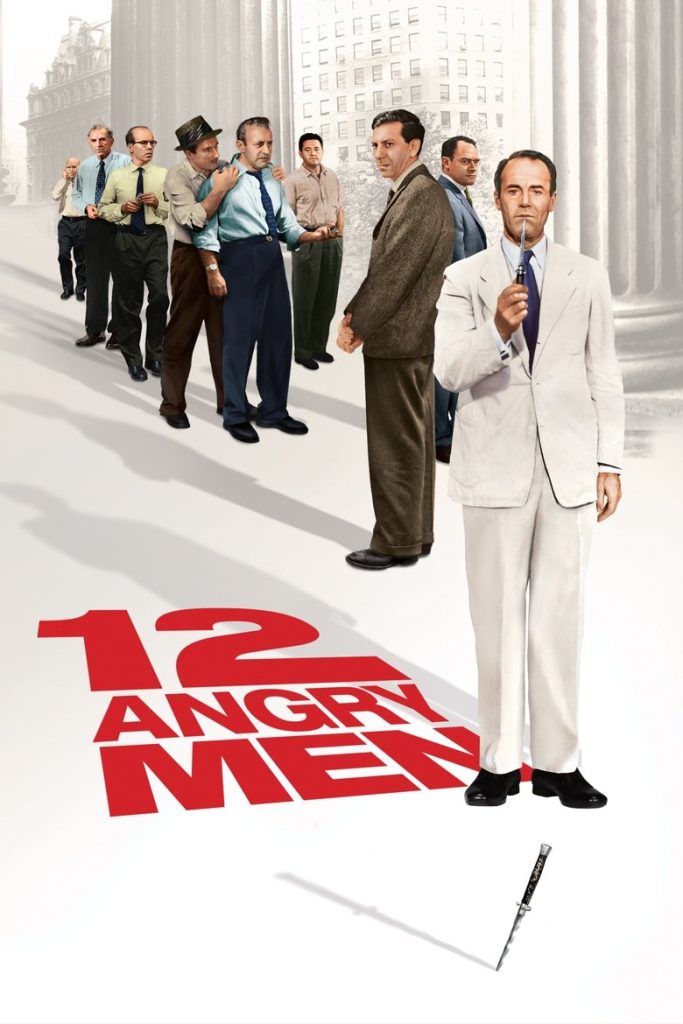
This classic courtroom drama follows twelve jurors as they deliberate a murder case. Initially appearing straightforward, the discussion reveals deep-seated biases and personal conflicts among the jurors. Through thoughtful dialogue and reasoning, they examine evidence and reconsider their initial assumptions about justice and truth.
Parent Guide
A thoughtful drama about justice and prejudice with no graphic content but intense discussions that require maturity to appreciate.
Content breakdown
Discussions of an off-screen murder case, but no violence shown. Some tense moments as jurors argue.
Themes of potential wrongful conviction and prejudice might be unsettling. Intense emotional confrontations between characters.
Period-appropriate language includes some derogatory terms about ethnic groups and class-based insults during heated arguments.
No sexual content or nudity.
Brief depiction of jurors drinking water. No alcohol, drugs, or smoking shown.
High emotional tension throughout as jurors passionately debate life-and-death decisions. Characters express anger, frustration, and prejudice.
Parent tips
This film offers excellent opportunities to discuss justice systems, critical thinking, and prejudice. While there's no graphic content, the intense emotional debates and themes of racism and class bias may require explanation for younger viewers. The black-and-white cinematography and single-room setting might challenge modern attention spans, but the intellectual engagement makes it worthwhile for mature children.
Parents should note that the film portrays 1950s attitudes that include racial stereotypes and dismissive language toward minority groups. These moments provide teachable opportunities about historical context and social progress. The film's focus on reasoned argument over emotional reaction models valuable conflict resolution skills.
Parent chat guide
After watching, focus on how the characters' personal experiences affected their judgment. Ask your child if they've ever had to reconsider an opinion when presented with new information. Discuss how the film shows that understanding different perspectives can lead to better decisions, even in difficult situations.
Parent follow-up questions
- What did you think about the men talking in the room?
- How did the men feel when they disagreed?
- What colors did you see in the movie?
- Did you see any children in the movie?
- What was your favorite part?
- Why do you think some jurors changed their minds?
- What makes a good argument or reason?
- How did the hot weather affect the people in the room?
- Have you ever changed your mind about something after talking with others?
- What does it mean to be fair?
- How did personal biases affect the jurors' initial decisions?
- What techniques did the jurors use to examine evidence critically?
- Why is reasonable doubt important in legal systems?
- How does the film show the difference between facts and opinions?
- What would you do if you were on a jury with strong disagreements?
- How does the film explore the relationship between emotion and reason in decision-making?
- What commentary does the film offer about systemic biases in justice systems?
- How do the jurors represent different aspects of society and personality types?
- What makes this 1957 film still relevant today?
- How does the confined setting intensify the dramatic conflict?
🎭 Story Kernel
At its core, '12 Angry Men' is a masterclass in epistemology—how we know what we know. The film dismantles the illusion of objective truth through group dynamics. It's not really about a boy's guilt or innocence, but about how prejudice, personal baggage, and social pressure corrupt the machinery of justice. Each juror represents a different failure of reasoning: the bigot (Juror 10), the indifferent (Juror 7), the wounded father (Juror 3). The driving force isn't evidence but the erosion of certainty. Juror 8 (Fonda) doesn't prove innocence; he simply plants the seed of doubt, forcing others to confront their own lazy assumptions and emotional investments in a quick, tidy verdict.
🎬 Visual Aesthetics
Sidney Lumet's direction is a textbook in using space to mirror psychological pressure. He famously employed a 'lens plot,' starting with wide-angle lenses and normal camera heights to establish the room. As tensions rise, he switches to longer lenses and lowers the camera angles, making the ceiling appear to descend and the walls close in. The color palette drains from warm, mundane tones to stark, sweaty contrasts. The weather outside shifts from overcast to a torrential downpour, externalizing the storm of conflict within. The final shot—the empty jury room—isn't just an exit; it's a visual sigh, the space finally breathing after 96 minutes of suffocating debate.
🔍 Details & Easter Eggs
💡 Behind the Scenes
The entire film was shot in just 21 days on a single, meticulously designed set. To achieve the increasing sense of claustrophobia, director Sidney Lumet had the walls of the jury room physically moved inward a few inches each week during filming. Henry Fonda, who also produced, took a pay cut to get the film made and hand-picked many of the supporting cast. The iconic switchblade Juror 8 produces was Fonda's own personal purchase from a New York cutlery shop, chosen for its distinctive design.
Where to watch
Choose region:
- Amazon Prime Video
- Amazon Prime Video with Ads
- Amazon Video
- Apple TV
- Google Play Movies
- YouTube
- Fandango At Home
- Spectrum On Demand
- Amazon Prime Video Free with Ads
- Tubi TV
- Kanopy
Trailer
Trailer playback is unavailable in your region.