
18×2 Beyond Youthful Days (2024)
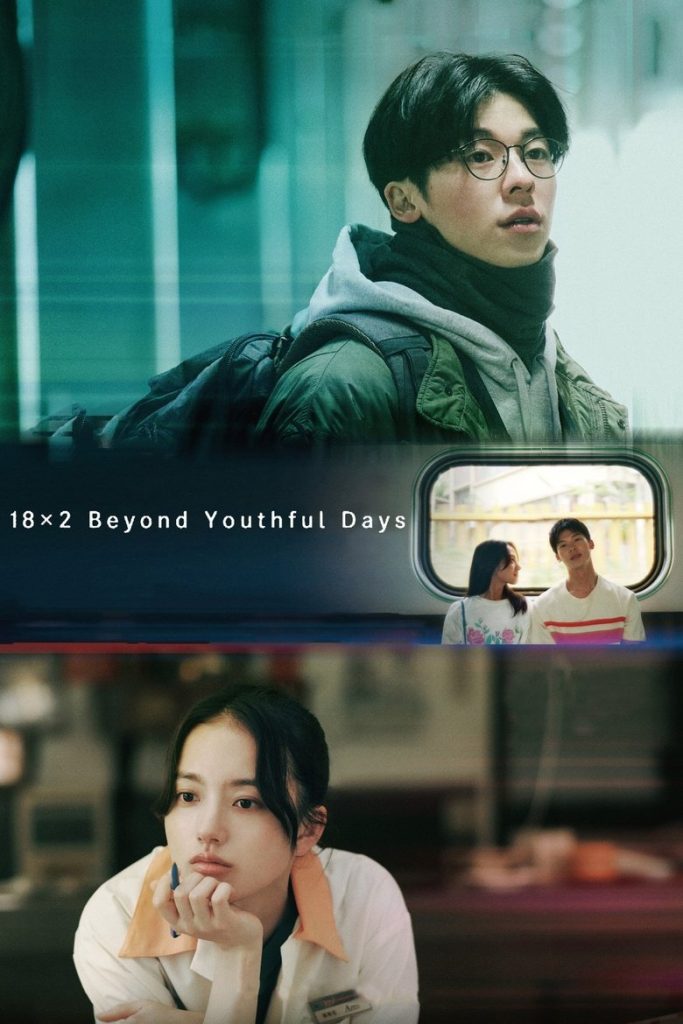
Story overview
18x2 Beyond Youthful Days is a 2024 romantic drama that explores themes of love, relationships, and personal growth. The story likely follows characters navigating emotional connections and life transitions. As a romance-drama, it focuses on interpersonal dynamics and emotional development rather than action or fantasy elements.
Parent Guide
A romantic drama focusing on relationship dynamics and emotional themes. Suitable for mature children who can understand relationship narratives.
Content breakdown
Romance-drama typically focuses on emotional conflicts rather than physical violence.
May include emotional tension or relationship conflicts that could be upsetting to sensitive viewers.
Romantic dramas typically avoid strong language, but mild expressions might be present.
Romantic dramas may include kissing, hand-holding, or romantic embraces.
Not typically featured in romance-drama narratives.
Focuses on relationship dynamics and emotional development, which may include emotional conflicts or heartfelt moments.
Parent tips
This romantic drama focuses on relationship dynamics and emotional themes that may be more relatable to older children and teenagers. Parents should be aware that romance-drama films often include emotional intensity, relationship conflicts, and potentially mature themes about love and personal growth. Consider your child's emotional maturity and ability to process relationship-focused narratives when deciding if this film is appropriate.
Parent chat guide
Parent follow-up questions
- What was your favorite part of the movie?
- Which character did you like best?
- What colors did you see in the movie?
- Was there any music you liked?
- Did you see any friends in the movie?
- What did you think about how the characters treated each other?
- What was the main problem in the story?
- How did the characters solve their problems?
- What would you do if you were in that situation?
- What did you learn from this movie?
- How did the characters show their feelings in the movie?
- What makes a good friendship or relationship?
- How do people change and grow in relationships?
- What challenges did the characters face?
- What would you do differently than the characters?
- What themes about relationships did this movie explore?
- How realistic were the character relationships and conflicts?
- What does this film say about communication in relationships?
- How did the characters demonstrate emotional maturity?
- What life lessons about relationships can be taken from this story?
🎭 Story Kernel
The film explores the anatomy of regret and the transformative power of memory through the lens of a dual-timeline narrative. It isn't just a romance; it's a meditation on how our younger selves dictate the trajectory of our adult lives. By juxtaposing Jimmy’s stagnant present in Taipei with his vibrant, sun-drenched past in Tainan, Fujii examines the 'Seishun 18' philosophy—the idea that youth is a ticket that eventually expires, leaving us to navigate the remaining journey alone. The narrative delves into the necessity of closure, suggesting that moving forward requires a physical and spiritual return to where time first stood still. It captures the universal ache of 'what if' while grounding it in the specific cultural textures of Taiwan and Japan, ultimately portraying love as a catalyst for self-discovery rather than just a destination.
🎬 Visual Aesthetics
Keisuke Imamura’s cinematography acts as a temporal bridge, utilizing distinct color palettes to differentiate eras. The 2006 Tainan sequences are bathed in a warm, nostalgic amber, capturing the humid, golden haze of a first summer love. In contrast, the modern-day Japanese winter scenes employ a crisp, melancholic blue and stark whites, reflecting Jimmy’s internal isolation and the cold reality of his mid-thirties. The recurring motif of trains and tunnels serves as a visual metaphor for the passage of time and the transition between memory and reality. Fujii’s direction favors lingering medium shots that allow the actors' subtle micro-expressions to convey the weight of eighteen years. The framing often places Jimmy against vast, snowy landscapes, emphasizing his smallness in the face of destiny and the overwhelming scale of his belated journey.
🔍 Details & Easter Eggs
💡 Behind the Scenes
The film is a landmark co-production between Taiwan’s Changhe Films and Japan’s Star Sands, marking Michihito Fujii’s first international project. It is based on the popular Taiwanese travel essay by Jimmy Lai, which chronicled his actual solo journey across Japan. Lead actor Greg Hsu had to perform in three languages—Mandarin, Japanese, and English—to authentically portray Jimmy’s evolution and his interactions during the trip. The production meticulously recreated the 2006 Tainan setting, including the specific era-appropriate posters and technology, to evoke a precise sense of time and place for the audience.
Where to watch
Choose region:
- Netflix
- Netflix Standard with Ads
Trailer
Trailer playback is unavailable in your region.