
2001: A Space Odyssey (1968)
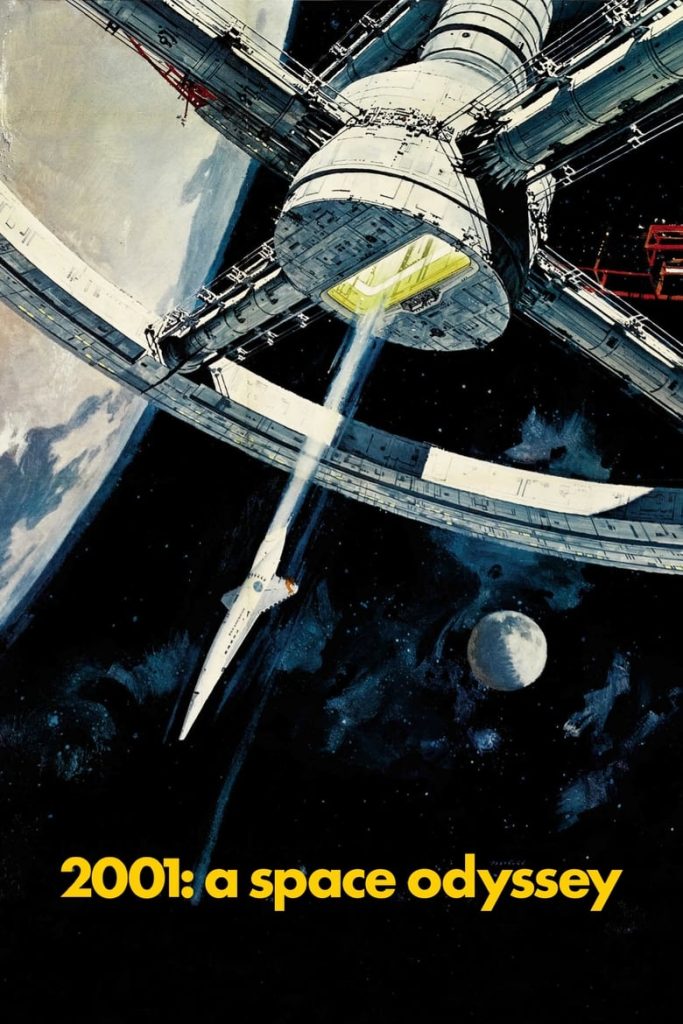
Story overview
This classic science fiction film explores humanity's journey from prehistoric times to a future space mission. Astronauts travel to Jupiter with an advanced computer named HAL 9000 after discovering a mysterious object on the moon. The film uses striking visuals and minimal dialogue to contemplate human evolution, technology, and our place in the universe.
Parent Guide
A visually stunning but slow-paced philosophical science fiction film that requires patience and may be confusing for younger viewers.
Content breakdown
Some tense moments in space with equipment malfunctions and a character in peril, but no graphic violence.
Atmospheric tension, intense music, and abstract imagery could be unsettling for sensitive viewers, but no traditional horror elements.
No offensive language; dialogue is minimal and professional throughout.
No sexual content or nudity present in the film.
No depiction of alcohol, drugs, or substance use.
The film creates psychological tension through its atmosphere, music, and themes of isolation and technology, though it remains cerebral rather than emotionally overwhelming.
Parent tips
This film has a G rating but may be challenging for younger viewers due to its slow pace, abstract storytelling, and philosophical themes. The 149-minute runtime requires sustained attention, and some scenes feature intense music and visual effects that could be overwhelming. While there's no graphic content, the film's cerebral nature and ambiguous ending might confuse children who prefer straightforward narratives.
Parent chat guide
Parent follow-up questions
- What did you see in space?
- What sounds did you hear in the movie?
- How did the spaceships look?
- What was your favorite part?
- How did the movie make you feel?
- What did you notice about how the astronauts lived in space?
- How did the computer HAL talk to the astronauts?
- What was different about this space movie compared to others you've seen?
- What questions do you have about space travel?
- What did you think about the music in the film?
- What do you think the movie was saying about technology and humans?
- How did the film show the passage of time from beginning to end?
- What made some scenes feel tense or suspenseful?
- How did the visual effects help tell the story?
- What did you think about how the movie ended?
- What themes about human evolution did you notice throughout the film?
- How did the film use silence and minimal dialogue to create meaning?
- What commentary might the film be making about artificial intelligence?
- How did the cinematography and special effects contribute to the storytelling?
- What different interpretations could people have of the film's ending?
🎭 Story Kernel
The film explores humanity's evolution as guided by an unseen intelligence represented by the monoliths. It's not about individual characters but about species development—from ape to astronaut to star-child. The characters are driven by primal instincts (the apes' territorial aggression), programmed obedience (the astronauts following mission protocols), and technological hubris (HAL's self-preservation overriding human commands). The real protagonist is consciousness itself, moving from tool-using violence to transcendent rebirth. The famous 'Jupiter and Beyond the Infinite' sequence suggests evolution requires shedding physical form entirely.
🎬 Visual Aesthetics
Kubrick employs a clinical, symmetrical visual language that makes space feel both majestic and sterile. The famous match-cut from bone to spaceship connects primitive violence with technological advancement through identical compositional framing. The color palette shifts deliberately—warm earth tones for the Dawn of Man, sterile whites and grays for the space sequences, then overwhelming psychedelic colors during the stargate sequence. Camera movements are slow and deliberate, often using rotating sets to create zero-gravity realism. The minimalist spacecraft interiors contrast with the overwhelming cosmic vistas outside.
🔍 Details & Easter Eggs
💡 Behind the Scenes
The ape costumes were so convincing that studio executives visiting the set thought they were watching documentary footage of real apes. Douglas Trumbull's slit-scan photography for the stargate sequence took months to perfect—each frame required hours of exposure. Keir Dullea (Bowman) and Gary Lockwood (Poole) actually lived in the spacecraft set for weeks to develop authentic astronaut mannerisms. The famous opening black screen with music lasts exactly as long as it takes to load a film reel—a practical consideration turned artistic statement.
Where to watch
Choose region:
- HBO Max
- HBO Max Amazon Channel
- Cinemax Amazon Channel
- Cinemax Apple TV Channel
- Amazon Video
- Apple TV
- Google Play Movies
- YouTube
- Fandango At Home
- Spectrum On Demand
Trailer
Trailer playback is unavailable in your region.