22 July (2018)
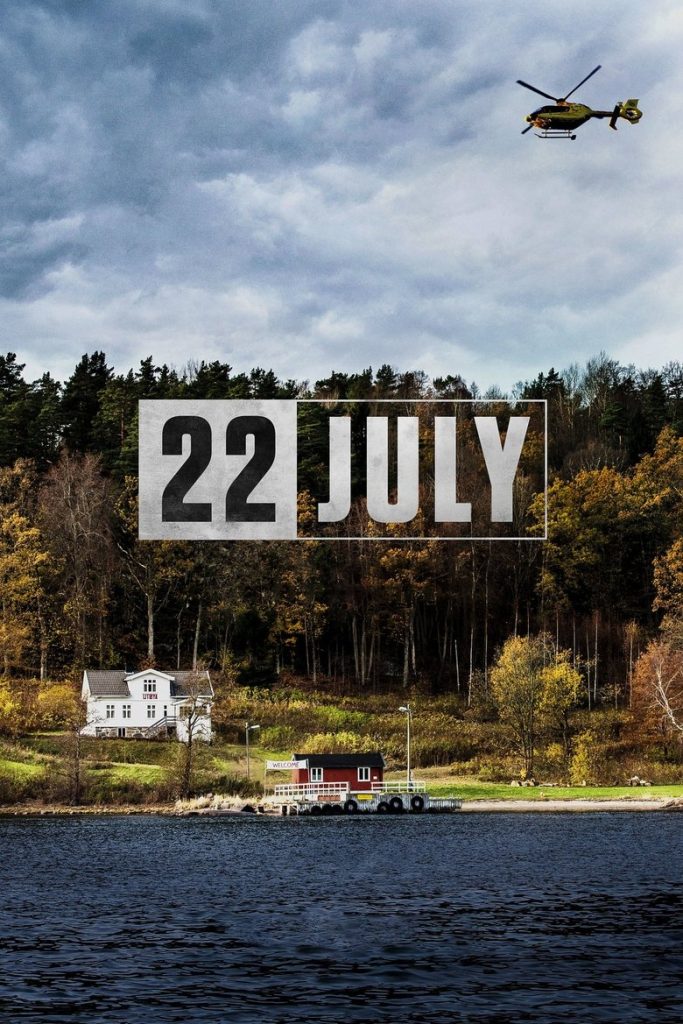
Story overview
22 July is a historical drama based on real events surrounding the 2011 Norway attacks. The film follows the aftermath of a terrorist bombing and mass shooting, focusing on the survivors, victims' families, and the legal proceedings. It explores themes of trauma, resilience, and justice in the face of national tragedy.
Parent Guide
Intense historical drama about real terrorist attacks with graphic violence and emotional trauma. Not suitable for children.
Content breakdown
Depicts terrorist bombings and shootings with injuries, blood, and peril. Scenes of medical treatment and dead bodies.
Terrorist violence, mass casualties, and psychological trauma. Disturbing themes of extremism and loss.
Some strong language likely, given R rating and intense subject matter.
No sexual content or nudity expected in this type of historical drama.
No substance use expected in this serious context.
High emotional intensity due to trauma, grief, and courtroom drama.
Parent tips
This film depicts real-life terrorist violence and its aftermath, including graphic scenes of injuries and emotional trauma. Due to its R rating and intense subject matter, it is not suitable for children or young teens. Parents should watch first to assess appropriateness for older teenagers, as it may provoke anxiety or distress about violence and terrorism.
Parent chat guide
Parent follow-up questions
- What did you think about the people in the movie?
- How did the movie make you feel?
- What was your favorite part?
- Did you see anything that scared you?
- What do you think the movie was about?
- What did you learn from this movie?
- How do you think the characters felt after what happened?
- Why do you think someone would do something like this?
- What does 'being brave' mean in this story?
- How can people help each other after bad things happen?
- How does this movie show the importance of justice?
- What are some ways people cope with trauma in the film?
- How does the media coverage in the movie affect the story?
- What responsibilities do leaders have during a crisis?
- How can societies prevent violence like this?
- How accurately do you think the film portrays real events?
- What are the ethical questions raised by the legal proceedings?
- How does extremism develop, and what can counter it?
- What role does forgiveness play in recovery from trauma?
- How does this film change your understanding of terrorism?
🎭 Story Kernel
At its core, '22 July' isn't about the terrorist attack itself, but about the institutional and psychological aftermath of national trauma. Director Paul Greengrass strips away sensationalism to examine how systems—legal, political, medical—process unspeakable violence. The film's driving force is the tension between Norway's commitment to democratic values (even for a mass murderer) and the human need for justice and closure. Characters are propelled not by revenge, but by the struggle to maintain their humanity within broken bodies and a shaken society. The real conflict emerges in courtrooms and rehabilitation centers where ideology meets the slow, painful work of healing.
🎬 Visual Aesthetics
Greengrass employs his signature documentary-style cinematography with deliberate restraint. The attack sequence uses shaky, chaotic handheld shots that place viewers in the visceral horror, but the aftermath shifts to cold, static compositions that mirror institutional processing. A muted color palette dominates—grays, blues, and sterile whites of hospitals and courtrooms—creating emotional distance that forces intellectual engagement over emotional manipulation. The camera often observes from middle distance, like a courtroom spectator or medical observer, emphasizing how trauma becomes public property. Symbolically, the recurring shots of water (fjords, rain) contrast with fire imagery from the attack, suggesting cleansing versus destruction.
🔍 Details & Easter Eggs
💡 Behind the Scenes
Director Paul Greengrass insisted on filming in actual Norwegian locations, including the government buildings and courthouses where real events occurred. Actor Anders Danielsen Lie (playing the terrorist) spent months studying the perpetrator's mannerisms and ideology, but refused to meet him, relying instead on court transcripts. Many survivors and family members consulted on the production, with some appearing as extras in courtroom scenes. The film's Norwegian dialogue was largely authentic, with non-Norwegian actors undergoing intensive language training to avoid distracting accents.
Where to watch
Choose region:
- Netflix
- Netflix Standard with Ads
Trailer
Trailer playback is unavailable in your region.