
2DIE4 (2026)
Story overview
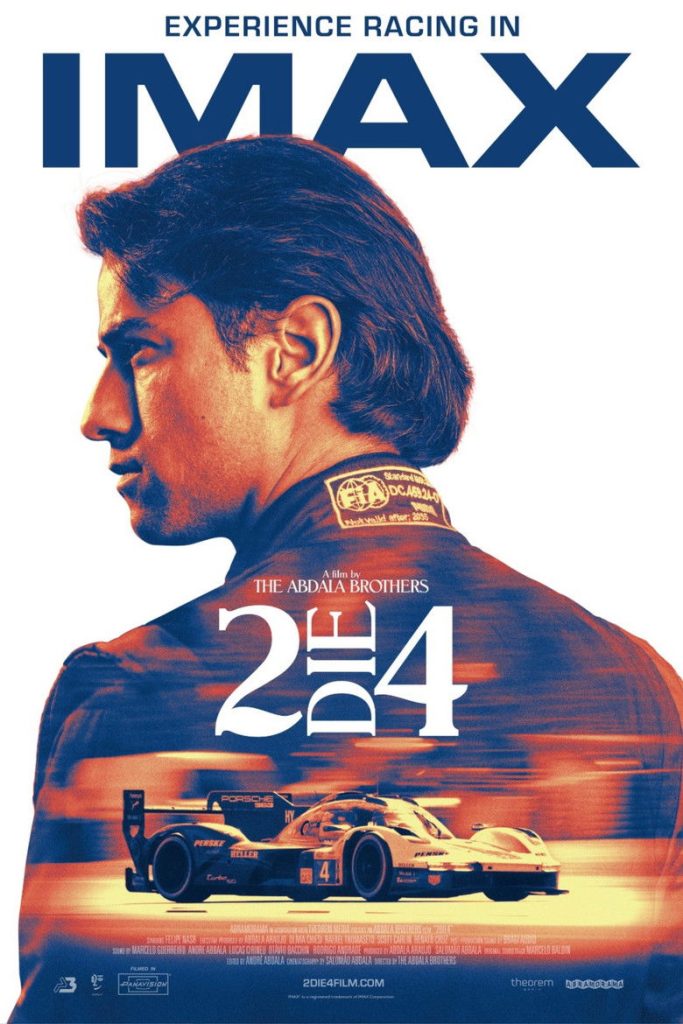
2DIE4 is a 2026 Brazilian drama-action film directed by André Abdala and Salomão Abdala. It follows real-life Brazilian Formula 1 driver Felipe Nasr as he competes in an actual race, with the story unfolding in real time. The film features a cast including Mathieu Jaminet, Nick Tandy, and Amir Nasr, capturing the high-stakes world of professional racing with documentary-style immediacy.
Parent Guide
A documentary-style drama following real Formula 1 racing with authentic competition tension. Suitable for most children who can understand sports competition, though the inherent danger of racing creates suspense.
Content breakdown
No fictional violence. Contains realistic racing peril with high-speed driving, potential for crashes (though none shown in overview), and competitive tension. Similar to watching actual sports broadcasts.
Mild suspense from racing competition and the possibility of accidents. Engine noises and fast-paced action might overwhelm very young or sensitive viewers. No horror elements or disturbing imagery indicated.
No indication of strong language. Likely contains typical sports commentary and driver communications. No offensive language expected given the documentary style and lack of rating information.
No sexual content or nudity indicated. Focus is entirely on professional racing competition.
No substance use shown or indicated. Professional sports environment with focus on athletic performance.
Moderate intensity from competitive sports drama, real-time storytelling, and the high-stakes nature of professional racing. Contains excitement, tension, and potential disappointment/success emotions typical of sports competitions.
Parent tips
This film focuses on professional motorsports competition with realistic racing scenes. Expect intense driving sequences, engine noises, and competitive tension. No fictional violence or mature content is indicated, but the inherent dangers of high-speed racing create natural suspense. Best for children who understand real-world sports and can handle the excitement of competition.
Parent chat guide
Parent follow-up questions
- Did you like the fast cars?
- What colors did you see on the race cars?
- Was it loud when the cars went zoom?
- What was the most exciting part of the race?
- How do you think the driver feels during competition?
- What safety equipment do you notice in the cars?
- What strategies might a driver use during a race?
- How does real-time storytelling affect how you experience the film?
- What challenges do professional athletes face in high-pressure situations?
- How does this documentary approach differ from fictional racing films?
- What does this reveal about the mental and physical demands of Formula 1?
- How does the real-time format create tension or engagement?
Where to watch
Streaming availability has not been announced yet.
Trailer
Trailer playback is unavailable in your region.