
3 Days of Terror: The Charlie Hebdo Attacks (2016)
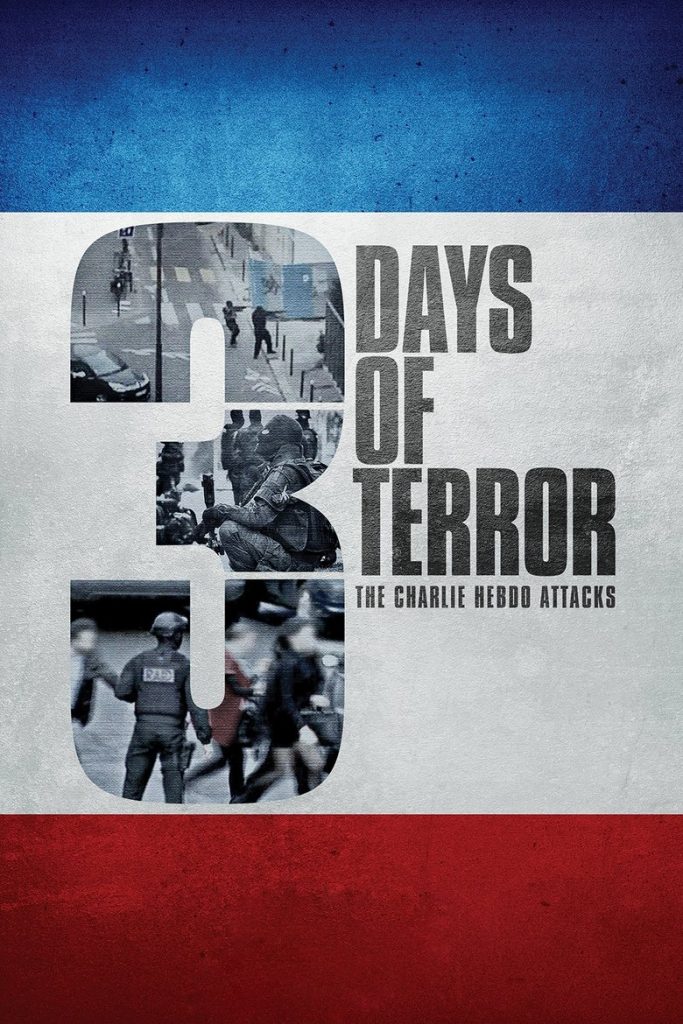
Story overview
This documentary examines the 2015 Charlie Hebdo attacks in Paris, detailing the three-day terrorist siege through police footage, survivor interviews, and official accounts. It focuses on the manhunt and the broader context of France's 'year of terror,' including a related attack on a kosher grocery store.
Parent Guide
A documentary with strong violent content and disturbing themes, suitable only for mature teens with parental guidance.
Content breakdown
Graphic real footage of shootings, hostage situations, and manhunts. Includes depictions of terrorism and mass casualties.
Intense and distressing scenes of real-life violence, terrorism, and death. May cause anxiety or fear.
Possible strong language in interviews or footage, but not a primary focus.
No sexual content or nudity.
No substance use depicted.
High emotional intensity due to real-life tragedy, grief, and fear. Can be overwhelming for sensitive viewers.
Parent tips
This documentary contains intense real-life footage of terrorist attacks, including shootings and hostage situations. It may be distressing for sensitive viewers due to its graphic nature and themes of violence and extremism. Parental guidance is strongly advised for all ages.
Parent chat guide
Parent follow-up questions
—
- What is a terrorist?
- Why did people get hurt?
- How can we stay safe?
- What is free speech, and why is it important?
- How do police respond to emergencies?
- What can we learn from this event?
- How does media coverage affect public perception of terrorism?
- What are the ethical implications of satirical journalism?
- How do societies balance security and civil liberties?
🎭 Story Kernel
The film's core isn't a simplistic 'good vs. evil' narrative, but a meticulous, almost forensic examination of institutional failure and human resilience. It expresses the terrifying banality of modern terror—how bureaucratic inertia and communication silos can be as deadly as ideology. The characters are driven not by grandiosity, but by immediate, visceral imperatives: the journalists by a professional duty that has become a death sentence, the police by a frantic race against a clock they didn't know was ticking, and the attackers by a warped, literalist conviction that sees satire as an existential threat. The real drama lies in the agonizing gap between intention and action in a crisis.
🎬 Visual Aesthetics
The cinematography employs a stark, handheld verité style, favoring tight close-ups and claustrophobic interiors to amplify the visceral panic. The color palette is desaturated, dominated by the grays of Parisian winter and the sterile blues of police command centers, making the sudden bursts of violence and the vivid red of blood profoundly jarring. There's a deliberate avoidance of glamorizing the action; the shootings are chaotic, ugly, and acoustically overwhelming. Symbolism is subtle but potent—recurring shots of locked doors, security monitors showing empty corridors, and the stark contrast between the messy, human chaos of the newsroom and the cold, ordered chaos of the manhunt.
🔍 Details & Easter Eggs
💡 Behind the Scenes
The production faced significant ethical challenges in recreating such a recent and traumatic national event. Many scenes were shot on location in Paris, with some exterior sequences filmed near the actual Charlie Hebdo offices, requiring sensitive coordination with authorities and local residents. The actors portraying the police and special forces underwent briefings with real GIGN and RAID officers to understand procedures and mindset. Notably, the film consulted with survivors and victims' families to ensure a respectful, fact-based approach, avoiding sensationalism while striving for documentary-like accuracy in its depiction of the timeline and events.
Where to watch
Choose region:
- HBO Max
- HBO Max Amazon Channel