
38 at the Garden (2022)
Story overview
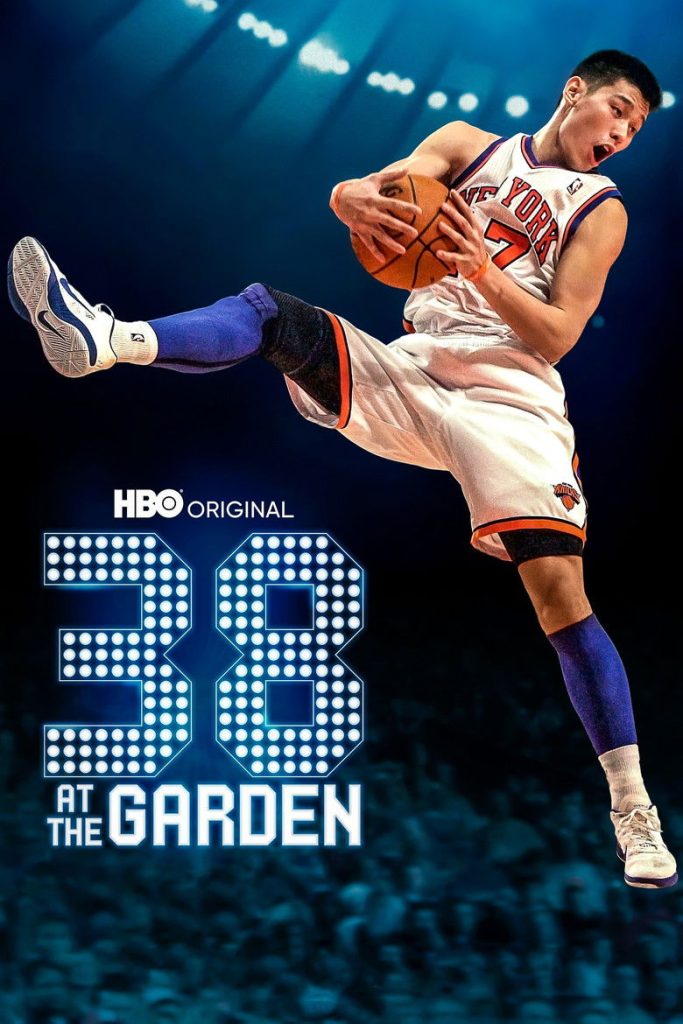
This documentary explores the cultural impact of Jeremy Lin's 2012 'Linsanity' phenomenon during a challenging period for Asian Americans. It examines how his unexpected NBA success challenged stereotypes, inspired hope, and provided representation a decade later, featuring interviews with Lin and commentators like Hasan Minhaj and Lisa Ling.
Parent Guide
A thoughtful documentary about sports, race, and representation suitable for most families, with themes best understood by school-aged children and up.
Content breakdown
No violence or peril depicted. Includes basketball game footage with typical sports contact.
Discusses racism and discrimination against Asian Americans, which may be upsetting but is presented in a documentary context without graphic imagery.
May include occasional mild language typical in sports contexts, but no strong profanity expected in this documentary format.
No sexual content or nudity.
No depiction of substance use.
Emotional moments related to racial discrimination and breakthrough achievements. Inspirational tone overall with some intense discussion of social issues.
Parent tips
This documentary addresses racism and stereotypes against Asian Americans, which may require explanation for younger viewers. It focuses on sports achievement and social issues without graphic content, making it suitable for family discussion about diversity and perseverance.
Parent chat guide
Parent follow-up questions
- Who was the basketball player in the movie?
- What sport does Jeremy Lin play?
- Did you see people cheering in the movie?
- Why was Jeremy Lin's story surprising to people?
- What does 'stereotype' mean?
- How do you think it felt to be Jeremy Lin during 'Linsanity'?
- How did Jeremy Lin's success challenge stereotypes about Asian Americans?
- Why do you think 'Linsanity' happened when it did?
- What can we learn from how people reacted to Jeremy Lin's success?
- How does this documentary connect Jeremy Lin's story to broader Asian American experiences?
- What does the film suggest about representation in sports media?
- How might Jeremy Lin's legacy influence current discussions about race and athletics?
🎭 Story Kernel
The film explores the complex legacy of Jeremy Lin's 'Linsanity' phenomenon through the lens of Asian American identity and representation. It's not just about basketball—it's about what happens when an entire community projects their hopes, frustrations, and cultural baggage onto one unexpected hero. The driving force isn't Lin's athletic prowess, but the collective hunger for validation in a society that routinely marginalizes Asian masculinity. The documentary examines how Lin became a Rorschach test for different groups: Asian Americans seeing a breakthrough, sports fans witnessing an underdog story, and a media machine hungry for narratives. Ultimately, it questions whether any individual can bear the weight of so many expectations.
🎬 Visual Aesthetics
The visual language masterfully blends archival footage with contemporary interviews, creating a temporal collage that mirrors how memory works. The camera lingers on faces—not just Lin's, but the diverse reactions in crowds—capturing micro-expressions of disbelief, joy, and sometimes discomfort. Color grading shifts subtly between the warm nostalgia of 2012 game footage and the cooler, more analytical tones of present-day reflections. The editing rhythm mimics basketball itself: rapid cuts during game sequences give way to slower, contemplative shots during interviews. Symbolically, the repeated use of tight close-ups on eyes emphasizes the theme of being watched and perceived through racial lenses.
🔍 Details & Easter Eggs
💡 Behind the Scenes
Director Frank Chi initially conceived the project as a short film but expanded it after discovering hours of unused broadcast footage that showed crowd reactions rather than just game action. Several interviewees were actually present at the original 'Linsanity' games and shared personal photos that hadn't been published before. The production team faced challenges clearing music rights for the 2012 game broadcasts, leading them to commission an original score that subtly incorporates basketball sounds like squeaking sneakers and bouncing balls into the musical texture.
Where to watch
Choose region:
- HBO Max
- HBO Max Amazon Channel
Trailer
Trailer playback is unavailable in your region.