
50/50 (2011)
Story overview
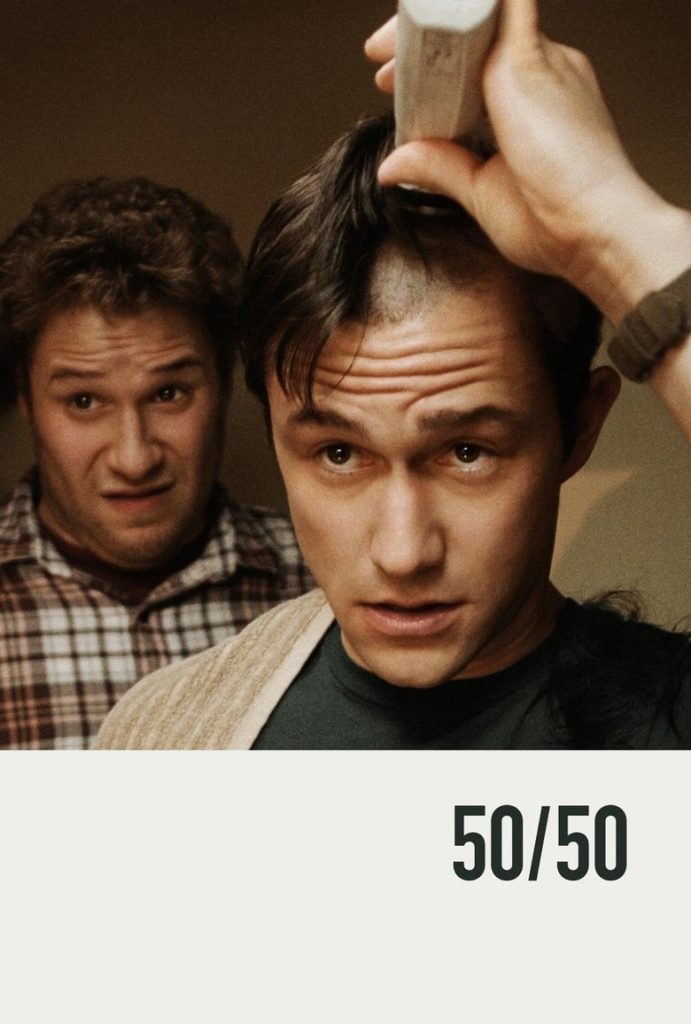
50/50 is a 2011 comedy-drama film about a young man diagnosed with a rare form of spinal cancer. The story follows his journey through treatment while navigating relationships with his best friend, girlfriend, and family. It blends humor with emotional moments as it explores themes of friendship, mortality, and resilience in the face of serious illness.
Parent Guide
A thoughtful film about cancer diagnosis and treatment that blends humor with emotional depth. Best for mature teens with parental guidance.
Content breakdown
Medical procedures and illness-related situations create tension but without graphic violence.
Themes of serious illness, mortality, and medical treatment may be emotionally intense for some viewers.
Contains some strong language consistent with the R rating.
Some sexual references and situations, but not graphic.
Includes recreational drug use and alcohol consumption by adult characters.
Deals with heavy themes of illness, mortality, and relationship stress balanced with comedic moments.
Parent tips
This film deals with mature themes including cancer diagnosis, treatment, and mortality in a way that blends humor with serious emotional content. The R rating indicates content may be inappropriate for children under 17 without parental guidance. Parents should be prepared to discuss serious illness, medical treatment, and emotional coping strategies with their children.
Consider your child's emotional maturity and previous exposure to medical themes before viewing. The film's balance of comedy and drama makes heavy topics more accessible but still requires thoughtful discussion. It may be particularly relevant for families who have experienced serious illness.
Parent chat guide
For younger viewers, keep explanations simple and reassuring. For teens, you can explore deeper questions about mortality, relationships under stress, and finding humor in challenging situations. Always end conversations by checking in on your child's feelings and offering continued support.
Parent follow-up questions
- How do friends help each other when someone is sick?
- What makes you feel better when you don't feel well?
- Who can you talk to when you're worried about something?
- Why is it important to have friends who support you during hard times?
- How do people show they care when someone is going through something difficult?
- What are some ways to stay positive when facing challenges?
- How does the movie show different ways people cope with serious news?
- What role does humor play in dealing with difficult situations?
- How can someone be a good friend to someone going through medical treatment?
- How does the film balance comedy with serious themes of illness and mortality?
- What does the movie suggest about the importance of honesty in relationships during crises?
- How might this story change your perspective on supporting friends through major life challenges?
🎭 Story Kernel
At its core, '50/50' explores the profound isolation that accompanies a life-altering diagnosis, using cancer as a crucible to test relationships rather than as a melodramatic plot device. The film isn't about beating cancer—it's about navigating the emotional minefield of vulnerability. Adam's journey reveals how illness strips away social niceties, exposing the raw mechanics of friendship, love, and self-worth. His therapist's clinical detachment, Kyle's bro-ish support, and his mother's suffocating care all represent different, flawed attempts to bridge the chasm of his experience. The driving force isn't survival instinct, but the desperate need to be seen authentically amidst the platitudes.
🎬 Visual Aesthetics
Director Jonathan Levine employs a muted, naturalistic palette that mirrors Adam's emotional numbness—lots of grays, blues, and hospital beiges. The camera often maintains a respectful distance during medical scenes, avoiding intrusive close-ups that would sensationalize his vulnerability. In contrast, scenes with Kyle use looser, handheld shots that capture their chaotic friendship. Visual symbolism is subtle: the recurring shots of Adam running through lush Pacific Northwest forests initially represent escape, but gradually transform into a metaphor for moving through life despite fear. The film's aesthetic rejects cancer-movie glossiness, favoring a raw, almost documentary-like intimacy that makes the emotional beats land harder.
🔍 Details & Easter Eggs
💡 Behind the Scenes
The film is loosely based on writer Will Reiser's own cancer experience at age 25, with Seth Rogen's character directly inspired by Rogen himself, who was Reiser's actual friend during treatment. Joseph Gordon-Levitt shaved his head for real instead of using a prosthetic, and many of Adam's therapy scenes were improvised between takes. The Vancouver locations double for Seattle, with the lush running trails becoming a character in themselves. Notably, the chemotherapy scenes used real cancer patients as extras to maintain authenticity, and Reiser insisted the medical details be accurate, consulting with his own oncologist throughout production.
Where to watch
Choose region:
- Peacock Premium
- Starz Apple TV Channel
- Peacock Premium Plus
- Amazon Video
- Apple TV
- Google Play Movies
- YouTube
- Fandango At Home
Trailer
Trailer playback is unavailable in your region.