
537 Votes (2020)
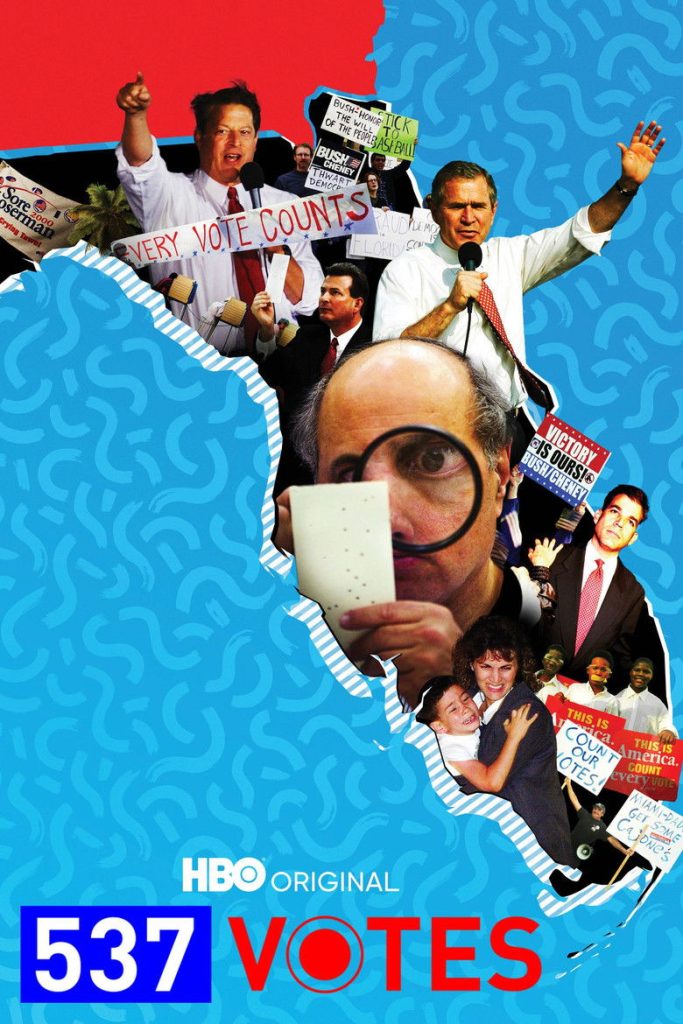
Story overview
This documentary examines the complex political events surrounding the 2000 U.S. presidential election, focusing on the controversial Florida recount that ultimately decided the presidency. It explores the legal battles, media coverage, and political strategies that led to George W. Bush's narrow victory over Al Gore.
Parent Guide
Educational documentary about a significant political event with mature themes but no explicit content. Best for teens who can understand complex political processes.
Content breakdown
No physical violence shown. Contains political tension and legal conflicts.
Some viewers may find the political conflict and uncertainty disturbing, but no frightening imagery.
Occasional mild political language and frustration expressed by commentators.
No sexual content or nudity.
No depiction of substance use.
High-stakes political drama with tense moments during recount discussions and legal decisions.
Parent tips
This documentary deals with mature political themes including election controversies, legal disputes, and media manipulation. While there's no graphic content, the subject matter requires understanding of U.S. politics and may be confusing or frustrating for younger viewers. Consider watching together to explain historical context and discuss democratic processes.
Parent chat guide
Parent follow-up questions
—
- What is an election?
- Why do people vote?
- What does a recount mean?
- Why was Florida so important in this election?
- What role did the Supreme Court play?
- How did the media cover this event?
- What were the legal arguments in Bush v. Gore?
- How did this election change voting procedures in the U.S.?
- What lessons about democracy can we learn from this event?
🎭 Story Kernel
At its core, '537 Votes' is less a political thriller and more a forensic autopsy of institutional failure. The film expresses how bureaucratic inertia and partisan tribalism can create a vacuum where truth becomes negotiable. The characters are driven not by grand ideological convictions, but by a desperate, often petty, need to win—to secure a job, validate a belief, or simply survive the next news cycle. It reveals that the most dangerous threat to an election isn't foreign interference, but the slow, mundane erosion of procedural faith from within the very people tasked with upholding it. The real drama unfolds in the quiet moments of doubt, not the public rallies.
🎬 Visual Aesthetics
The visual language is one of claustrophobic realism. Cinematographer Adam Stone employs a handheld, documentary-style aesthetic, often shooting through glass, over shoulders, or in crowded, poorly lit rooms, making the viewer a trapped observer. The color palette is dominated by sterile fluorescents, muted blues, and the sickly green of computer screens, visually reinforcing the bureaucratic malaise. There are no sweeping, heroic shots; instead, the camera lingers on faces etched with exhaustion and the mundane tools of the process—stacks of ballots, timestamped forms, the glow of a spreadsheet—elevating these objects to symbols of a strained system.
🔍 Details & Easter Eggs
💡 Behind the Scenes
The film is a dramatization of the 2018 Florida recount for U.S. Senate and governor. Key scenes were shot in the actual Broward County Supervisor of Elections office where the events occurred, adding a layer of eerie authenticity. Actor Enver Gjokaj, who plays a pivotal elections lawyer, spent days shadowing real election law attorneys to capture the specific jargon and weary demeanor. Director Billy Corben, known for his documentary work, insisted on using real, de-identified 2018 ballot images as props during filming to ensure accuracy in the painstaking recount scenes.
Where to watch
Choose region:
- HBO Max
- HBO Max Amazon Channel
- Google Play Movies
- YouTube
Trailer
Trailer playback is unavailable in your region.