
9/11: Inside the President’s War Room (2021)
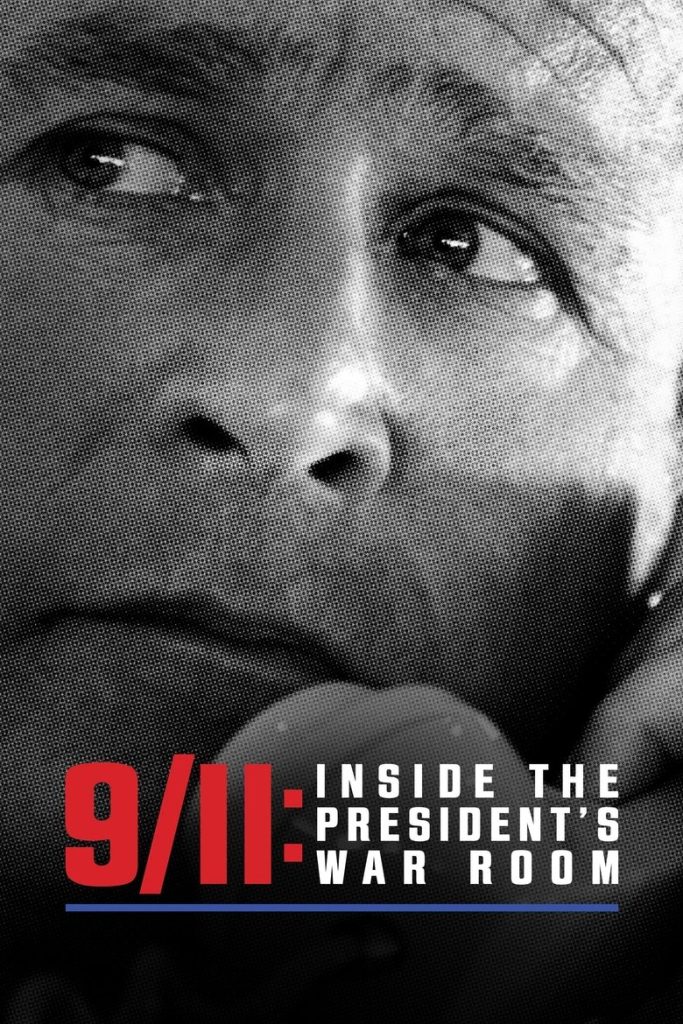
Story overview
This documentary provides a detailed account of the September 11, 2001 terrorist attacks from the perspective of President George W. Bush and his key advisors. Through archival footage and firsthand interviews, it chronicles the critical decisions made in the immediate aftermath, offering insight into the leadership and crisis management during one of America's most traumatic events.
Parent Guide
Documentary about 9/11 attacks with intense real footage and emotional content. Suitable for mature teens with parental guidance.
Content breakdown
Contains real footage of terrorist attacks including planes crashing into buildings, explosions, collapsing structures, and people in peril. No graphic violence but the reality of the events is disturbing.
Extremely disturbing real-life footage of catastrophic events. Shows people running from danger, smoke-filled streets, and emergency responders. The knowledge that thousands died adds to the emotional impact.
May contain occasional mild expletives in tense situations. No strong profanity noted in typical documentary style.
No sexual content or nudity present in this historical documentary.
No depiction of substance use or abuse in this serious documentary context.
High emotional intensity due to real tragedy footage, discussions of death and terrorism, and tense decision-making scenes. May provoke anxiety or sadness about real historical events.
Parent tips
This film deals with real-life terrorism and national tragedy. It contains distressing footage of the attacks, including plane crashes and building collapses. The emotional intensity is high as it depicts real people in crisis. Consider your child's maturity level and ability to process historical trauma before viewing. May be best watched with parental guidance for discussion.
Parent chat guide
Parent follow-up questions
—
- What do you think the president's job was on that day?
- How do you think people helped each other during the emergency?
- What safety rules do we follow in our family?
- Why do you think this event was so important in history?
- What qualities do you think make a good leader during a crisis?
- How do you think the country changed after 9/11?
- What ethical dilemmas do you think leaders faced that day?
- How does this event continue to affect international relations today?
- What role does media coverage play in how we remember historical events?
🎭 Story Kernel
The film's core theme is the anatomy of power under existential threat. It's not about heroism but about the mechanics of decision-making when every protocol has failed. The narrative drive comes from the tension between the human instinct to react emotionally and the institutional demand for measured, presidential response. We watch as Bush, Cheney, Rumsfeld, and Rice transform from politicians into crisis managers, their personal fears sublimated into the clinical language of national security. The real story is how leadership is performed when the script is being written by terrorists in real-time, revealing that the 'War Room' was less a command center and more a chamber where uncertainty was the only certainty.
🎬 Visual Aesthetics
The visual language is claustrophobic and procedural, dominated by tight close-ups and sterile, fluorescent-lit interiors that contrast violently with the apocalyptic footage from New York and Washington. The color palette is intentionally drab—grays, beiges, and muted blues—emphasizing the bureaucratic reality of the response. Shaky, handheld camera work during crisis moments mimics the disorientation of the characters, while static, wide shots of empty corridors and secure rooms underscore the isolation of power. There's a deliberate absence of traditional 'action' cinematography; the tension is built through faces, documents, and screens, making the viewer a silent witness to history's raw nerve center.
🔍 Details & Easter Eggs
💡 Behind the Scenes
The film was shot on location in meticulous recreations of the actual White House Situation Room and Presidential Emergency Operations Center, using detailed blueprints and input from former staffers. Much of the dialogue is drawn directly from declassified transcripts and firsthand accounts, with actors like Jeff Daniels (Bush) and Michael C. Hall (Cheney) studying hours of archival footage to capture not just accents but the specific physical mannerisms of shock and focus. Director Brian Knappenberger insisted on using period-accurate technology, including the bulky, early-2000s monitors and secure phones, to enhance authenticity.
Where to watch
Choose region:
- Apple TV
Trailer
Trailer playback is unavailable in your region.