A Better Tomorrow (1986)
Story overview
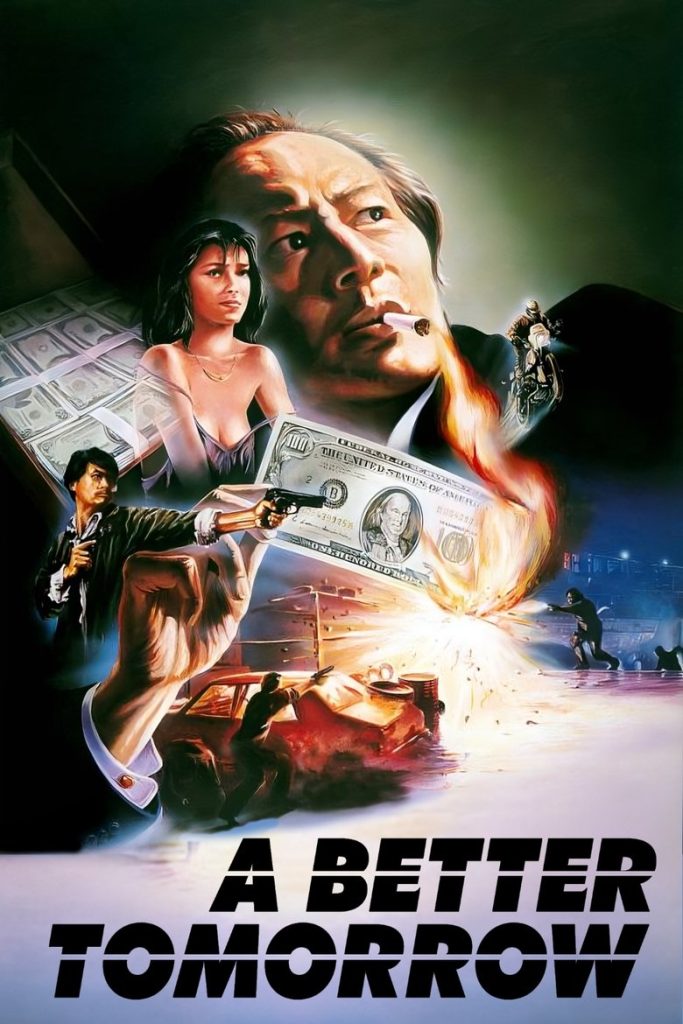
A Better Tomorrow is a 1986 Hong Kong action crime drama directed by John Woo. The film follows a former gangster who attempts to leave his criminal past behind and reconcile with his younger brother, a dedicated police officer. As he tries to build a new life, he faces pressure from his former gang associates who won't let him go easily, creating tension between his old loyalties and his desire for redemption.
Parent Guide
A stylized action drama with mature themes of crime, loyalty, and redemption. Contains significant violence and criminal activity that may not be suitable for younger viewers.
Content breakdown
Frequent stylized violence including gunfights with blood, fistfights, criminal activities, and tense confrontations. Characters are shot, beaten, and threatened. Some scenes show characters in peril.
Intense confrontations and emotional family conflicts. Some scenes of betrayal and characters in danger. The tension between brothers and criminal threats create disturbing situations.
Some mild language and insults in subtitles. No strong profanity noted, but characters use harsh language during conflicts.
No sexual content or nudity observed. The film focuses on action and family drama.
Characters occasionally smoke cigarettes. Some social drinking in scenes. No prominent drug use shown.
High emotional intensity with themes of brotherly conflict, betrayal, loyalty, and redemption. Characters experience significant emotional turmoil and difficult moral choices.
Parent tips
This film contains significant stylized violence including gunfights, fistfights, and criminal activities. The themes of brotherly conflict, loyalty, and redemption are mature and may be difficult for younger children to process. The criminal lifestyle is portrayed with some glamorization. Consider watching with older children to discuss the consequences of violence and criminal choices.
Parent chat guide
Parent follow-up questions
—
- What did you think about the brothers in the movie?
- How did the characters show they cared about each other?
- Why do you think the older brother had trouble leaving his criminal life behind?
- How did the police officer brother feel about his brother's past?
- What are some consequences of violence shown in the film?
- How does the film balance glamorizing criminal life with showing its consequences?
- What does the film suggest about the possibility of redemption?
- How do cultural differences between Hong Kong and Western countries affect the portrayal of law enforcement and criminal justice?
- What commentary does the film make about brotherhood and loyalty?
🎭 Story Kernel
At its core, 'A Better Tomorrow' is a brutal deconstruction of Confucian loyalty in hyper-capitalist Hong Kong: Mark Gor’s return from exile isn’t redemption—it’s an aestheticized suicide pact disguised as reconciliation. His immaculate trench coat and slow-motion gunplay aren’t cool; they’re ritual armor against moral collapse. Ken’s arc—abandoning police duty for filial vengeance—exposes how 'honor' becomes fungible currency when institutions fail. The film refuses catharsis: the final hospital bed isn’t healing but containment, where brotherhood survives only as shared trauma, not resolution. Woo weaponizes melodrama to ask whether integrity can exist outside systems that have already sold their souls—hence the irony that the most 'moral' characters die while the compromised survive, breathing but hollow.
🎬 Visual Aesthetics
Woo’s visual language here is revolutionary precisely because it’s so controlled: the saturated crimson of blood contrasts with the sickly greenish-blue of neon-lit alleys, visually encoding moral decay beneath surface glamour. His signature dual-wielding choreography isn’t just spectacle—it’s a theological gesture, turning firearms into extensions of bodily prayer. Static wide shots frame characters in architectural isolation (e.g., Mark standing alone in the harbor mist), while sudden, jarring close-ups on trembling hands or sweat-dripping brows rupture romanticism with visceral vulnerability. The rain-soaked finale isn’t poetic—it’s punitive, washing away neither sin nor consequence, only obscuring the line between martyrdom and masochism. Every slow-motion bullet carries the weight of unspoken guilt.
🔍 Details & Easter Eggs
💡 Behind the Scenes
Chow Yun-fat nearly turned down the role of Mark Gor, fearing it would typecast him as a 'gun-toting thug' after years of TV comedy; he accepted only after Woo promised to shoot the action sequences 'like ballet.' Filming occurred largely on location in Kowloon’s now-demolished Kai Tak Airport freight yards and the real Aberdeen fishing village—where locals were paid in rice and cigarettes due to budget constraints. The iconic trench coat was Chow’s own idea, sourced from a Mong Kok tailor who’d never made one before; its exaggerated lapels were later trimmed mid-shoot when stunt coordinators complained they snagged on rigging. Crucially, the film’s explosive success saved Cinema City Studios from bankruptcy—its $2.3M HK box office haul (a record then) funded Woo’s next three films outright.
Where to watch
Choose region:
- fuboTV
- Criterion Channel
- Shout! Factory TV
- YouTube Free
- Tubi TV
- Amazon Video
- Apple TV Store
- Google Play Movies
- YouTube
- Fandango At Home
Trailer
Trailer playback is unavailable in your region.