
A Clockwork Orange (1971)
Story overview
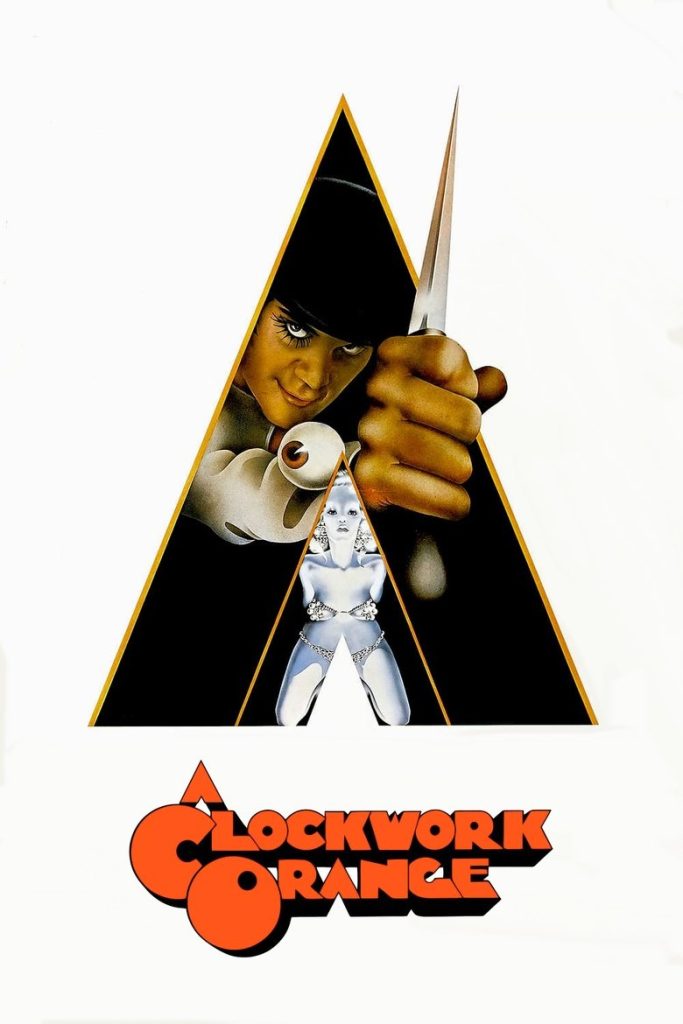
A Clockwork Orange is a dystopian science fiction film set in a near-future Britain where a young man named Alex leads a gang that commits violent crimes for entertainment. The story explores themes of free will, morality, and government control as Alex undergoes an experimental rehabilitation procedure that removes his capacity for violence. The film examines whether true change can occur without personal choice and questions the ethics of behavior modification.
Parent Guide
Extremely mature content with graphic violence, sexual assault, and disturbing themes. Only appropriate for adults.
Content breakdown
Extensive brutal violence including beatings, gang violence, and graphic depictions of assault.
Disturbing psychological content, unsettling imagery, and themes of mind control and loss of free will.
Frequent strong language and invented slang with violent connotations.
Graphic sexual violence and nudity in disturbing contexts.
Scenes of alcohol consumption and drug references.
High emotional intensity throughout with disturbing themes of violence, control, and morality.
Parent tips
This film contains intense and graphic content including brutal violence, sexual assault, disturbing imagery, and strong language throughout. The R rating is well-earned due to the explicit nature of the material. Parents should be aware that the film presents complex philosophical questions about free will, morality, and state control in a deliberately provocative manner that may be confusing or disturbing to younger viewers.
Parent chat guide
Parent follow-up questions
- What did you think about the movie?
- Was there anything that made you feel scared?
- What colors did you see in the movie?
- Did you see any people being unkind?
- What was your favorite part?
- What did you think about how the characters treated each other?
- How did the movie make you feel?
- What do you think about changing how people behave?
- What would you do if you saw someone being treated badly?
- What was confusing about the movie?
- What do you think the movie was trying to say about violence?
- How does the movie show the difference between punishment and rehabilitation?
- What questions did the movie make you think about?
- How do you think the government should handle people who do bad things?
- What did you think about the main character's choices?
- What philosophical questions about free will does the film raise?
- How does the film critique both individual violence and state control?
- What do you think about the ethics of behavior modification?
- How does the film use music and visuals to create meaning?
- What contemporary issues does this film still speak to today?
🎭 Story Kernel
At its core, 'A Clockwork Orange' is a brutal exploration of whether forced morality is more monstrous than innate evil. The film asks: is a man who chooses violence more human than one programmed for goodness? Alex's journey from gleeful sadist to conditioned victim exposes society's hypocrisy—we condemn his crimes yet applaud when he's stripped of agency. The Ludovico Technique doesn't cure evil; it merely transfers it from individual to institution. The final shot of Alex's restored smirk isn't a victory but a condemnation of a world that would rather control than understand human nature.
🎬 Visual Aesthetics
Kubrick weaponizes aesthetics, creating a surreal future where brutality unfolds in candy-colored interiors. The symmetrical framing turns violence into cold tableaus, while the wide-angle lenses distort faces into grotesque masks. Notice how Alex's home is bathed in warm, domestic light during horrific acts—a visual dissonance that makes the violence more unsettling. The infamous 'Singin' in the Rain' sequence uses cheerful music as psychological weaponry, while the Ludovico scenes employ clinical whites and restraints that feel more torturous than Alex's crimes. Every frame is meticulously composed to both repel and hypnotize.
🔍 Details & Easter Eggs
💡 Behind the Scenes
Malcolm McDowell suffered permanent eye damage from the corneal scratch during the Ludovico scenes—Kubrick insisted on real discomfort for authenticity. The Korova Milkbar's bizarre furniture was created from mannequins molded from real people, including Kubrick's daughters. Most interiors were shot on soundstages, with the brutalist Thamesmead housing estate standing in for dystopian London. The iconic bowler hat and codpiece costume was McDowell's idea, inspired by a gay club he frequented. Kubrick cut 30 seconds of explicit sexual content to avoid an X rating in America, though the film was still banned in the UK until after his death.
Where to watch
Choose region:
- Amazon Video
- Apple TV
- Google Play Movies
- YouTube
- Fandango At Home
- Spectrum On Demand
Trailer
Trailer playback is unavailable in your region.