
A Friend of the Family: True Evil (2022)
Story overview
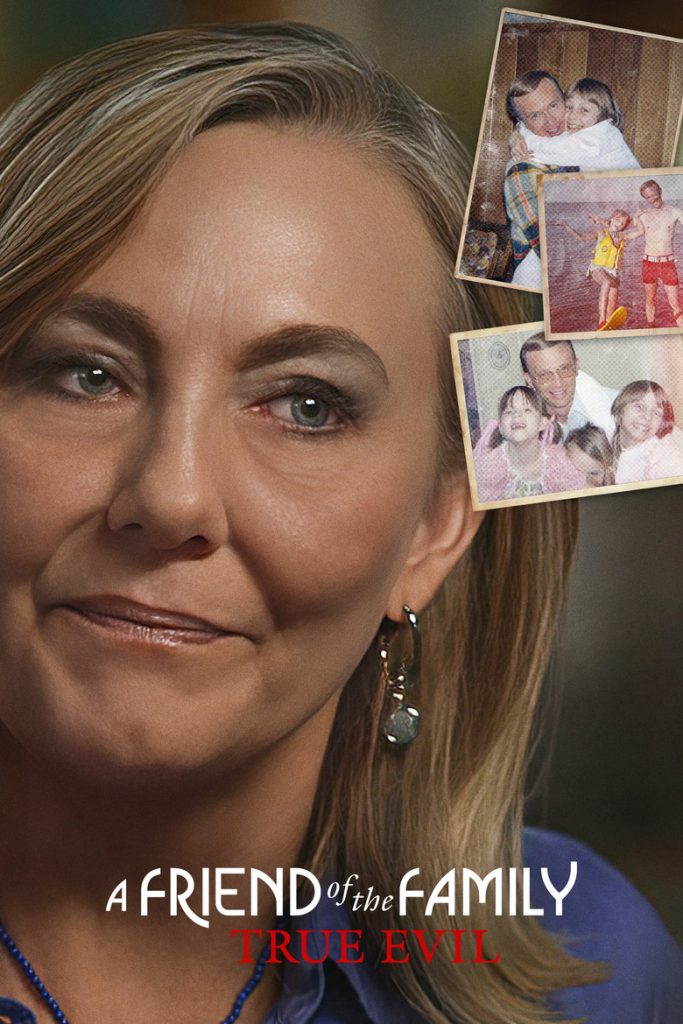
This documentary recounts the harrowing true story of Jan Broberg, who was kidnapped twice and sexually abused for years by a trusted family friend. Through interviews with Jan and her family members, it details the psychological manipulation, trauma, and eventual survival, highlighting themes of trust, resilience, and the long-term impact of abuse.
Parent Guide
A documentary with mature themes of sexual abuse and kidnapping, recommended for viewers 16+ due to emotional intensity and disturbing content. Not suitable for children.
Content breakdown
Includes descriptions of kidnapping, confinement, and psychological peril. No graphic physical violence shown, but the situations are tense and threatening.
Highly disturbing due to detailed accounts of childhood sexual abuse, manipulation, and trauma. The psychological aspects and betrayal by a trusted adult are particularly unsettling.
Minimal strong language; typical of documentary interviews. No excessive profanity.
Explicit discussions of sexual abuse and manipulation, but no nudity or visual sexual acts. The content is verbal and descriptive, focusing on the psychological impact.
No depiction or mention of substance use.
High emotional intensity due to themes of trauma, fear, and survival. Interviews convey raw emotions, which may be overwhelming for sensitive viewers.
Parent tips
This documentary deals with intense themes of kidnapping, sexual abuse, and psychological manipulation. It is best suited for mature teens and adults. Parents should watch first to assess appropriateness for their child. Consider discussing safety, trust, and consent if viewing with older teens. The content may be triggering for survivors of abuse.
Parent chat guide
Parent follow-up questions
—
—
—
- What did you learn about how predators manipulate trust?
- How did Jan show resilience in her story?
- Why is it important to speak up if something feels wrong?
- How can we support survivors of abuse?
🎭 Story Kernel
At its core, 'A Friend of the Family: True Evil' explores the terrifying banality of evil through the lens of psychological manipulation. The film isn't about a dramatic kidnapping but about how a predator systematically dismantles a family's trust from within. Robert Berchtold's character demonstrates how evil often wears a friendly face, using social norms and community standing as camouflage. The real horror lies in watching how ordinary people—neighbors, friends, even family members—become unwitting accomplices through their unwillingness to see what's happening right before their eyes. The film asks uncomfortable questions about our collective responsibility when danger presents itself as normalcy.
🎬 Visual Aesthetics
The cinematography employs a deliberately mundane aesthetic that makes the horror more unsettling. The camera often lingers on domestic spaces—kitchens, living rooms, backyards—making them feel both familiar and increasingly claustrophobic. A muted color palette dominated by 1970s earth tones creates a sense of nostalgic normalcy that contrasts sharply with the unfolding trauma. Shots are frequently framed through windows or doorways, visually reinforcing the theme of boundaries being violated. The absence of dramatic lighting or horror-movie tropes makes the psychological manipulation feel all the more real and terrifying.
🔍 Details & Easter Eggs
💡 Behind the Scenes
The series was filmed in Vancouver, Canada, standing in for 1970s Idaho, with production designers meticulously recreating period details from wallpaper patterns to automobile models. Actor Jake Lacy, who plays Robert Berchtold, reportedly isolated himself from the cast during filming to maintain the character's outsider status. The real Jan Broberg, whose kidnapping the series depicts, served as a producer and consultant, ensuring accuracy in portraying the psychological manipulation she endured. Director Nick Antosca insisted on using practical effects and period-appropriate lighting to maintain authenticity rather than relying on digital enhancements.
Where to watch
Choose region:
- Peacock Premium
- Peacock Premium Plus
Trailer
Trailer playback is unavailable in your region.