
A Life of Speed: The Juan Manuel Fangio Story (2020)
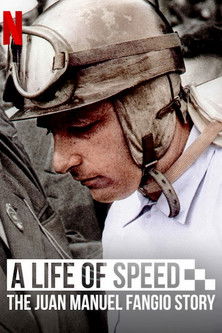
Story overview
This documentary explores the life and career of Juan Manuel Fangio, a legendary Formula One driver who won five world championships in the 1950s. It highlights his achievements during an era when racing lacked modern safety equipment, featuring interviews with other racing icons who discuss his legacy and impact on the sport.
Parent Guide
A documentary about a historical racing figure, with no concerning content but some discussion of past racing dangers.
Content breakdown
Mentions of racing risks and historical accidents without graphic depictions.
No frightening or disturbing imagery; focuses on interviews and archival footage.
No offensive language noted.
No sexual content or nudity.
No depiction or discussion of substance use.
Mild intensity from discussions of racing dangers and historical context.
Parent tips
This documentary focuses on historical racing achievements and may include discussions of the dangers of early Formula One racing. Suitable for children interested in sports history, but parents should be prepared to discuss historical safety practices in motorsports.
Parent chat guide
Parent follow-up questions
- What do you think about the fast cars?
- Can you name a color you saw on the cars?
- Why do you think Fangio was so successful?
- How do you think racing has changed since his time?
- What qualities made Fangio a champion?
- How did the lack of safety gear affect drivers in the 1950s?
- How does Fangio's legacy influence modern Formula One?
- What ethical considerations arise from racing without modern safety features?
🎭 Story Kernel
The film's core isn't about speed records or championship counts, but about the paradoxical relationship between extreme risk and profound calm. It explores how Fangio's legendary composure—his ability to operate at the physical limit while maintaining almost supernatural mental stillness—wasn't just a racing technique but a philosophy for survival and excellence. The narrative drives home that in an era of lethal machinery, his victories were less about conquering tracks and more about mastering the internal chaos that killed his contemporaries. The characters are driven by this tension between external velocity and internal tranquility, making it a study of focus as the ultimate performance enhancer.
🎬 Visual Aesthetics
The visual language masterfully contrasts archival grainy, high-contrast black-and-white race footage with crisp, contemplative modern interviews. The racing sequences use rapid cuts and shaky cameras to convey visceral danger, while interviews are static, composed shots emphasizing reflection. A recurring visual motif is the close-up on Fangio's eyes in historical photos—calm amidst blurry motion—juxtaposed with wide shots of treacherous circuits like the Nürburgring. The color palette shifts from the muted, dusty tones of period footage to the vivid blues and greens of present-day Argentina, visually connecting past legacy to living memory.
🔍 Details & Easter Eggs
💡 Behind the Scenes
The production team unearthed several minutes of previously unseen color home movie footage from the 1950s, discovered in a private Argentine collection. Director Francisco Macri insisted on filming contemporary segments at actual locations from Fangio's life, including his modest hometown garage in Balcarce. Notably, the film's sound designers recorded vintage Alfa Romeo and Mercedes-Benz race cars at historic tracks to recreate authentic engine sounds rather than using studio effects.
Where to watch
Choose region:
- Netflix
- Netflix Standard with Ads