
A Private War (2018)
Story overview
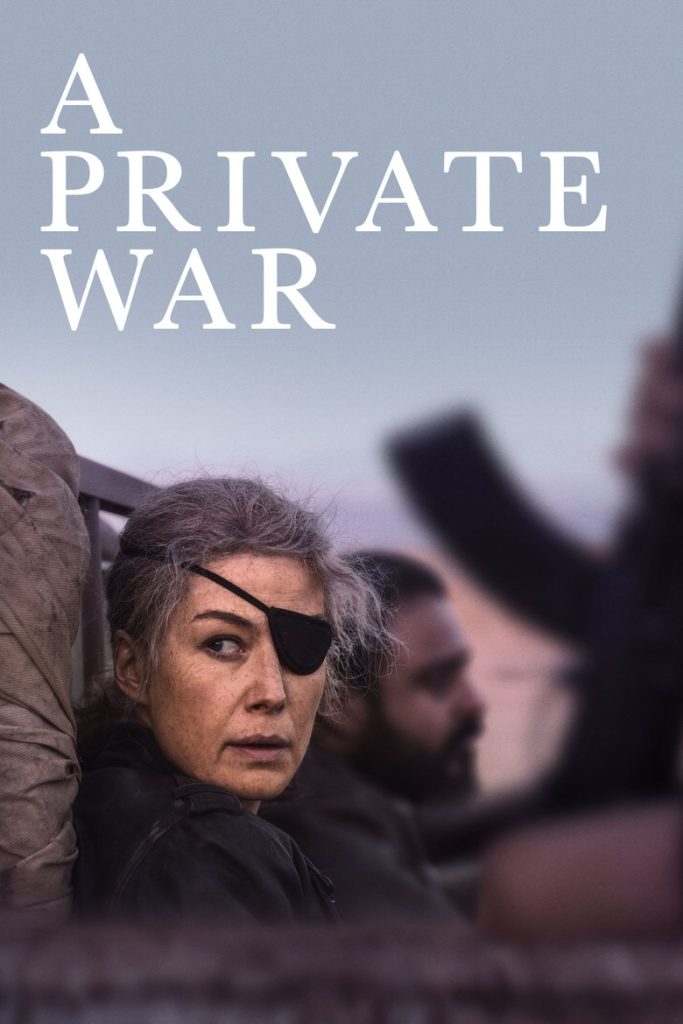
A Private War is a 2018 biographical drama about Marie Colvin, a fearless war correspondent who reported from conflict zones worldwide. The film follows her career as she covers dangerous conflicts in Sri Lanka, Iraq, Libya, and Syria, showing both her professional dedication and personal struggles with PTSD and relationships. It portrays the human cost of war through Colvin's experiences and her commitment to giving voice to civilian victims.
Parent Guide
This intense biographical drama about war correspondent Marie Colvin contains graphic war violence, disturbing content, strong language, and mature themes. Not suitable for children or young teens. Recommended for mature audiences 16+ with parental guidance.
Content breakdown
Graphic war violence including bombings, shootings, explosions, and aftermath scenes. Shows civilian casualties, injured and dead bodies, and intense combat situations. A character loses an eye in a grenade attack (shown in detail). Multiple scenes of peril and life-threatening situations.
Very disturbing images of war carnage, dead and injured civilians including children. Graphic medical scenes. Intense psychological trauma portrayal including PTSD symptoms, nightmares, and emotional breakdowns. Realistic depictions of war's human cost that may be deeply upsetting.
Strong language including f-words (approximately 10-15 instances), s-words, and other profanity. Some crude references and wartime slang.
Brief romantic scenes with kissing and implied sexual relationships. Some sensual moments but no explicit nudity or graphic sexual content shown.
Frequent smoking and drinking throughout. Characters drink alcohol in social and stressful situations. Some prescription medication use related to trauma recovery. No illegal drug use shown.
High emotional intensity throughout. Themes of trauma, loss, mortality, and moral responsibility. The protagonist struggles with PTSD, survivor's guilt, and personal relationships. The film creates a sense of constant tension and emotional weight.
Parent tips
This R-rated film contains intense war violence, disturbing images, strong language, and mature themes. It's best suited for mature teens and adults. Parents should watch first to determine appropriateness for their older teens. The film provides opportunities to discuss journalism ethics, war consequences, and mental health.
Parent chat guide
Parent follow-up questions
—
—
- What do you think makes someone want to be a war reporter?
- How do you think seeing war affects people?
- Why is it important to tell stories about people in war zones?
- What ethical responsibilities do war correspondents have?
- How does the film portray the psychological effects of trauma?
- What does the film suggest about the relationship between journalists and the military?
- How does Colvin's personal life intersect with her professional work?
- What commentary does the film make about media coverage of war?
🎭 Story Kernel
The film's core is a brutal autopsy of the psychological contract of bearing witness. It posits that Marie Colvin's addiction wasn't to danger, but to the moral imperative of giving voice to the voiceless, a compulsion that became a slow-motion suicide. Her drive is not heroism, but a profound, corrosive empathy that demands she stand where others cannot, transforming her into a living monument to the atrocities she documents. The narrative dissects the paradox of a woman who finds her truest self in the world's most broken places, arguing that her final act in Homs was not an accident, but the logical, tragic conclusion of a life spent staring into the abyss until it stared back.
🎬 Visual Aesthetics
The cinematography masterfully employs a dual visual language. The war zones are shot with a visceral, handheld urgency—grainy, saturated with dust and the sickly yellow of explosives. In contrast, her London life is rendered in cold, sterile blues and grays, with static, claustrophobic frames that feel more imprisoning than any battlefield. This stark dichotomy visually argues that 'normalcy' is her true hell. Key symbolic moments, like the slow-motion shower scene washing off blood that isn't there, externalize her internal contamination, making her PTSD a tangible, visual stain.
🔍 Details & Easter Eggs
💡 Behind the Scenes
Rosamund Pike spent extensive time with Colvin's real-life photographer partner, Paul Conroy, who survived the Homs attack, and studied hours of Colvin's interviews to capture her specific cadence and chain-smoking mannerisms. The production filmed in Jordan, standing in for locations like Iraq and Syria. Director Matthew Heineman, primarily known for gritty documentaries like 'Cartel Land', brought a verité style to the war sequences, using real refugees as extras to heighten authenticity. Pike performed many of the intense, emotionally raw scenes in single takes to maintain the harrowing continuity of Colvin's psychological state.
Where to watch
Choose region:
- Netflix
- Netflix Standard with Ads
- Tubi TV
- Amazon Video
Trailer
Trailer playback is unavailable in your region.