
A Room with a View (1986)
Story overview
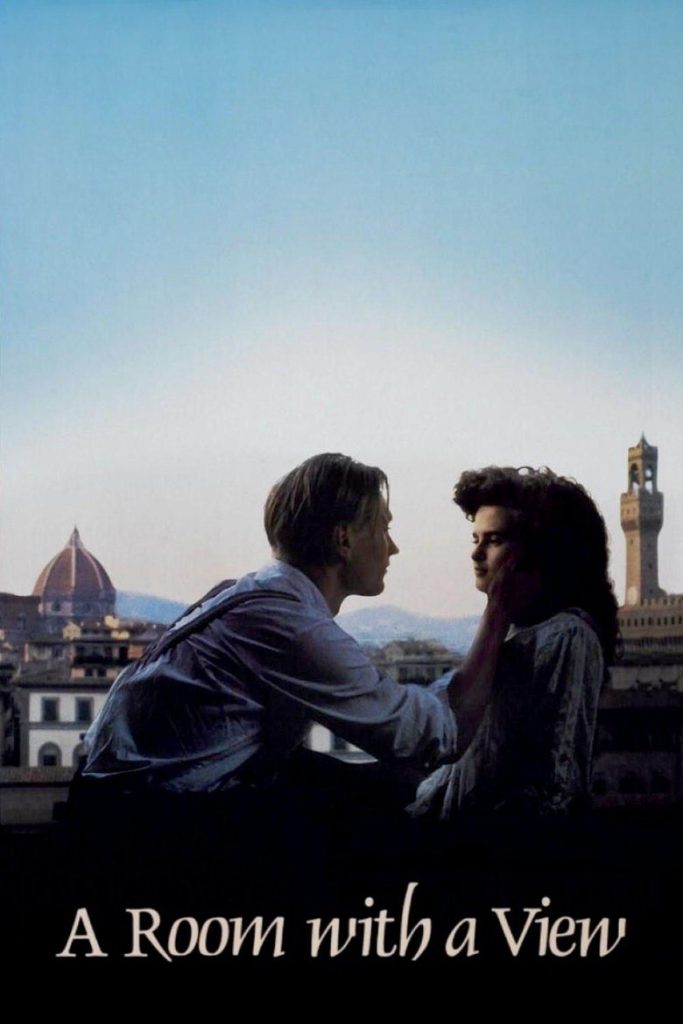
A Room with a View is a 1986 British period drama romance set in early 1900s England and Italy. It follows young Lucy Honeychurch as she travels to Florence with her strict chaperone. There, she meets the unconventional Emerson family, particularly the passionate George Emerson, who challenges her sheltered worldview. The film explores Lucy's internal conflict between societal expectations and her own desires, ultimately questioning whether she will follow her heart or conform to the rigid conventions of Edwardian society.
Parent Guide
A gentle period drama exploring romance and societal expectations with no concerning content, but themes may be too mature for young children.
Content breakdown
No violence or peril. The most intense moment is a non-fatal drowning scene where a character is rescued.
Nothing scary or disturbing. The tone is consistently gentle and romantic.
No strong language. Period-appropriate polite dialogue throughout.
Several passionate kisses. A scene where male characters swim naked in a pond (partial nudity from a distance, no explicit detail). Romantic tension and discussions of love and marriage.
No substance use shown. Period-appropriate social drinking of wine at meals.
Moderate emotional intensity around romantic confusion and societal pressure. Characters experience inner turmoil about life choices, but presented in a restrained, period-appropriate manner.
Parent tips
This film is suitable for mature children and teenagers interested in historical dramas and romance. It contains no violence, strong language, or substance use. However, it deals with complex themes of societal pressure, personal freedom, and romantic awakening that may require explanation for younger viewers. The slow pacing and dialogue-heavy nature might not engage very young children. Parents should be prepared to discuss the historical context of gender roles and class distinctions.
Parent chat guide
Parent follow-up questions
—
- What was your favorite place in the movie? Italy or England?
- Did you like Lucy's pretty dresses?
- How do you think Lucy felt when she had to make a big choice?
- Why do you think Lucy felt so confused about who to marry?
- How were George and Cecil different as people?
- What do you think 'a room with a view' means in the story?
- How does the film critique Edwardian society's restrictions on women?
- What role does Italy play as a symbol of freedom versus England's repression?
- How does the film use humor to comment on social conventions?
- What does Lucy's journey suggest about self-discovery and authenticity?
🎭 Story Kernel
The film is a meticulous dissection of societal repression versus authentic desire. Lucy Honeychurch's journey isn't just about choosing between Cecil Vyse and George Emerson; it's about choosing between the suffocating, performative world of manners and the messy, vital world of feeling. Cecil represents the death of spontaneity—he treats Lucy like an aesthetic object to be curated. George, by contrast, embodies the life force, literally pulling her into the mud and the river. The real conflict is internal: Lucy's struggle to acknowledge her own passionate nature, which her culture has taught her to fear and suppress. The 'room with a view' is the life she glimpses but is too afraid to claim.
🎬 Visual Aesthetics
Merchant-Ivory employ a stark visual dichotomy. Italy is rendered in warm, sun-drenched tones, with fluid camerawork that follows characters through bustling piazzas and lush landscapes. The camera feels alive, participating in the chaos of the murder and the intimacy of the kiss. England, by contrast, is all cool grays, greens, and constrained compositions. Shots are static, framed by windows and doorways, visually imprisoning the characters. The most powerful symbolism is the mud-stained photographs George returns to Lucy—a permanent stain of reality on the carefully composed portrait of her life. The river scene is a baptism into authenticity.
🔍 Details & Easter Eggs
💡 Behind the Scenes
Helena Bonham Carter, only 19 during filming, was so nervous about the famous kiss scene with Julian Sands that director James Ivory had to clear the set entirely. The Florentine locations were meticulously chosen to contrast with the English settings, with the Pension Bertolini actually being a composite of different locations. Maggie Smith, playing the perpetually offended Charlotte Bartlett, based some of her mannerisms on the film's fastidious costume designer, Jenny Beavan. The film's critical and awards success (3 Oscars) helped define the 'Merchant-Ivory' style as a hallmark of literary adaptation.
Where to watch
Choose region:
- HBO Max
- HBO Max Amazon Channel
- Britbox Apple TV Channel
- Criterion Channel
- The Roku Channel
- Shout! Factory TV
- Tubi TV
- Amazon Video
- Apple TV Store
- Google Play Movies
- YouTube
- Fandango At Home
Trailer
Trailer playback is unavailable in your region.