
A Separation (2011)
Story overview
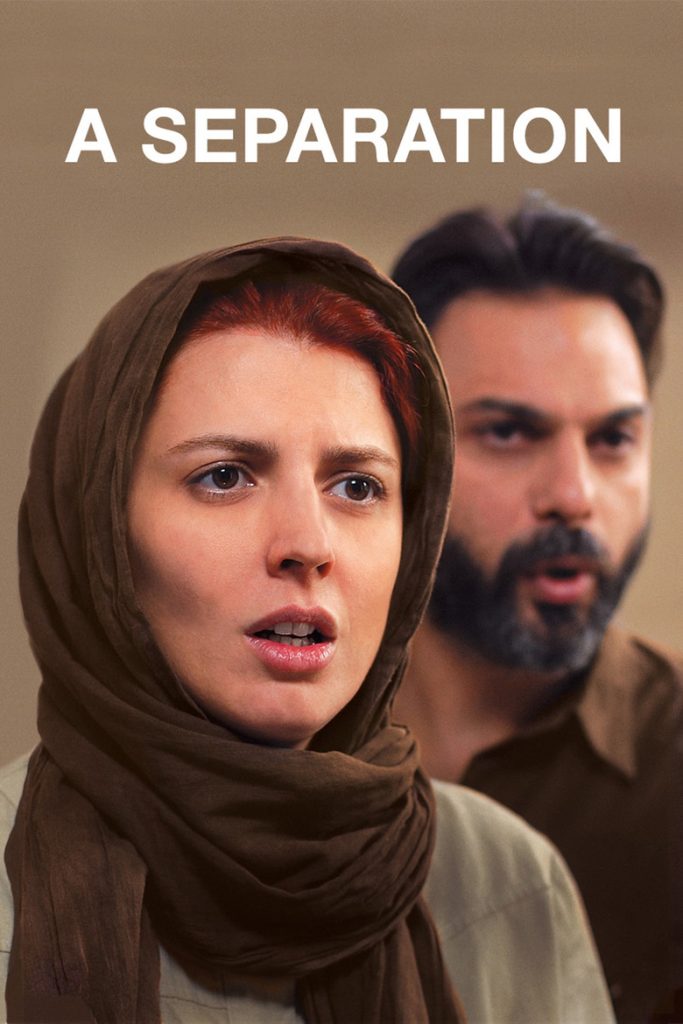
A Separation is a powerful Iranian drama that explores complex family dynamics and moral dilemmas. The film follows a married couple facing a difficult choice between moving abroad for their daughter's future and staying in Iran to care for an elderly parent with Alzheimer's disease. As tensions rise, the situation escalates into legal and emotional conflicts that test relationships and personal values. The story provides a thoughtful examination of cultural expectations, family responsibility, and the challenging decisions adults must sometimes make.
Parent Guide
A thoughtful drama exploring family conflicts and ethical dilemmas without graphic content, but with significant emotional intensity.
Content breakdown
Some tense arguments and emotional confrontations, but no physical violence or dangerous situations.
Scenes depicting Alzheimer's symptoms and family distress may be unsettling for sensitive viewers.
No offensive language noted; dialogue is in Persian with subtitles.
No sexual content or nudity present.
No substance use depicted.
High emotional tension throughout as characters face difficult moral choices and family conflicts.
Parent tips
This film deals with mature themes including family conflict, ethical dilemmas, and cultural pressures that may be challenging for younger viewers. While there's no graphic content, the emotional intensity and complex moral situations require thoughtful discussion. The PG-13 rating reflects the film's serious themes rather than explicit content, making it most appropriate for mature middle schoolers and teenagers who can process the nuanced storytelling.
Parent chat guide
Parent follow-up questions
- How do you think the little girl felt when her parents were arguing?
- What are some ways families can help each other?
- Why is it important to be kind to older people?
- What makes you feel safe in your family?
- What was the hardest decision the family had to make?
- How did different family members show they cared for each other?
- What does it mean to have responsibilities to your family?
- Why do you think the parents disagreed about what was best?
- What values were most important to each character in the film?
- How did cultural expectations influence the family's decisions?
- What makes a decision 'right' or 'wrong' when all choices have consequences?
- How did the legal situation affect the family relationships?
- How does the film explore the tension between individual aspirations and family obligations?
- What cultural differences in family dynamics did you notice compared to your own experience?
- How do the characters' moral dilemmas reflect larger societal issues?
- What role does truth and honesty play in the conflicts that develop?
🎭 Story Kernel
The film's core theme is the erosion of truth under the weight of social pressure and personal desperation. It's not about discovering who's right or wrong, but how rigid societal structures—class, religion, gender roles, and legal systems—force characters into impossible choices where honesty becomes a luxury they can't afford. Simin wants freedom, Nader wants stability, Razieh wants dignity, and Termeh wants her family intact. Their driving forces aren't malicious but survivalist, creating a tragic domino effect where every attempt to protect someone inevitably harms another. The real separation isn't just marital—it's the chasm between intention and consequence, between private morality and public judgment.
🎬 Visual Aesthetics
Farhadi employs a handheld, documentary-style camera that creates visceral intimacy while denying us omniscience. We're trapped in tight apartments and claustrophobic corridors, mirroring the characters' constrained choices. The color palette is deliberately muted—washed-out beiges, grays, and blues—reflecting Tehran's winter and the emotional frost between characters. There are no establishing shots of iconic locations; the entire world exists within these domestic spaces and the sterile courtroom. The camera often lingers on characters' backs or observes through doorways, emphasizing how much remains unseen and unspoken. Even violent moments happen off-screen or in fragmented glimpses, forcing us to piece together truth from partial perspectives.
🔍 Details & Easter Eggs
💡 Behind the Scenes
The entire film was shot in sequence, which is highly unusual and contributed to the actors' authentic emotional progression. Leila Hatami (Simin) and Peyman Moaadi (Nader) actually lived separately during filming to enhance their on-screen estrangement. Many courtroom scenes used real judges as consultants for dialogue. The apartment sets were built exactly to scale in a studio to maintain continuity. Farhadi wrote the script with specific actors in mind, tailoring characters to their natural mannerisms. The film's budget was under $500,000, yet it became the first Iranian film to win the Oscar for Best Foreign Language Film.
Where to watch
Choose region:
- Amazon Video
- Apple TV
- Google Play Movies
- YouTube
- Fandango At Home
- Spectrum On Demand
Trailer
Trailer playback is unavailable in your region.