
A Wonderful World (2006)
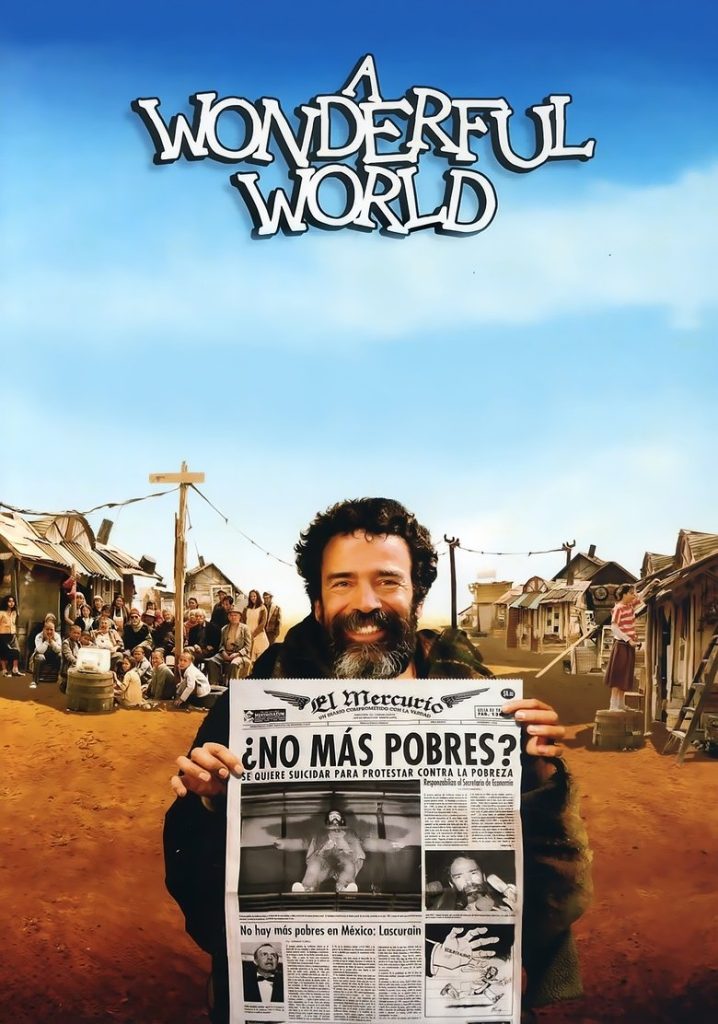
Story overview
A Wonderful World is a 2006 comedy-drama film that explores themes of human connection and everyday life through a lighthearted yet meaningful lens. The story follows characters navigating personal challenges with humor and heart, blending comedic moments with emotional depth. It presents a positive perspective on relationships and personal growth without heavy conflict or intense drama.
Parent Guide
A gentle comedy-drama suitable for family viewing with minimal concerning content. Focuses on positive themes of relationships and personal growth.
Content breakdown
No violence or physical peril depicted.
No scary or disturbing imagery or situations.
No offensive language or crude humor.
No sexual content or nudity.
No depiction of substance use.
Some emotional moments related to relationships and personal challenges, but handled gently.
Parent tips
This film is suitable for most family viewing, particularly for children ages 8 and up. The comedy-drama format provides gentle entertainment while offering opportunities to discuss themes like friendship, empathy, and problem-solving. Parents should be aware that while the film is generally lighthearted, some emotional moments might require explanation for younger viewers.
Consider watching together to help children process any emotional content and reinforce positive messages about relationships and personal growth. The film's pacing and tone make it accessible for family discussions about everyday challenges and how characters handle them.
Parent chat guide
For younger viewers, help them identify emotions characters experienced and discuss healthy ways to express feelings. With older children, explore deeper themes about empathy and how small actions can impact others. Use the film as a springboard to talk about real-life situations where similar values apply.
Parent follow-up questions
- What was your favorite funny part in the movie?
- How did the characters show they were friends?
- What colors or things did you like seeing?
- Can you tell me about a happy moment in the story?
- What would you do if you were one of the characters?
- What problem did the main characters face and how did they solve it?
- How did the characters show kindness to each other?
- What did you learn about friendship from this movie?
- Which character would you want to be friends with and why?
- What was the most important message in the story?
- How did the characters grow or change during the story?
- What challenges did the characters face in their relationships?
- How did humor help the characters deal with difficult situations?
- What does this film teach us about understanding different perspectives?
- How might you apply the film's messages to your own friendships?
- How does the film balance comedy with deeper emotional themes?
- What commentary does the film make about human connection in modern life?
- How effectively did the characters communicate their feelings and needs?
- What societal or personal values does the film reinforce or challenge?
- How does the film's structure support its themes of growth and relationships?
🎭 Story Kernel
The film's core theme is the commodification of happiness in a hyper-capitalist society. It's not about finding joy, but purchasing a curated, branded version of it. The protagonist, Leo, isn't driven by love or ambition, but by a desperate need to upgrade his 'Life Satisfaction Score' to access better healthcare for his daughter. His journey reveals a world where emotions are metrics, relationships are transactions, and the 'wonderful' world is a gilded cage maintained by systemic indifference. The climax isn't a triumph over evil, but a grim negotiation where he trades his authentic, messy humanity for a sterile, pre-approved package of contentment, questioning whether survival is worth the soul.
🎬 Visual Aesthetics
The visual language masterfully uses a sickly-sweet, hyper-saturated color palette—think candied pinks and electric blues—to create a veneer of perfection that feels artificial and cloying. The camera work is unsettlingly smooth, with glidecam shots and symmetrical compositions that mirror the society's controlled, frictionless surface. This contrasts sharply with the few handheld, shaky scenes in Leo's cramped apartment, where the color drains to muted greys. The most potent symbolism is the omnipresent, softly glowing 'Happiness Halo' interface characters see through AR lenses; it literally overlays a performance metric on every human interaction, visualizing the film's core critique of quantified living.
🔍 Details & Easter Eggs
💡 Behind the Scenes
Lead actor Michael Fassbender reportedly insisted on performing the final, wordless 'integration' scene in a single, agonizing 10-minute take to capture the gradual dissolution of the self. The film's oppressive cityscapes were shot in a real, abandoned planned community in China, chosen for its eerily perfect, yet utterly lifeless, architecture. Director Chloe Zhao initially conceived the project as a documentary about social credit systems before developing it into this narrative feature, which explains its stark, observational feel in the societal scenes.
Where to watch
Choose region:
- Netflix
- Netflix Standard with Ads
Trailer
Trailer playback is unavailable in your region.