
Aaina (1993)
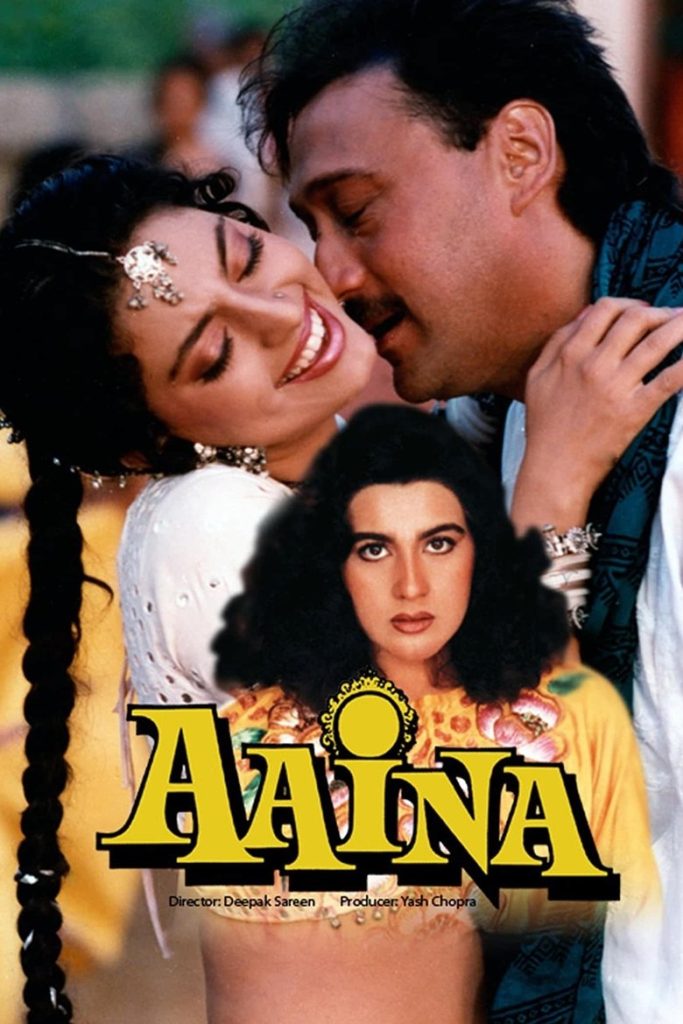
Story overview
Aaina is a 1993 Indian drama and romance film. The story explores themes of love, relationships, and personal growth within a family context. As a Bollywood production from this era, it likely features emotional storytelling with musical elements and cultural nuances.
Parent Guide
A family drama and romance film from 1990s Indian cinema. Without specific content details, this appears to be generally appropriate for older children with parental guidance for cultural context and emotional themes.
Content breakdown
May contain mild dramatic conflicts typical of family dramas, but no graphic violence expected.
Could include emotionally intense family situations or romantic conflicts that might be unsettling for sensitive viewers.
No strong language expected in typical Bollywood family films from this period.
May include romantic themes and modest expressions of affection typical of 1990s Bollywood.
No substance use expected in this type of family-oriented film.
Likely contains emotional family dynamics and romantic relationships that could be intense for younger viewers.
Parent tips
This film appears to be a family-oriented drama and romance from 1990s Indian cinema. Without specific content details, parents should be aware that Bollywood films from this period often include emotional family dynamics, romantic themes, and cultural elements that might require explanation for younger viewers. Consider previewing or watching together to gauge appropriateness for your child's maturity level.
Parent chat guide
Parent follow-up questions
- What was your favorite part of the movie?
- Did you see any families in the movie?
- What colors or music did you like best?
- How did the characters show they cared about each other?
- What problems did the characters face?
- What did you learn about how families work from this movie?
- How did the characters' relationships change throughout the story?
- What cultural differences did you notice in the film?
- How did music and dancing help tell the story?
- How does this film portray romantic relationships compared to Western films?
- What social or family expectations did the characters navigate?
- How does the film's 1990s setting influence its themes and presentation?
🎭 Story Kernel
At its core, 'Aaina' is a psychological exploration of identity and familial duty, where the protagonist's journey is driven by the suffocating weight of societal expectations and the search for self beyond prescribed roles. The film dissects how personal desires are systematically crushed by tradition, leading to a haunting internal conflict. Characters are propelled not by external villains but by the invisible chains of obligation, creating a tragedy where the real battle is against the self one is forced to become. The narrative reveals that the most profound prisons are often built by those who claim to love us, making escape a act of existential rebellion.
🎬 Visual Aesthetics
The film employs a restrained, almost clinical visual palette dominated by cool blues and sterile whites, mirroring the emotional coldness of the protagonist's environment. Camera work is deliberately static during domestic scenes, creating a sense of entrapment, while handheld shots emerge during moments of internal turmoil, visually representing psychological instability. Symbolism is woven through reflective surfaces—windows, mirrors, still water—that rarely show clear images, instead distorting reality to reflect fractured identities. The lighting often isolates characters in pools of light against darkness, emphasizing their loneliness within the familial structure.
🔍 Details & Easter Eggs
💡 Behind the Scenes
The film was shot almost entirely on location in a single ancestral haveli in Rajasthan, with the production team living in the same building during filming to maintain atmospheric continuity. Lead actress Jaya Bhaduri (later Bachchan) reportedly stayed in character throughout the shoot, refusing to break from the protagonist's subdued demeanor even between takes. Director Ramanand Sagar drew from his own observations of joint family dynamics in traditional households. Several scenes were improvised when unexpected monsoon rains altered the shooting schedule, with the director incorporating the weather into the film's metaphor for emotional release.
Where to watch
Choose region:
- Netflix
- Netflix Standard with Ads
- Apple TV
- Google Play Movies
- YouTube