
Adaptation. (2002)
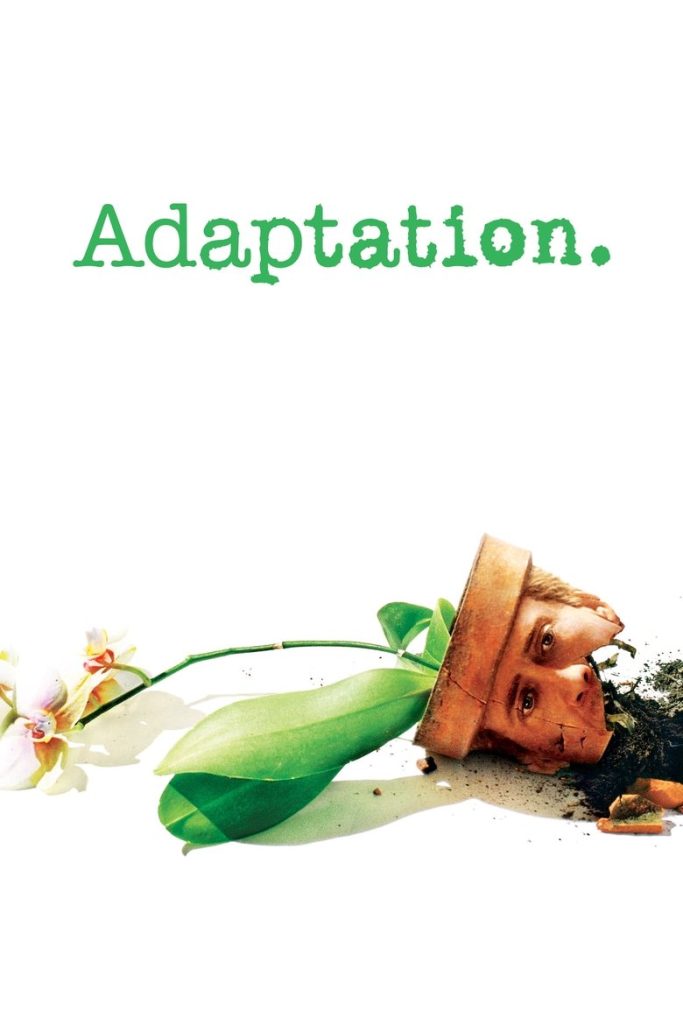
Story overview
This film explores the creative struggles of a screenwriter trying to adapt a book about orchid theft. It blends reality with fiction as the writer's personal anxieties and professional challenges become intertwined with the story he's adapting. The narrative examines themes of artistic frustration, identity, and the blurred lines between truth and imagination through a mix of comedy and drama.
Parent Guide
A complex, R-rated film about creative struggle with mature themes and narrative complexity best suited for older teens.
Content breakdown
Some tense situations and peril related to criminal activities, but no graphic violence.
Psychological intensity and themes of anxiety may be disturbing; narrative confusion could unsettle some viewers.
Some strong language and profanity throughout the film.
Discussions of sexuality and sexual frustration; some sexual references and situations.
Some social drinking and brief references to drug use.
High emotional intensity around themes of inadequacy, frustration, and creative anxiety.
Parent tips
This R-rated film contains mature themes including sexual frustration, self-loathing, and creative anxiety that are presented through complex narrative structures. The movie includes strong language, discussions of sexuality, and some intense emotional moments that may be confusing or inappropriate for younger viewers. Parents should be aware that the film's non-linear storytelling and meta-commentary on screenwriting may require significant cognitive maturity to appreciate.
Parent chat guide
Parent follow-up questions
- What was your favorite part of the movie?
- Did you see any flowers in the movie?
- How did the people in the movie feel?
- What colors did you see?
- Was there any music you liked?
- What do you think the movie was about?
- How do you think the writer felt in the story?
- What does it mean to adapt a book into a movie?
- Have you ever felt unsure about something you were creating?
- What was confusing about the movie?
- How does the movie show the creative process?
- What challenges do artists sometimes face?
- Why do you think the story jumps between different perspectives?
- How are reality and imagination mixed in this film?
- What did you learn about storytelling from this movie?
- How does the film explore themes of identity and authenticity?
- What commentary does the movie make about the creative industry?
- How effective is the meta-narrative structure in conveying the writer's struggle?
- What does the film suggest about the relationship between art and reality?
- How do the different storylines reflect different aspects of creative anxiety?
🎭 Story Kernel
At its core, 'Adaptation.' is a meta-narrative about the agony and impossibility of artistic creation, particularly adaptation. Charlie Kaufman's struggle to adapt 'The Orchid Thief' mirrors the film's own thesis: that life resists neat narrative structure. The characters are driven by obsession—Susan Orlean's for the exotic, John Laroche's for orchids, Charlie's for authenticity, and Donald's for commercial success. The film argues that true adaptation isn't fidelity to source material, but the messy process of wrestling with it, ultimately showing how Kaufman's fictionalized breakdown becomes the only honest way to tell the story.
🎬 Visual Aesthetics
The film's visual language shifts to mirror its narrative disintegration. Early scenes use a muted, naturalistic palette and restrained camerawork for Charlie's 'real' world and Susan's flashbacks. As Donald's influence and Charlie's desperation grow, the visuals become more conventional—heightened colors, faster edits, and eventually, the tropes of a Hollywood thriller (car chases, drug use, violent confrontation) in the swamp. This visual betrayal of its own initial aesthetic is the film's most potent argument: form follows failed function, and sometimes you have to become the cliché to expose it.
🔍 Details & Easter Eggs
💡 Behind the Scenes
Nicolas Cage played both Charlie and Donald Kaufman, with the latter being a completely fictional brother invented for the film. The real Charlie Kaufman initially wrote a script about his struggles to adapt 'The Orchid Thief,' which producer Spike Jonze suggested he incorporate into the script itself. Meryl Streep and Chris Cooper, who had never shared a scene before, filmed their intimate, drug-fueled encounter in the swamp with remarkable intensity, with Cooper basing Laroche's cadence on a Florida reptile dealer. The film credits list 'Donald Kaufman' as a co-writer, and this fictional personage was even nominated for an Academy Award for Best Adapted Screenplay.
Where to watch
Choose region:
- Amazon Video
- Apple TV
- Google Play Movies
- YouTube
- Fandango At Home
Trailer
Trailer playback is unavailable in your region.