
African Cats (2011)
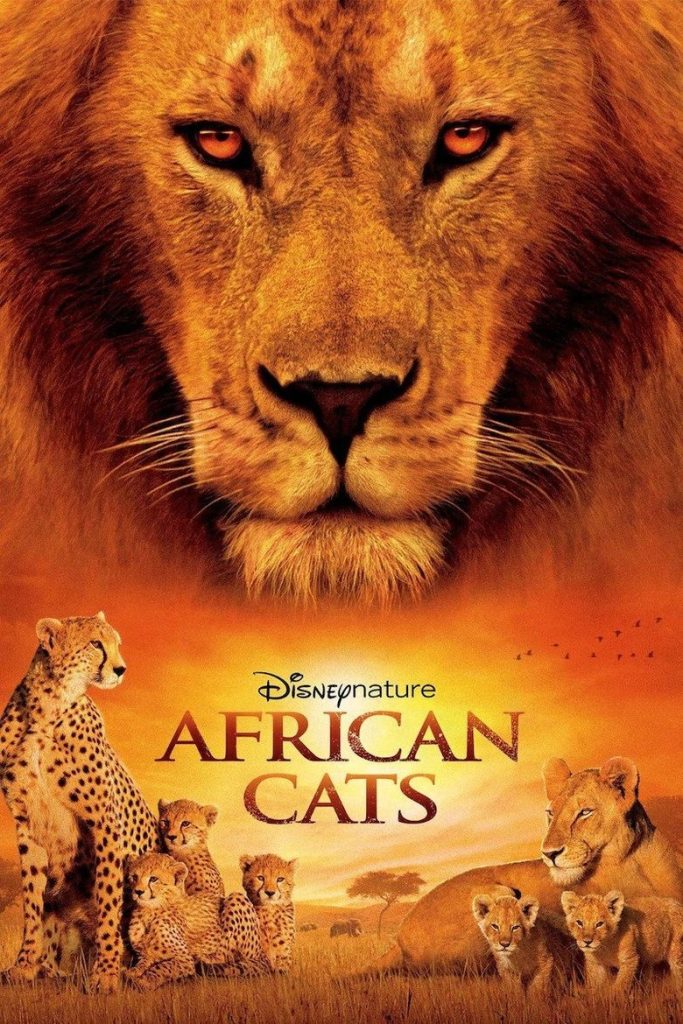
Story overview
African Cats is a 2011 nature documentary that follows the lives of big cats in Africa's savanna. The film focuses on two families—a lion pride and a cheetah mother with her cubs—as they navigate the challenges of survival in their natural habitat. Through stunning cinematography, it showcases their daily struggles for food, territory, and protection against predators. This G-rated documentary offers an educational and visually captivating look at wildlife behavior and ecosystems.
Parent Guide
Educational nature documentary suitable for most ages, with some intense natural predator scenes.
Content breakdown
Natural predator-prey interactions shown, including hunting sequences and territorial disputes among animals.
Some scenes may be intense for sensitive viewers as animals face survival challenges and natural dangers.
No concerning language; narration is educational and family-appropriate.
No sexual content; animals are shown naturally without focus on mating behaviors.
No substance use depicted.
Some emotional moments as animals face survival challenges, but overall uplifting and educational tone.
Parent tips
This documentary is suitable for all ages due to its G rating, but younger children might find some scenes intense as it depicts natural predator-prey interactions. The film shows animals hunting and facing dangers in the wild, which could be upsetting for sensitive viewers. Consider watching together to provide context about nature's cycles and answer any questions that arise.
Parent chat guide
Parent follow-up questions
- What was your favorite animal in the movie?
- How do the mommy animals take care of their babies?
- What sounds did the animals make?
- What colors did you see in nature?
- Where do these animals live?
- How do lions and cheetahs protect their families?
- What challenges do the animals face in their habitat?
- Why is it important for animals to work together?
- What did you learn about how animals find food?
- How are animal families similar to or different from human families?
- What survival strategies did you observe in the documentary?
- How does the film show the balance of ecosystems?
- What adaptations help these cats survive in their environment?
- Why might filmmakers choose to focus on these particular animal families?
- What conservation messages did you notice in the film?
- How does the documentary's cinematography affect your understanding of wildlife?
- What ethical considerations arise when filming animals in their natural habitat?
- How does this film contribute to public awareness about conservation?
- What parallels can you draw between animal social structures and human societies?
- How might climate change or human activity impact these ecosystems?
🎭 Story Kernel
At its core, 'African Cats' is less a documentary about wildlife and more a primal narrative about the universal struggle for legacy and survival. The film frames the lives of lioness Layla and cheetah mother Sita through the lens of family, territory, and the relentless passage of time. Their drives are not instinctual abstractions but deeply emotional: Layla's fierce protection of her cub Mara stems from a desire to secure her lineage within the pride, while Sita's solitary journey is a desperate fight to preserve her genetic future against overwhelming odds. The movie subtly argues that in the animal kingdom, the ultimate currency is not food or strength, but the successful transmission of life to the next generation, making every hunt, every rivalry, and every sacrifice a chapter in this fundamental saga.
🎬 Visual Aesthetics
The film's visual language is majestic and intimate, employing a sweeping, epic scale for landscape shots that dwarf the subjects, contrasted with extreme close-ups that capture every twitch of an ear or glint in an eye. The color palette is dominated by the golden hues of dry grass and the deep blues of the Mara River, creating a natural, sun-baked aesthetic. Slow-motion is used not just for action but for emotional weight, like the tender grooming between Layla and Mara. The camera often adopts a low-angle perspective, placing the viewer at eye-level with the animals, fostering empathy and immersing us in their ground-level view of a vast, dangerous world.
🔍 Details & Easter Eggs
💡 Behind the Scenes
Narrated by Samuel L. Jackson, the film was shot over two and a half years in Kenya's Maasai Mara National Reserve. The directors, Alastair Fothergill and Keith Scholey, are veterans of Disney's 'Earth' and the BBC's 'Planet Earth' series. A significant challenge was filming the cheetah sequences, as Sita's solitary nature and incredible speed (requiring specialized camera vehicles to keep pace) made consistent tracking difficult. The production team used custom-built, stabilized camera rigs on vehicles to capture the smooth, close-range footage without disturbing the animals, and much of the intimate cub footage was obtained using remote-controlled, camouflaged cameras.
Where to watch
Choose region:
- Disney Plus
- Amazon Video
- Apple TV
- Google Play Movies
- YouTube
- Fandango At Home