
Air Jaws: Top Guns (2022)
Story overview
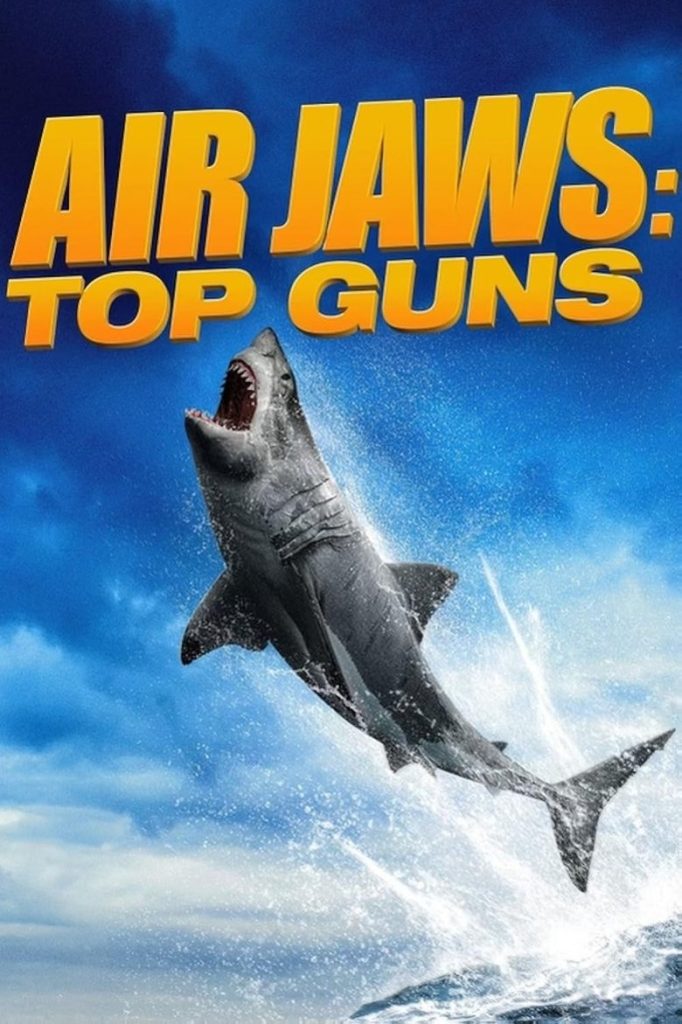
A documentary following shark cinematographers Andy Casagrande and Dickie Chivell as they travel to South Africa to film and capture footage of the largest breaching great white shark ever recorded, showcasing their mission and the natural behavior of these marine predators in their habitat.
Parent Guide
A family-friendly documentary suitable for most ages, focusing on shark cinematography with educational value and no inappropriate content. Mild intensity from shark footage may require guidance for younger or sensitive viewers.
Content breakdown
No violence depicted. Mild peril from scenes of sharks breaching near boats or in the ocean, but presented in a documentary context without graphic or aggressive behavior.
Some scenes of large sharks breaching or swimming close-up might be startling or intense for very young children, but it is not presented as horror or with jump scares.
No offensive or strong language noted; typical documentary narration and dialogue.
No sexual content or nudity.
No depiction of substance use.
Mild excitement or tension from the mission to film sharks, but overall calm and educational tone.
Parent tips
This documentary focuses on shark behavior and cinematography efforts, with no graphic violence, language, or mature content. It may be intense for very young children due to shark footage and perilous ocean scenes. Best for children interested in marine life or documentaries, with parental guidance for sensitive viewers.
Parent chat guide
Parent follow-up questions
- What did you think about the big shark?
- How do you think the filmmakers stayed safe in the water?
- What colors did you see in the ocean?
- Why do you think the filmmakers wanted to film the biggest shark?
- What did you learn about how sharks breach?
- How might this documentary help protect sharks?
- What challenges do you think the cinematographers faced while filming?
- How does this documentary contribute to our understanding of marine ecosystems?
- What safety measures should be taken when observing wildlife like sharks?
- Analyze the ethical considerations of filming wild predators up close.
- Discuss the impact of documentaries on public perception of sharks.
- How might climate change affect shark behavior and habitats as shown in the film?
🎭 Story Kernel
At its core, 'Air Jaws: Top Guns' isn't just another shark documentary—it's a character study of apex predators as elite athletes. The film explores the evolutionary arms race that has turned great white sharks into precision hunters, specifically focusing on their spectacular breaching behavior. The narrative drive comes from the scientific quest to understand why certain populations have perfected this high-risk, high-reward hunting technique while others haven't. It's less about sharks as monsters and more about them as specialized professionals in their ecological niche, with individual sharks displaying distinct hunting personalities and strategies that scientists attempt to decode through patient observation and technological innovation.
🎬 Visual Aesthetics
The cinematography operates on two distinct visual registers: the clinical precision of scientific observation and the breathtaking spectacle of nature's raw power. Underwater sequences employ steady, wide shots that establish the sharks' massive scale and grace, while surface breaches are captured with rapid-fire, shaky-cam urgency that mimics the chaos of the hunt. The color palette shifts dramatically between the cool blue-grey tones of the ocean depths and the explosive white spray of breaching moments. Slow-motion replays transform violent predation into balletic sequences, allowing viewers to appreciate the biomechanical perfection of sharks launching their entire bodies from the water with terrifying accuracy.
🔍 Details & Easter Eggs
💡 Behind the Scenes
The most remarkable production detail involves the specialized camera technology developed specifically for this documentary. Film crews used custom-built, high-speed cameras capable of shooting 1,000 frames per second to capture the milliseconds of breaching action clearly. These cameras were mounted on gyro-stabilized platforms on boats and helicopters to compensate for ocean movement. The team spent over 300 hours at sea for every minute of usable breaching footage, with researchers identifying individual sharks by their unique dorsal fin markings to track hunting success rates. Location shooting occurred primarily in South Africa's Seal Island and Mossel Bay areas, where the unique geography creates ideal conditions for the breaching behavior documented in the film.
Where to watch
Choose region:
- HBO Max
- Discovery +