
Aladdin (1992)
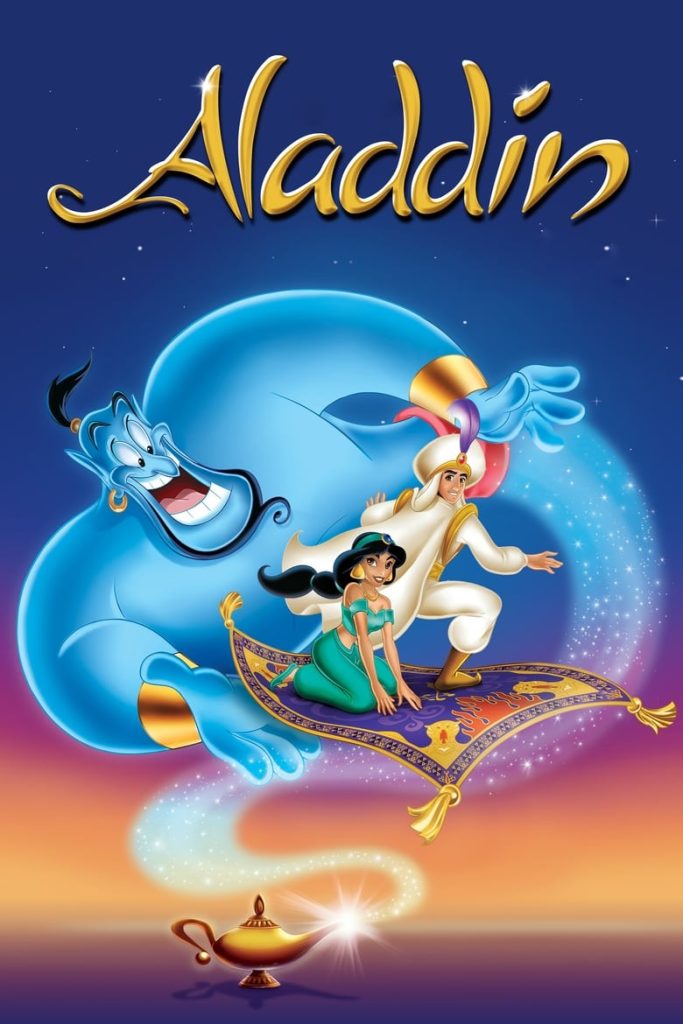
Story overview
Aladdin is a classic animated adventure set in the fictional city of Agrabah. The story follows a kind-hearted street urchin named Aladdin who falls in love with Princess Jasmine, who is restricted to marrying only a prince. Aladdin and the power-hungry Grand Vizier Jafar compete for a magical lamp that can grant wishes, leading to fantastical adventures and important lessons about honesty and being true to oneself.
Parent Guide
A classic animated musical with positive messages about honesty and self-worth, featuring some mild fantasy peril.
Content breakdown
Fantasy action including characters being chased, threatened with swords, trapped in caves, and magical transformations. No graphic violence.
Some intense scenes with villains, magical threats, and dark settings that might be momentarily frightening to very young children.
No offensive language.
No sexual content or nudity. Some mild romantic elements like hand-holding and a brief kiss.
No substance use depicted.
Some emotional moments involving deception, danger to characters, and themes of social inequality.
Parent tips
Aladdin is a G-rated animated musical that's generally appropriate for most children, featuring colorful animation, memorable songs, and positive messages about honesty and self-worth. Parents should be aware that some scenes contain mild peril and fantasy violence, including characters being chased, threatened, or transformed by magic. The film also touches on themes of deception, social class differences, and the dangers of greed, which provide good discussion opportunities about right and wrong choices.
Parent chat guide
Parent follow-up questions
- What was your favorite song in the movie?
- How did Aladdin help his friends?
- What magic things did the Genie do?
- Why was it important for Aladdin to tell the truth?
- How did Jasmine show she was brave?
- What lesson did Jafar learn about being greedy?
- What does the movie teach about being true to yourself?
- How do the characters show loyalty to their friends?
- What are the consequences of making wishes without thinking?
- How does the film address themes of social class and privilege?
- What commentary does the movie make about power and corruption?
- How do the characters develop throughout their journeys?
🎭 Story Kernel
At its core, 'Aladdin' explores the tension between authenticity and performance in a society rigidly defined by class. Aladdin's transformation into 'Prince Ali' isn't just a disguise; it's a metaphor for the masks people wear to gain acceptance in a world that values status over substance. The Genie, trapped in servitude despite ultimate power, represents the paradox of external freedom without internal agency. Jafar's lust for power stems from a deep-seated insecurity and resentment, making him a villain motivated by envy rather than pure evil. The film argues that real magic isn't found in lamps or palaces, but in the vulnerability of showing your true self, as Aladdin ultimately does to win Jasmine's heart and his own freedom.
🎬 Visual Aesthetics
The film's visual language masterfully contrasts the claustrophobic, earthy tones of the marketplace with the vast, opulent blues and golds of the palace, visually reinforcing the class divide. The Cave of Wonders sequence uses dizzying, cavernous perspectives and treacherous, shifting sands to create a palpable sense of awe and danger. Agrabah feels alive through its crowded, dynamic street scenes, where the camera weaves through merchants and animals, emphasizing chaos and community. Jasmine's costumes often incorporate blues that mirror the Genie's hue, subtly connecting her desire for freedom with his literal imprisonment. The magic carpet ride through the starry sky remains iconic not just for its romance, but for its use of scale—making the characters tiny against the universe, highlighting the moment's vast emotional significance.
🔍 Details & Easter Eggs
💡 Behind the Scenes
Robin Williams ad-libbed so much during recording that Disney created a separate 'special edition' soundtrack just to feature some of his unused material. The animators studied real tigers for Rajah, but gave him exaggerated, dog-like expressions to make him more relatable and friendly. The song 'A Whole New World' was almost cut; producers feared a romantic ballad would slow the film's momentum. The voice of the Cave of Wonders is provided by Frank Welker, who also voiced Abu's chatter and various animal sounds, and would decades later voice the live-action film's Cave. The film's layout artists used sophisticated computer-generated imagery for the Cave of Wonders and magic carpet ride, a groundbreaking blend for 1992 animation.
Where to watch
Choose region:
- Disney Plus
- fuboTV
- Amazon Video
- Apple TV
- Google Play Movies
- YouTube
- Fandango At Home
Trailer
Trailer playback is unavailable in your region.