
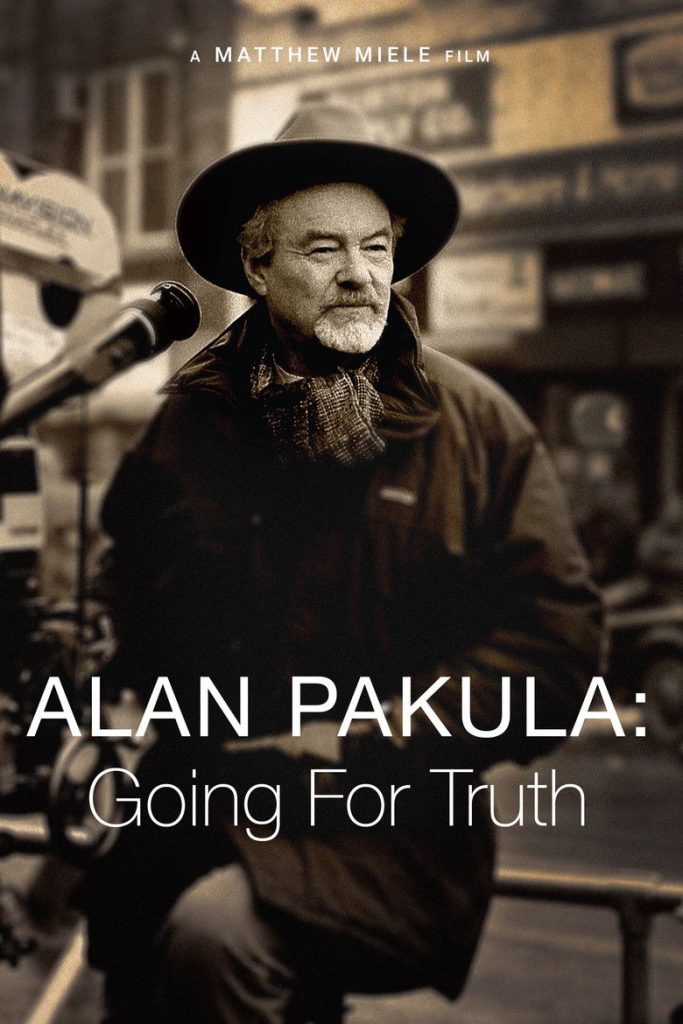
Alan Pakula: Going for Truth (2019)
Story overview
This documentary explores the life and career of filmmaker Alan J. Pakula, known for directing acclaimed films like 'All the President's Men' and 'Sophie's Choice.' It covers his professional achievements and personal life, featuring interviews with notable actors and colleagues.
Parent Guide
A documentary about a filmmaker's life and work, suitable for pre-teens and up with parental guidance for thematic discussions.
Content breakdown
Discusses violent themes from Pakula's films (e.g., political thrillers, war stories) but does not depict graphic violence. May include brief archival clips or descriptions.
Topics like political corruption, trauma, or historical events might be unsettling for sensitive viewers, but presented in a documentary style without intense visuals.
No strong or offensive language expected in this educational documentary.
No sexual content or nudity.
No depiction or discussion of substance use.
Emotional when discussing serious film themes or Pakula's personal life, but overall moderate and informative.
Parent tips
This documentary is suitable for older children and teens interested in film history. It discusses mature themes from Pakula's films, such as political corruption and trauma, but does so in an educational context. No explicit content is shown, but some topics may require explanation for younger viewers.
Parent chat guide
Parent follow-up questions
—
—
- What did you learn about how movies are made?
- Why do you think Alan Pakula wanted to tell stories about important events?
- How do Pakula's films reflect the social issues of their time?
- What qualities made Pakula an effective director, and how might they apply to other careers?
- How does this documentary change your perspective on the filmmaking process?
🎭 Story Kernel
The documentary posits that Pakula's work is a lifelong autopsy of the American psyche, driven by a profound anxiety about institutional corruption and the fragility of truth. It argues his 'paranoia trilogy' (Klute, The Parallax View, All the President's Men) wasn't about conspiracy for its own sake, but about the individual's terrifying isolation within vast, opaque systems. The film suggests Pakula himself was driven by a quiet, obsessive need to visually articulate this dread—not as a cynic, but as a moralist documenting the erosion of trust. His later films, like Sophie's Choice, reveal this same core: characters are ultimately driven by the search for truth within overwhelming historical and personal trauma.
🎬 Visual Aesthetics
The documentary mirrors Pakula's own aesthetic: a restrained, observational camera that favors medium shots and deliberate compositions, echoing his clinical, unflashy directorial style. Archival footage is presented with a muted, sometimes grainy palette, reflecting the 70s film stock of his seminal work. Cleverly, interviews are often framed with deep shadows or against stark backdrops, visually invoking the chiaroscuro and looming emptiness of frames from Klute or The Parallax View. This isn't just biography; it's a visual essay that adopts the subject's own cinematic language to tell his story.
🔍 Details & Easter Eggs
💡 Behind the Scenes
The documentary features rare archival audio of Pakula himself, extracted from old interview tapes, providing an intimate, first-person layer to the narrative. It includes insights from cinematographer Gordon Willis ('The Prince of Darkness'), who details the deliberate, shadow-drenched visual language created with Pakula. Notably, it reveals that Pakula's meticulous, research-heavy approach on All the President's Men involved the cast and crew extensively studying the actual Washington Post newsroom and FBI documents to achieve an unparalleled authenticity that defined the political thriller genre.
Where to watch
Choose region:
- HBO Max
- HBO Max Amazon Channel
- Philo
- Fandor Amazon Channel
- The Roku Channel
- Cineverse
- Mometu
- Tubi TV
- Amazon Video
- Apple TV Store
- Google Play Movies
- YouTube
Trailer
Trailer playback is unavailable in your region.