
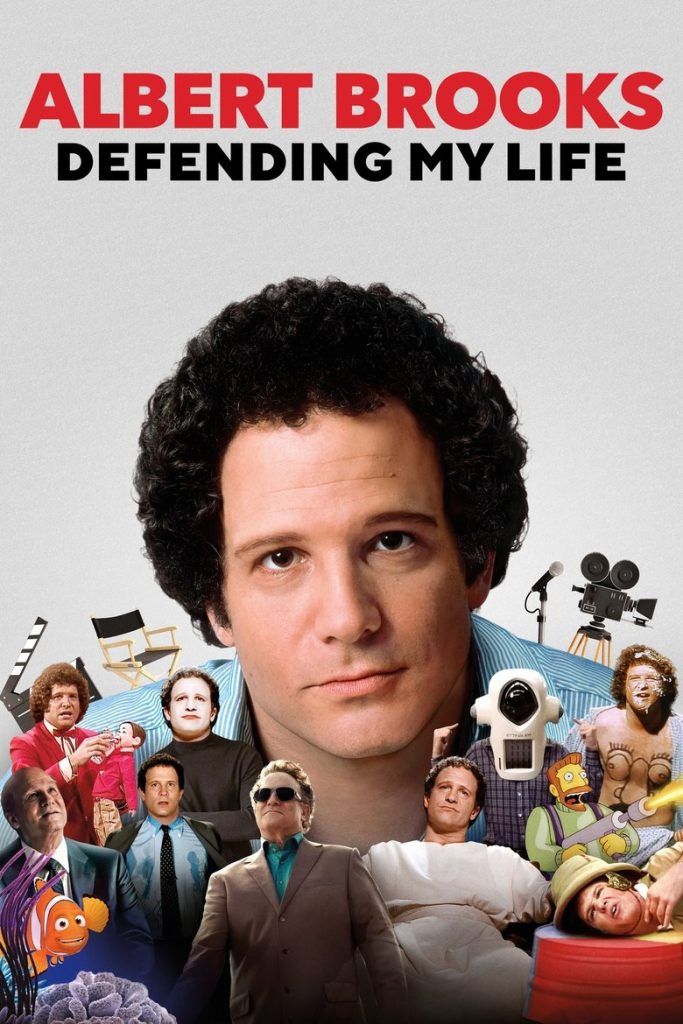
Albert Brooks: Defending My Life (2023)
Story overview
This documentary profiles comedian Albert Brooks through interviews with friends and colleagues, exploring his career and personal reflections in a conversational, retrospective style.
Parent Guide
A gentle documentary about a comedian's life and career, suitable for families with older children and teens interested in comedy or filmmaking.
Content breakdown
No violence or peril depicted. The film consists entirely of interviews, archival footage, and conversational segments.
Nothing scary or disturbing. The tone is reflective and conversational throughout.
May contain occasional mild profanity consistent with TV-14 rating. Language is conversational rather than aggressive.
No sexual content or nudity. Focus is on career and personal reflections.
No depiction or discussion of substance use.
Low emotional intensity. Some reflective moments about career and aging, but presented in a calm, conversational manner.
Parent tips
This documentary is suitable for most families with older children and teens. It focuses on career discussions and comedic insights without intense content. Parents should note the TV-14 rating indicates some mild language and adult themes may be present.
Parent chat guide
Parent follow-up questions
—
- What was your favorite funny moment in the movie?
- What job would you like to have when you grow up?
- Why do you think documentaries are made about people's lives?
- How does humor help people talk about serious topics?
- What makes someone a good friend over many years?
- How does this documentary balance personal reflection with career analysis?
- What insights did you gain about the creative process from Albert Brooks' approach?
- How do the interview segments with different comedians provide varied perspectives on Brooks' impact?
🎭 Story Kernel
The documentary is less a standard biopic and more a philosophical post-mortem of a living legend. At its heart, it explores the burden of being a 'comedian’s comedian'—a title that suggests immense respect but also a certain niche isolation. Through a career-spanning dialogue with Rob Reiner, the film examines Brooks’ relentless drive to subvert expectations, from his conceptual stand-up that mocked the very form of variety shows to his prophetic directorial efforts like Real Life. It expresses the vulnerability of an artist who used irony as a shield while seeking to capture the absurdity of the human condition. The narrative moves beyond mere nostalgia, positioning Brooks as a pioneer of meta-humor who anticipated the self-reflexive nature of modern media long before it became the cultural standard, ultimately revealing the profound anxiety behind his intellectual wit.
🎬 Visual Aesthetics
Director Rob Reiner opts for a visual strategy of intimate stasis punctuated by kinetic archival eruptions. The primary setting—a booth at Langer’s Deli—is shot with a warm, conversational glow that prioritizes the chemistry between the two lifelong friends over flashy cinematography. This grounded 'present-day' footage acts as a tether for the dizzying array of archival clips. The visual editing of these vintage segments is crucial; it doesn't just show the jokes but highlights the reactions of the 1970s audiences, capturing the palpable confusion and eventual delight Brooks provoked. The use of clips from his films, particularly the saturated, clinical look of Real Life and the purgatorial bureaucracy of Defending Your Life, serves as a visual shorthand for his thematic obsession with the artifice of existence and the persistent anxiety of being observed and judged.
🔍 Details & Easter Eggs
💡 Behind the Scenes
Rob Reiner and Albert Brooks share a friendship spanning over six decades, having met at Beverly Hills High School. This deep personal history allows for a level of candor rarely seen in celebrity documentaries. The film features an impressive roster of admirers, including Steven Spielberg, who famously cast Brooks in Twilight Zone: The Movie, and Larry David, who cites Brooks as a primary influence on his own brand of observational neurosis. Interestingly, the documentary discusses how Brooks’ birth name was Albert Einstein, a fact that necessitated his stage name and perhaps fueled his lifelong quest for a unique identity.
Where to watch
Choose region:
- HBO Max
- HBO Max Amazon Channel
Trailer
Trailer playback is unavailable in your region.