
Ali & Cavett: The Tale of the Tapes (2018)
Story overview
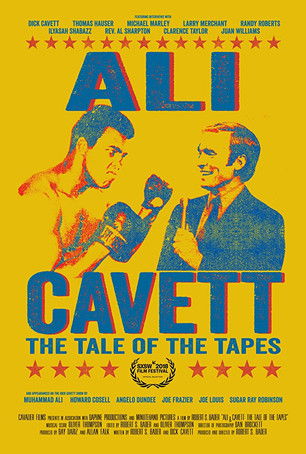
This documentary explores Muhammad Ali's life and legacy through his appearances on The Dick Cavett Show, featuring archival footage and new interviews with Dick Cavett, Rev. Al Sharpton, and Larry Merchant. It highlights Ali's charisma, social activism, and cultural impact in a historical context.
Parent Guide
A thoughtful documentary suitable for older children and teens, focusing on historical and social themes without explicit content.
Content breakdown
No violence depicted; includes historical references to racial tensions and Ali's boxing career without graphic footage.
Mild due to discussions of racism and social injustice, but presented in a documentary style without intense imagery.
Possible mild language in archival footage, but no strong profanity expected.
No sexual content or nudity.
No depiction or discussion of substance use.
Mild emotional intensity related to historical social issues and Ali's personal journey.
Parent tips
This documentary is suitable for children interested in history, sports, or civil rights. It contains discussions of racism and social issues, but no graphic content. Parents may want to watch with younger children to provide context.
Parent chat guide
Parent follow-up questions
—
- What did you learn about Muhammad Ali?
- Why do you think people liked watching him on TV?
- How did Ali's interviews help shape public opinion about civil rights?
- What can we learn from his confidence and principles?
- How does this documentary portray the intersection of sports, media, and activism?
- In what ways did Ali's appearances challenge societal norms of his time?
🎭 Story Kernel
This film isn't just about recovered interviews—it's about how media preservation became the ultimate act of resistance against historical erasure. The driving force isn't Ali or Cavett as individuals, but their symbiotic relationship with the television camera itself. Ali understood that his political voice needed the medium as much as the medium needed his charisma. The recovered tapes become evidence of a cultural battle fought not in rings but in broadcast studios, where Ali weaponized his wit against systemic racism while Cavett's platform provided the rare space where that weapon could be unsheathed. The documentary argues that without these preserved moments, the full dimension of Ali's cultural revolution would remain incomplete.
🎬 Visual Aesthetics
The visual language masterfully contrasts pristine digital transfers of the original interviews with gritty, textured shots of the physical tapes being handled. Close-ups on tape reels spinning and labels fading emphasize the fragility of historical memory. When showing Ali on Cavett's set, the framing often isolates him against simple backgrounds, making his physical presence and expressions the entire visual landscape—a deliberate choice that mirrors how he commanded attention. The color grading preserves the warm, slightly muted tones of 1970s broadcast television, creating nostalgic authenticity without romanticization. Archival footage is presented without modern enhancements, allowing the grain and imperfections to speak to the passage of time.
🔍 Details & Easter Eggs
💡 Behind the Scenes
The documentary's existence hinges on a 2018 discovery of 50+ hours of raw footage in a Connecticut storage unit that was scheduled for disposal. Director Robert S. Bader spent two years authenticating and restoring the materials, discovering that some tapes contained multiple interview sessions recorded over each other—a common cost-saving practice of the era that nearly erased history. Cavett, now in his 80s, provided contemporary reflections that were recorded in the same studio where the original interviews took place, creating a powerful spatial continuity. The restoration team used custom software to separate overlapping audio tracks from the multi-generation tapes.
Where to watch
Choose region:
- HBO Max
- HBO Max Amazon Channel
- Amazon Video
- Apple TV Store
- Google Play Movies
- YouTube
- Fandango At Home
Trailer
Trailer playback is unavailable in your region.