
Alice in Wonderland (2010)
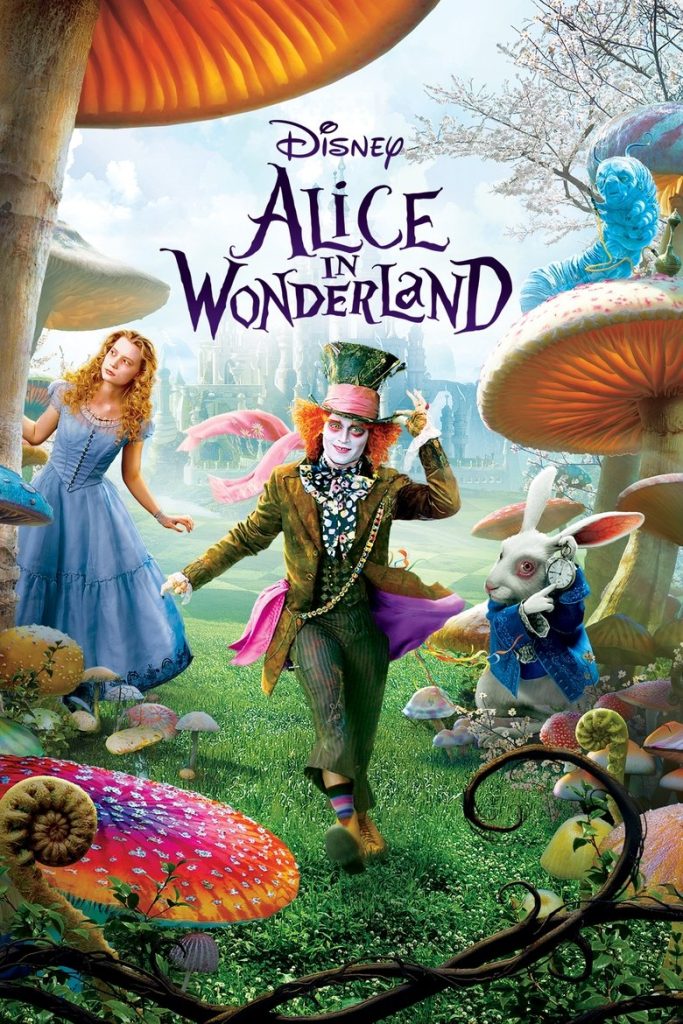
Story overview
In this 2010 Tim Burton adaptation, 19-year-old Alice returns to Wonderland, a fantastical realm she visited as a child. She must navigate this surreal world, filled with eccentric characters like the Mad Hatter and the Red Queen, to fulfill a prophecy and discover her true purpose, blending adventure with themes of self-discovery and courage.
Parent Guide
A visually striking fantasy adventure with darker elements typical of Tim Burton's style. While rated PG and suitable for most school-age children, it contains fantasy violence, some scary moments, and intense emotional scenes that may be too much for very young or sensitive viewers. Parental guidance recommended for children under 8.
Content breakdown
Fantasy violence includes sword fights, battles with creatures (like the Bandersnatch and Jabberwocky), and threats of execution ('Off with their heads!'). No graphic blood or gore, but action sequences are intense. Characters are in peril throughout, including a climactic battle.
Some frightening imagery: the Jabberwocky is a dragon-like monster, the Bandersnatch is a fierce beast, and the Red Queen has an enlarged head and angry outbursts. Dark, surreal visuals and eerie settings may unsettle young children. Decapitated heads (as decorations) and creepy characters like the Knave of Hearts add to the unsettling tone.
Very mild language, with occasional insults like 'stupid' or 'fool.' No strong profanity.
No sexual content or nudity. Alice wears modest Victorian-style clothing throughout.
Characters drink tea (nonalcoholic) in social settings, and there are references to 'drinking potions' in a fantasy context. No depiction of real-world drug or alcohol abuse.
Emotionally intense scenes include Alice's struggle with self-doubt, the Mad Hatter's sadness and madness, and the pressure of fulfilling a prophecy. Themes of loss, responsibility, and facing fears may resonate strongly with children. The film's overall tone has moments of darkness amid the adventure.
Parent tips
This film features Tim Burton's signature dark and whimsical visual style, which may be intense for very young viewers. Key elements to note: fantasy violence with sword fights and creature battles, some frightening imagery (like the Jabberwocky monster), and themes of rebellion against authority. The Red Queen's frequent shouts of 'Off with their heads!' and exaggerated anger could be disturbing. Best for children who can distinguish fantasy from reality and handle mild peril.
Parent chat guide
Parent follow-up questions
- Which character was your favorite? Why?
- What was the silliest thing you saw in Wonderland?
- How did Alice help her friends?
- Why do you think the Mad Hatter was so worried about Alice?
- What made the Red Queen a bad ruler?
- How did Alice change from beginning to end?
- What does the film say about growing up and making choices?
- How does Tim Burton's style make Wonderland different from other versions?
- Is rebellion against unfair authority ever justified?
- Analyze how the film uses fantasy to explore real-world themes of self-discovery.
- Discuss the portrayal of female power through Alice and the queens.
- How does the film balance dark elements with family-friendly adventure?
🎭 Story Kernel
Tim Burton's 2010 film is less about a child's fantasy and more about a young woman's crisis of identity and agency. Nineteen-year-old Alice returns to Wonderland not as a curious visitor but as a reluctant warrior, pressured by Victorian society's expectations of marriage and propriety. The narrative explores her struggle against predetermined roles—both in her world and in Wonderland's prophecy. The Red Queen's tyranny represents unchecked id and childish tantrums given absolute power, while the White Queen's passive manipulation reveals that 'good' rulers can be just as calculating. Alice's ultimate refusal of both courts and her decision to become a merchant explorer represents a third path: rejecting binary systems entirely.
🎬 Visual Aesthetics
Burton's visual language creates a stark dichotomy between the muted, desaturated Victorian world and Wonderland's hyper-saturated, almost nauseating color palette. The Red Queen's domain burns with fiery oranges and blood reds, while the White Queen's realm glows with icy blues and sterile whites—both extremes feel equally oppressive. Camera work emphasizes Alice's disorientation through Dutch angles and sudden shifts in scale. The CGI creatures maintain a grotesque, slightly off-putting quality that preserves Carroll's original unsettling tone rather than sanitizing it for children. Notice how Alice's clothing gradually transforms from restrictive Victorian blues to armored battle gear in vibrant golds and reds, visually charting her internal revolution.
🔍 Details & Easter Eggs
💡 Behind the Scenes
Mia Wasikowska trained for three months in sword fighting, archery, and horseback riding for her role. The film's Wonderland was almost entirely digital, with actors performing against green screens—Helena Bonham Carter's oversized head was achieved through a combination of prosthetic makeup and digital enlargement. Johnny Depp based the Mad Hatter's fluctuating accents on the mercury poisoning historically suffered by hat makers, which caused neurological symptoms. The chessboard motif throughout was a direct homage to Lewis Carroll's sequel 'Through the Looking-Glass,' where the entire story follows chess movement rules.
Where to watch
Choose region:
- Disney Plus
- Amazon Video
- Apple TV Store
- Google Play Movies
- YouTube
- Fandango At Home
Trailer
Trailer playback is unavailable in your region.