
Alice Through the Looking Glass (2016)
Story overview
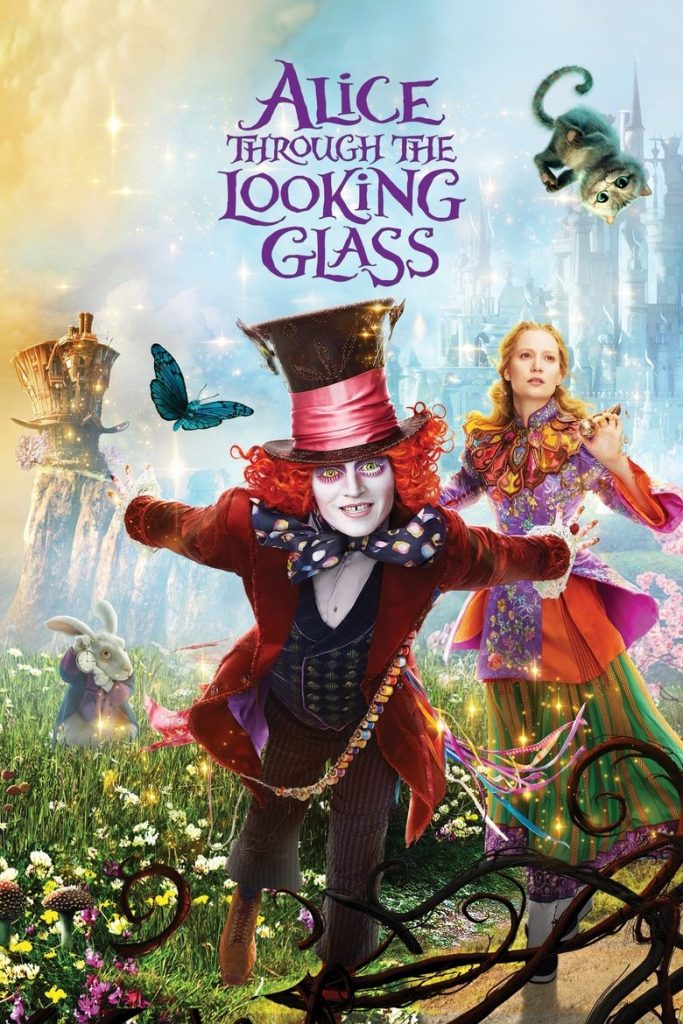
Alice Through the Looking Glass (2016) is a fantasy adventure film directed by James Bobin, starring Mia Wasikowska, Johnny Depp, Anne Hathaway, Helena Bonham Carter, and Sacha Baron Cohen. In this sequel to Alice in Wonderland, Alice Kingsleigh returns to the magical world of Underland to help her friend, the Mad Hatter, who is gravely ill. To save him, she must travel through time using a magical device called the Chronosphere, facing challenges and learning about the past of Underland's inhabitants. The film blends whimsical fantasy with themes of friendship, courage, and the consequences of time, set in a visually rich and imaginative world.
Parent Guide
Alice Through the Looking Glass is a family-friendly fantasy adventure with mild peril and positive themes, suitable for children aged 8 and older. It offers imaginative storytelling and valuable lessons, though younger viewers might find some scenes intense.
Content breakdown
Includes fantasy-based peril, such as chases, confrontations with villainous characters (e.g., Time), and magical threats. No graphic violence or injuries are shown; action is stylized and non-realistic.
Features some mildly scary elements, like dark settings, intense characters (e.g., the Red Queen), and moments of urgency. These are brief and balanced with humor and fantasy, unlikely to cause lasting fear.
No profanity or offensive language. Dialogue is clean and appropriate for all ages, with mild insults or playful banter typical of fantasy adventures.
No sexual content, nudity, or romantic scenes. The focus is on adventure and friendship, with characters dressed modestly in fantasy attire.
No depiction of alcohol, drugs, or smoking. The film maintains a wholesome, family-oriented atmosphere throughout.
Moderate emotional intensity due to themes of loss (the Mad Hatter's illness), urgency in time-travel missions, and character conflicts. It may evoke empathy or concern but is resolved positively, suitable for most children with parental guidance.
Parent tips
This PG-rated film is suitable for most children but includes some elements parents should note. It features mild peril and fantasy violence, such as chases and confrontations with villainous characters, though no graphic injuries are shown. There are a few mildly scary moments, like dark settings and intense characters, but nothing overly frightening. Language is very mild, with no profanity. There is no sexual content or nudity, and substance use is absent. The emotional intensity is moderate, with themes of loss and urgency that might be intense for very young viewers. Overall, it's a family-friendly adventure best for ages 8 and up, with positive messages about bravery and loyalty.
Parent chat guide
Parent follow-up questions
- What was your favorite character in the movie?
- Can you draw a picture of something magical from Underland?
- How did Alice help her friends?
- Why did Alice need to travel through time?
- What lesson did Alice learn about the past?
- How did the Mad Hatter feel, and how did Alice cheer him up?
- What does the Chronosphere symbolize in the story?
- How does the movie show the importance of friendship?
- What would you do if you could travel through time like Alice?
- How does the film explore themes of time and consequence?
- What do you think about the portrayal of villainy in characters like Time?
- How does Alice's character development reflect real-world challenges?
🎭 Story Kernel
At its core, 'Alice Through the Looking Glass' is a surprisingly poignant exploration of grief, regret, and the impossibility of altering the past. While framed as a rescue mission for the Mad Hatter, the film's true engine is Alice's desperate attempt to rewrite personal history, mirroring her own unresolved grief for her late father. The narrative cleverly uses time travel not as a tool for correction, but as a mechanism for understanding. Alice's journey teaches her—and the audience—that healing comes from accepting loss, not erasing it. The film argues that our past, with all its pain, is what forges our identity, a lesson personified in Time himself, who is not a villain but a guardian of natural order.
🎬 Visual Aesthetics
The film's visual language is a jarring but intentional clash. The vibrant, candy-colored chaos of Underland is contrasted with the cold, metallic, and mechanistic Grand Clock, the heart of Time's domain. This aesthetic division visually reinforces the theme: the organic, emotional world of memory versus the rigid, unyielding laws of chronology. Director James Bobin employs sweeping, fluid camera movements during time-travel sequences, creating a dizzying, river-like flow of moments. The action is stylized and physics-defying, leaning into cartoonish logic that prioritizes visual wit and symbolic weight over realism, keeping the film firmly anchored in its fantastical roots.
🔍 Details & Easter Eggs
💡 Behind the Scenes
Sacha Baron Cohen's portrayal of Time was largely improvised, with the actor bringing his own comedic mannerisms and cadence to the role, which the writers then incorporated into the script. The massive, practical Grand Clock set was built at Pinewood Studios and featured real working gears and mechanisms that were later enhanced with CGI. Helena Bonham Carter had to undergo nearly four hours of makeup daily to achieve the Iracebeth's oversized prosthetic head, a process she reportedly found enjoyable due to the collaborative effort with the makeup artists.
Where to watch
Choose region:
- Disney Plus
- Amazon Video
- Apple TV Store
- Google Play Movies
- YouTube
- Fandango At Home
Trailer
Trailer playback is unavailable in your region.