
Alien Sharks: Strange New Worlds (2023)
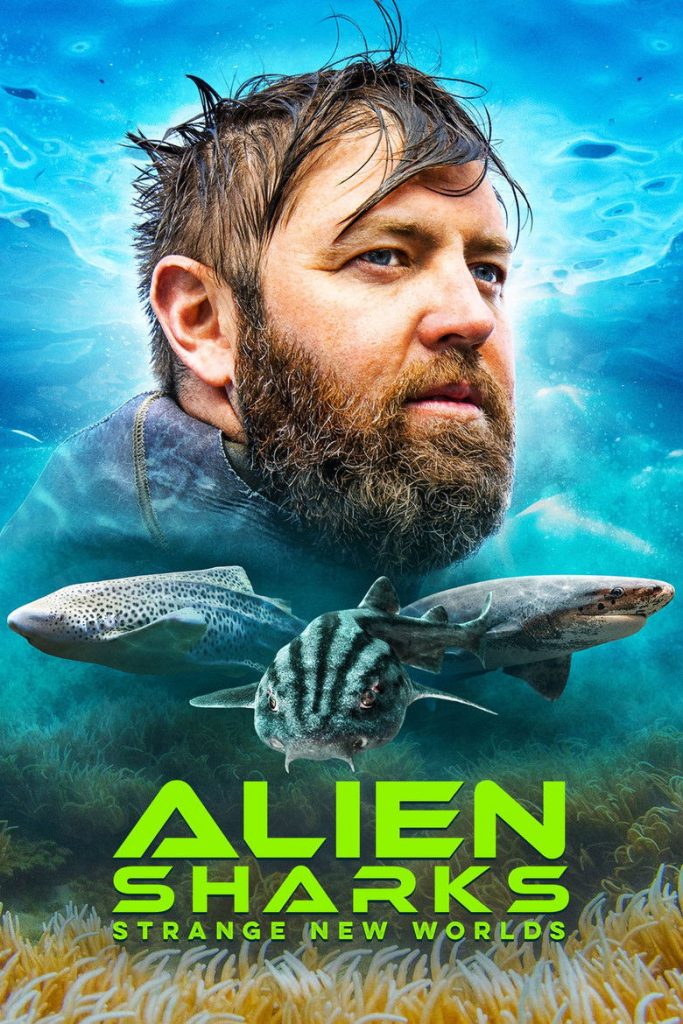
Story overview
This 2023 documentary follows adventurer Forrest Galante as he explores remote kelp forests and deep ocean areas around South Africa's coast, investigating unique shark species in their natural habitats. The film showcases marine biology research through underwater footage of sharks and their ecosystems, presented in an educational format.
Parent Guide
Educational documentary about shark research with no concerning content beyond natural predator footage. Suitable for elementary school children with interest in marine life.
Content breakdown
Sharks are shown hunting fish in natural predator-prey interactions. No graphic violence or human danger depicted.
Some close-up shark footage might be intense for very young children. Underwater scenes in dark ocean depths could be slightly unsettling.
No offensive language. Scientific terminology appropriate for educational content.
No sexual content or nudity.
No substance use depicted.
Mild excitement during exploration scenes. Educational tone throughout.
Parent tips
This documentary is suitable for most children interested in marine life, but younger viewers might find some shark footage intense. Consider watching together to discuss ocean conservation. No concerning content beyond natural predator behavior.
Parent chat guide
Parent follow-up questions
- What colors did you see in the ocean?
- Did the sharks look friendly or scary?
- What other animals live in the sea?
- Why do scientists study sharks?
- How are kelp forests important to ocean life?
- What makes these sharks different from others?
- What adaptations help sharks survive in deep water?
- How does underwater exploration technology work?
- Why is South Africa's coast special for shark research?
- What conservation challenges do these shark species face?
- How does this research contribute to marine biology?
- What ethical considerations exist in wildlife documentary filmmaking?
🎭 Story Kernel
The documentary transcends the typical predator-centric narrative of Shark Week, shifting the focus toward evolutionary biology and the preservation of biodiversity. By exploring the rugged coastlines of South Africa, it frames these ancient, bizarre-looking elasmobranchs as 'aliens' not because they are hostile, but because they represent a lineage of life that has remained largely unchanged for millions of years. The film expresses a profound sense of urgency regarding conservation, illustrating how these 'strange new worlds' are fragile ecosystems under threat. It emphasizes that the true mystery of our planet lies in the depths we have yet to fully map, positioning the sharks as biological time capsules that offer a glimpse into Earth’s prehistoric past and the resilience of life in extreme environments.
🎬 Visual Aesthetics
The cinematography utilizes high-definition underwater photography to capture the ethereal, often murky environments where these rare species thrive. There is a deliberate use of contrast between the vibrant, sunlit surface and the oppressive, monochromatic shadows of the deep-sea habitats. The visual language emphasizes the 'alien' aesthetic through extreme close-ups of specialized physiological features, such as the glowing eyes of deep-water species or the prehistoric gill structures of the Sevengill shark. Symbolically, the camera often lingers on the vastness of the kelp forests and rocky reefs, portraying the ocean as a sprawling, untamed frontier. The lighting is particularly effective in highlighting the bioluminescence and unique textures of the sharks' skin, reinforcing the otherworldly theme suggested by the title and creating a sense of wonder.
🔍 Details & Easter Eggs
💡 Behind the Scenes
Produced for Discovery Channel’s 35th anniversary of Shark Week in 2023, the documentary features renowned wildlife biologist and conservationist Forrest Galante. Galante is widely known for his 'Extinct or Alive' series, and his involvement brings a specific focus on species discovery and scientific data collection rather than sensationalized shark attacks. Director Jason Strougo, a veteran of natural history and adventure programming, utilized advanced diving technology to reach depths rarely seen in mainstream television. The production faced significant logistical challenges due to the volatile weather conditions off the tip of South Africa, where the Atlantic and Indian Oceans meet.
Where to watch
Choose region:
- HBO Max
- Discovery +