
All About Eve (1950)
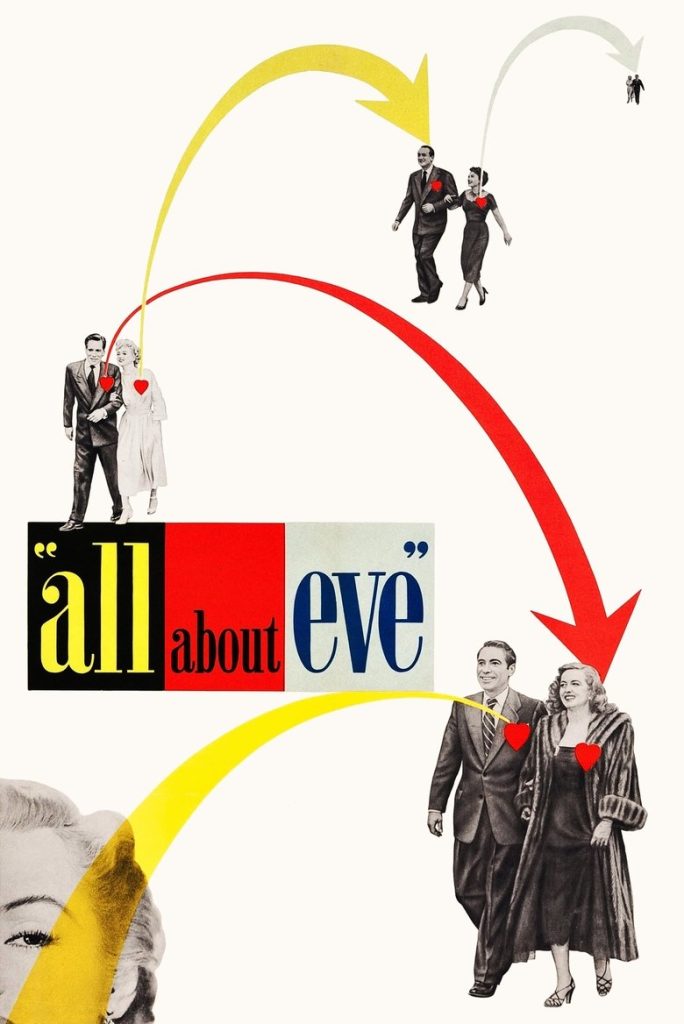
Story overview
All About Eve is a classic 1950 drama about ambition and deception in the theater world. The story follows a young woman who manipulates her way into the life and career of an established actress, creating tension and conflict among those around them. The film explores themes of loyalty, betrayal, and the price of success through sharp dialogue and complex character dynamics.
Parent Guide
A sophisticated drama about ambition and manipulation in theater circles, best suited for mature pre-teens and teenagers who can understand complex character motivations.
Content breakdown
No physical violence or perilous situations; conflict is entirely verbal and psychological.
Some psychological manipulation and betrayal might be unsettling for sensitive viewers.
Period-appropriate sophisticated dialogue with some cynical remarks and mild insults.
Implied romantic relationships and suggestive dialogue, but no explicit content or nudity.
Frequent social drinking of alcohol by adult characters in party and theater settings.
Strong emotional themes of betrayal, ambition, and jealousy among complex adult characters.
Parent tips
This film contains mature themes about ambition, manipulation, and betrayal that may be challenging for younger viewers. The dialogue-driven drama features complex adult relationships and subtle power struggles rather than action or violence. Parents should be aware that the film portrays cynical attitudes toward fame and success that might require discussion with older children.
Parent chat guide
Parent follow-up questions
- What did you think about the people in the movie?
- Did you see anyone being mean to someone else?
- What do you think makes a good friend?
- How did the movie make you feel?
- What was your favorite part of the story?
- Why do you think the young woman wanted to be like the famous actress?
- How did people use their words to get what they wanted?
- What does it mean to be loyal to your friends?
- Have you ever seen someone pretend to be something they're not?
- What lessons could the characters learn from their experiences?
- How does ambition drive the characters' actions throughout the film?
- What are the different ways people can manipulate others without using physical force?
- How do the characters balance their personal relationships with their career goals?
- What makes someone a good friend versus someone who just uses others?
- How does the film show the difference between genuine talent and calculated ambition?
- How does the film critique the entertainment industry and celebrity culture?
- What psychological motivations drive the main character's manipulative behavior?
- How do power dynamics shift between characters throughout the story?
- What commentary does the film make about aging, particularly for women in the arts?
- How do the characters' moral compromises reflect broader themes about success and integrity?
🎭 Story Kernel
The film is a chilling autopsy of artistic parasitism and the transactional nature of fame. It's not just about Eve Harrington's ruthless climb, but about how Margo Channing's world—built on genuine talent but frayed by insecurity and age—creates the perfect host. Every character trades something: loyalty for proximity, mentorship for adoration, friendship for advancement. The real horror isn't Eve's deception, but the realization that the theater, a temple of artifice, has no immunity to the very human frailties it dramatizes. The cycle concludes not with justice, but with a chilling inheritance, as a new 'Eve' appears for the now-successful one.
🎬 Visual Aesthetics
Mankiewicz uses a deceptively elegant, stage-like composition. The camera often feels like a static audience member in drawing rooms and backstage areas, framing characters in doorways and mirrors to emphasize performance and duality. The black-and-white cinematography isn't gritty; it's sharp and glossy, reflecting the polished surfaces of high society that hide moral decay. Key moments use stark lighting—like the harsh overhead light in Margo's bedroom during her breakdown—to strip characters bare. The famous party scene uses deep focus and fluid tracking to orchestrate the social maneuvering like a play within a play.
🔍 Details & Easter Eggs
💡 Behind the Scenes
Bette Davis and Anne Baxter famously both campaigned for the Best Actress Oscar for their roles, potentially splitting the vote and allowing Judy Holliday to win for 'Born Yesterday.' Marilyn Monroe has a small but memorable early role as Miss Caswell, a naive aspiring actress, with the line 'I don't want to make trouble. All I want is a drink.' The screenplay, adapted from a short story, holds the record for the most female acting Oscar nominations (4) for a single film. Much of the film was shot on soundstages, with the theater atmosphere created through meticulous set design and lighting.
Where to watch
Choose region:
- BroadwayHD
- Broadway HD Amazon Channel
- Amazon Video
- Apple TV
- Google Play Movies
- YouTube
- Fandango At Home
Trailer
Trailer playback is unavailable in your region.