
All Dogs Go to Heaven (1989)
Story overview
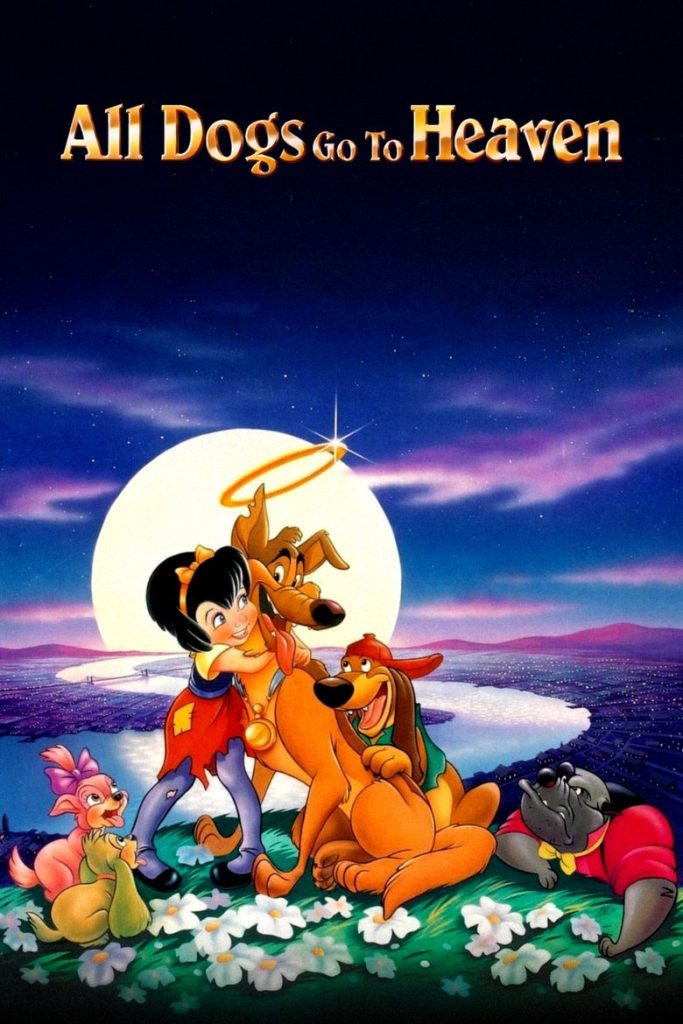
All Dogs Go to Heaven is a 1989 animated fantasy film about Charlie, a charismatic but morally flawed dog who runs a casino. After being murdered by his rival Carface, Charlie finds himself in Heaven due to the rule that all dogs go there. Determined to seek revenge, he tricks his way back to Earth, knowing this act could condemn him to Hell. Back in the living world, he reunites with his friend Itchy and discovers an orphan girl named Anne-Marie who can communicate with animals. Charlie uses her ability to gain insider information on dog races to fund his revenge plot, but he is tormented by nightmares of his potential damnation. The story explores themes of redemption, friendship, and morality as Charlie grapples with his selfish desires and the chance to prove himself worthy of Heaven again.
Parent Guide
A thought-provoking animated film with dark themes wrapped in a family-friendly package. While rated G, it contains mature content that may require parental guidance for younger viewers.
Content breakdown
Charlie is murdered off-screen (implied by drowning), and there are scenes of peril including a car chase, a collapsing building, and threats from villainous characters. No graphic violence is shown, but the themes of death and revenge are present.
Some scenes may be frightening for sensitive children: Charlie has nightmares of Hell with fiery imagery and demonic figures, Carface is an intimidating villain, and there are tense moments involving the orphan girl in danger. The overall tone is more dramatic than truly scary.
No offensive language. The dialogue is clean and appropriate for all ages.
No sexual content or nudity. The film focuses on platonic relationships and adventure.
Background elements include gambling (dog races and a casino) and brief, non-glamorized depictions of characters drinking in a bar setting. Not central to the plot.
Emotional themes include death, abandonment (Anne-Marie is an orphan), guilt, and redemption. Some scenes are sad or tense, but balanced with humor and uplifting moments. May provoke thoughtful discussions about morality.
Parent tips
This film deals with mature themes like death, revenge, and moral consequences in an animated format. The G rating makes it accessible, but parents should be prepared to discuss: 1) The portrayal of murder and afterlife concepts (Heaven/Hell) which may confuse or frighten young children. 2) Charlie's morally ambiguous actions—he lies, cheats at gambling, and seeks revenge, though he ultimately seeks redemption. 3) Emotional scenes involving an orphan girl and perilous situations. 4) Mild scary elements like nightmares and villainous characters. It's best suited for children ages 8+ who can understand the story's deeper messages about forgiveness and doing the right thing.
Parent chat guide
Parent follow-up questions
—
- Was Charlie a good dog or a bad dog at the beginning? Why?
- How did Anne-Marie help Charlie?
- What made Charlie decide to be better?
- What are the consequences of seeking revenge instead of forgiveness?
- How does the movie show that everyone deserves a second chance?
- What does 'redemption' mean in this story?
- Analyze Charlie's character arc—how does he evolve from selfish to selfless?
- Discuss the moral ambiguity: is it ever okay to do bad things for a good reason?
- How does the film use fantasy elements to explore real-life ethical dilemmas?
🎭 Story Kernel
At its core, 'All Dogs Go to Heaven' is a surprisingly dark exploration of conditional grace and the transactional nature of redemption. Charlie B. Barkin, a charismatic but deeply flawed anti-hero, doesn't seek goodness for its own sake; he's driven by a primal fear of eternal damnation and a self-serving desire to reclaim his earthly comforts. His journey from the afterlife back to the mortal world is less a spiritual awakening and more a high-stakes hustle, where he manipulates a psychic orphan, Anne-Marie, to regain his casino empire. The film's true conflict isn't between good and evil, but between Charlie's ingrained, selfish instincts and the faint, inconvenient tug of genuine affection. His ultimate sacrifice feels earned not because he becomes a saint, but because he finally values something—Anne-Marie's safety—more than his own self-preservation, suggesting that redemption is a messy, reluctant choice, not a divine entitlement.
🎬 Visual Aesthetics
The film's visual language is a jarring yet effective blend of lush, romanticized New Orleans ambiance and grotesque, expressionistic horror. Don Bluth's signature detailed animation creates a vibrant, almost tactile world of rain-slicked streets and glowing casinos, but this beauty is constantly undercut by sinister imagery. The color palette sharply divides realms: Earth is saturated with warm golds and deep purples, while Heaven is a blinding, sterile white, and Hell (or its canine equivalent) is a chaotic, fiery pit of reds and oranges. The camera work in dream sequences and Charlie's visions employs dramatic Dutch angles and rapid zooms, visually externalizing his psychological torment. Symbolism is blunt but powerful—the pocket watch representing his borrowed time, the ever-present water reflecting both the fluidity of his fate and the looming threat of his demise.
🔍 Details & Easter Eggs
💡 Behind the Scenes
The film's development was notoriously troubled. Director Don Bluth and his team, fresh from the success of 'An American Tail', faced intense pressure and budget constraints from the studio, Goldcrest Films, which collapsed during production. This chaos is reflected in the film's tonal whiplash. The voice cast is a fascinating time capsule: Burt Reynolds brings a uniquely smarmy charm to Charlie, while Dom DeLuise ad-libbed much of Itchy's dialogue. The song 'You Can't Keep a Good Dog Down' was originally written for a completely different, abandoned project. A direct-to-video sequel was released in 1996, but the original remains a cult classic for its unflinching blend of musical whimsy and psychological horror.
Where to watch
Choose region:
- fuboTV
- MGM+ Amazon Channel
- Peacock Premium
- MGM Plus Roku Premium Channel
- MGM Plus
- Philo
- Peacock Premium Plus
- The Roku Channel
- Tubi TV
- Amazon Video
- Apple TV Store
- Google Play Movies
- YouTube
- Fandango At Home
Trailer
Trailer playback is unavailable in your region.