
All Quiet on the Western Front (2022)
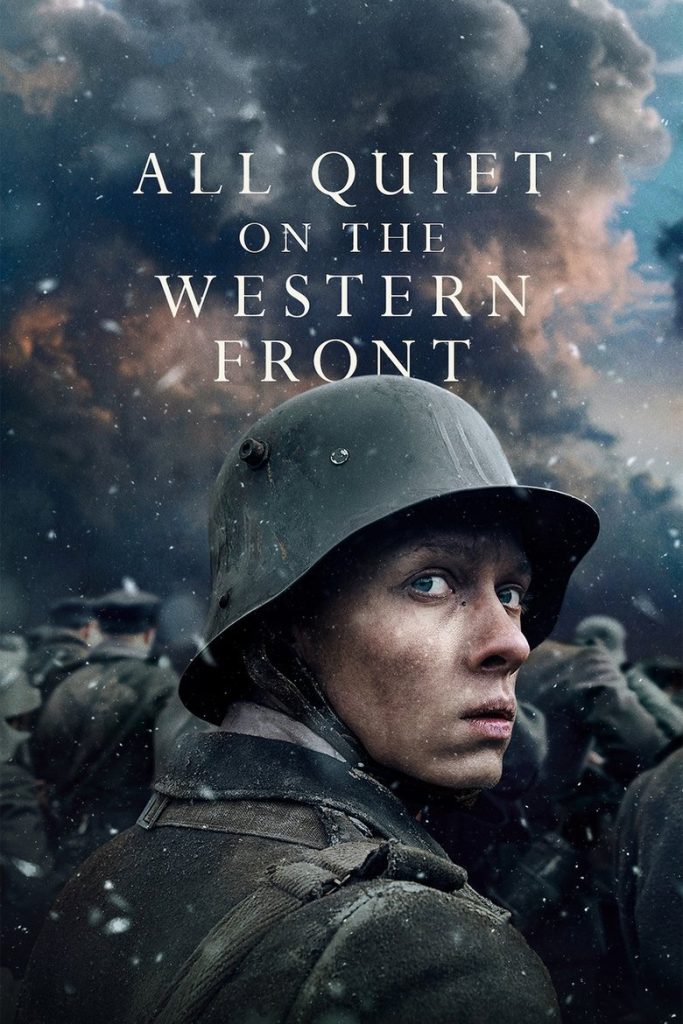
Story overview
All Quiet on the Western Front is a 2022 war drama that follows young German soldiers during World War I. The film depicts their initial enthusiasm turning to horror as they experience the brutal realities of trench warfare. It explores themes of patriotism, disillusionment, and the human cost of conflict through the soldiers' perspectives.
Parent Guide
An intense, graphic war drama with strong violence and mature themes about the horrors of combat.
Content breakdown
Frequent, graphic battlefield violence including explosions, gunfire, stabbings, and dismemberment. Realistic depictions of trench warfare with mud, blood, and corpses.
Intense scenes of soldiers in peril, psychological trauma, and the grim reality of war. Disturbing imagery of injury and death throughout.
Some wartime profanity and soldiers' dialogue typical of combat situations.
No sexual content or nudity present in this war-focused narrative.
Brief scenes may show soldiers smoking or drinking in limited contexts.
High emotional intensity throughout with themes of fear, loss, despair, and the psychological toll of warfare.
Parent tips
This R-rated war film contains intense and graphic depictions of battlefield violence that are not suitable for younger viewers. Parents should be aware that the movie portrays the psychological trauma and physical suffering of soldiers in unflinching detail. Consider watching it yourself first to determine if it's appropriate for your teenager, as it may provoke strong emotional reactions and discussions about war's consequences.
Parent chat guide
Parent follow-up questions
- What do soldiers do?
- Why are people fighting?
- What is a uniform?
- How do you think the soldiers felt leaving home?
- What does it mean to be brave?
- Why do countries have armies?
- How does war change people's perspectives?
- What responsibilities do soldiers have to each other?
- How do you think families at home felt during the war?
- How does the film challenge romantic notions of war?
- What ethical dilemmas do soldiers face in combat situations?
- How does propaganda influence public perception of conflict?
- What are the long-term psychological effects of warfare?
- How might this historical perspective inform current global conflicts?
🎭 Story Kernel
The film's core isn't about heroism but about the systematic dehumanization and consumption of youth by the state. The driving force isn't patriotism but the primal, desperate will to survive another hour in a system designed to erase individuality. Paul Bäumer's journey from eager recruit to hollowed-out veteran illustrates how war replaces identity with function—soldiers become interchangeable parts in a failing machine. The central tension lies in the conflict between the boys' remembered humanity and the trench's demand for animalistic survival, culminating in a finale where peace arrives not as salvation, but as a cruel, meaningless punctuation mark on a completed atrocity.
🎬 Visual Aesthetics
Director Edward Berger employs a stark, desaturated color palette dominated by mud, steel, and blood, visually grinding away any romanticism. The camera often feels like another soldier in the trench—claustrophobic, shaky, and trapped. Wide shots of No Man's Land emphasize terrifying scale and vulnerability, while intimate close-ups on faces reveal the erosion of spirit. The film's most powerful visual motif is the recurring image of the uniform—a symbol of erased identity. From the initial, ill-fitting issuance to the final, harvested recycling, the uniform visually narrates the cycle of consumption, where boys are processed into resources and then back into matériel.
🔍 Details & Easter Eggs
💡 Behind the Scenes
To achieve authenticity, the production used real historical locations in the Czech Republic that still bore scars from World War I trench systems. Lead actor Felix Kammerer, in his film debut, underwent intensive military training with real drill instructors to physically embody the transformation. The iconic 'dead man's uniform' subplot, a central visual metaphor, is a significant expansion from the source novel, conceived by the filmmakers to create a tangible, repeating symbol of the war machine's cold logistics.
Where to watch
Choose region:
- Netflix
- Netflix Standard with Ads
Trailer
Trailer playback is unavailable in your region.