
Amanda Knox (2016)
Story overview
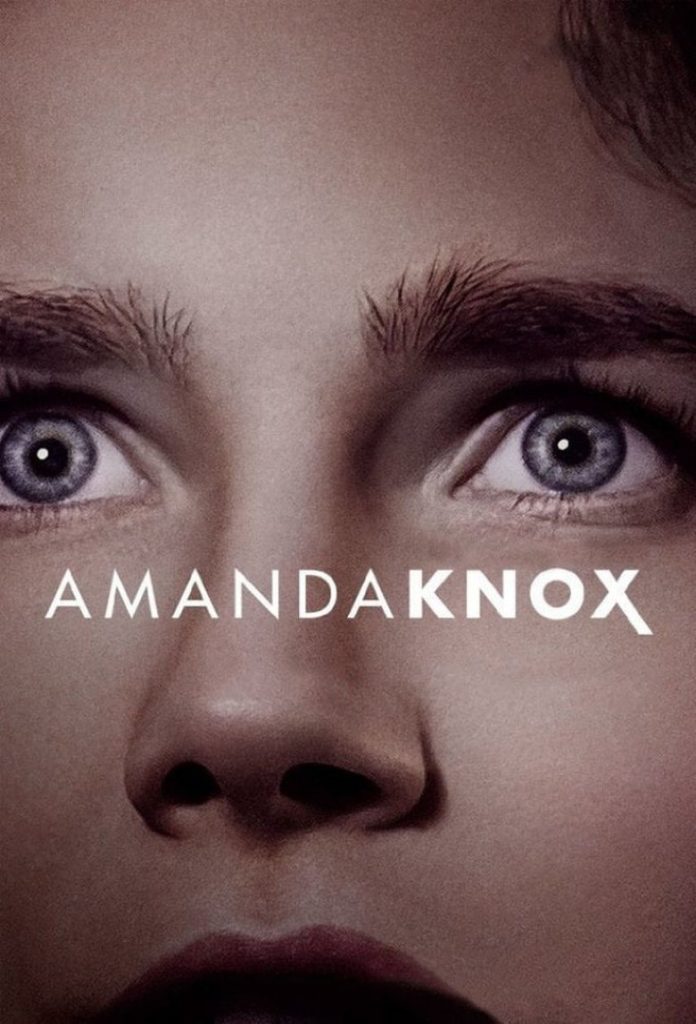
This documentary examines the high-profile case of Amanda Knox, an American student accused and later acquitted of murdering her roommate in Italy in 2007. It explores the legal proceedings, media frenzy, and personal impact through interviews and archival footage.
Parent Guide
A documentary about a real murder case and trial, with themes of injustice and media sensationalism. Not suitable for children; recommended for mature teens.
Content breakdown
Discussions and descriptions of a violent murder (stabbing), crime scene details, and legal proceedings involving violence. No graphic visuals, but the subject matter is intense.
Themes of death, wrongful accusation, imprisonment, and psychological distress. May be unsettling due to the real-life nature of the crime.
Occasional mild language related to the case or emotional reactions. No strong profanity noted.
No sexual content or nudity present.
No depiction or discussion of substance use.
High emotional intensity due to the serious subject matter, including fear, anxiety, and the impact of legal battles on individuals.
Parent tips
This documentary deals with real-life crime, legal injustice, and intense media scrutiny. It may be disturbing for younger viewers due to discussions of violence and death. Best suited for mature teens who can process complex themes.
Parent chat guide
Parent follow-up questions
—
—
—
- What did you think about how the media portrayed Amanda Knox?
- How do you think the legal system handled this case?
- What would you do if you were wrongly accused of something serious?
🎭 Story Kernel
The film's core theme is the creation and consumption of narrative itself. It's not really about 'what happened' in the Meredith Kercher case, but about how competing stories—the 'Foxy Knoxy' femme fatale, the bumbling Italian police, the salacious media—were manufactured, weaponized, and consumed by the public. The characters are driven by the primal need to control the story: Amanda Knox fights to reclaim her identity from a media caricature, the prosecutors fight to validate their initial theory, and the media fights for the most sensational version. The real trial happens not in the courtroom, but in the global court of public opinion, where evidence is secondary to plot.
🎬 Visual Aesthetics
The visual language is deliberately bifurcated. Archival footage—grainy, chaotic, voyeuristic—represents the media's narrative: invasive close-ups of a crying Knox, lurid crime scene shots. In contrast, the present-day interviews are stark, clean, and controlled, often in sterile rooms or against plain backgrounds. This contrast visually argues that the 'truth' is found in these calm, reflective spaces, not the frenetic noise of the news cycle. The color palette subtly shifts from the warm, almost romantic tones of Perugia in the archival memories to the cold, clinical blues and greys of the legal and media machinery that engulfed the case.
🔍 Details & Easter Eggs
💡 Behind the Scenes
Directors Rod Blackhurst and Brian McGinn faced significant challenges obtaining clearances for the vast amount of incendiary media footage, requiring meticulous legal review. Notably, the documentary team secured the participation of both Amanda Knox and her former prosecutor, Giuliano Mignini, creating a rare dialectic. Much of the present-day interview with Knox was shot in her hometown of Seattle, emphasizing her displacement from the Italian saga. The filmmakers have stated that the original working title was 'The Last Word,' highlighting their focus on the battle over narrative control.
Where to watch
Choose region:
- Netflix
- Netflix Standard with Ads
Trailer
Trailer playback is unavailable in your region.