
Amélie (2001)
Story overview
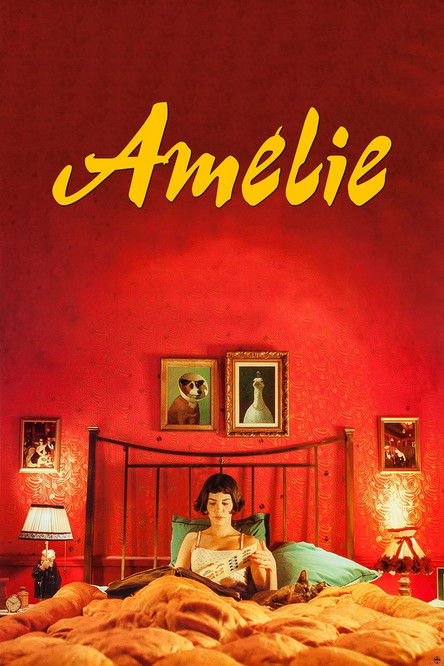
Amélie is a whimsical French film about a shy young woman in Paris who discovers joy in secretly helping people around her. Through small acts of kindness, she becomes a matchmaker and guardian angel to her neighbors while struggling with her own loneliness. The story follows her journey as she navigates romance and learns to connect with others, all presented with imaginative visual storytelling.
Parent Guide
A charming but mature French romance with sexual content and themes best suited for teens.
Content breakdown
No physical violence, but some tense moments and emotional conflicts.
Some surreal imagery and themes of loneliness that might unsettle sensitive viewers.
Occasional strong language and sexual references in French with English subtitles.
Brief sexual situations, discussions of sexuality, and some sensual content.
Social drinking in café settings, typical of French culture.
Themes of loneliness, connection, and romantic longing presented with emotional depth.
Parent tips
Amélie is rated R primarily for sexual content and some language, making it more suitable for mature teens than younger children. The film contains brief sexual situations and discussions, occasional strong language, and some mature themes about relationships and isolation. While visually charming and generally positive in tone, parents should preview the content to determine appropriateness for their individual child's maturity level.
Parent chat guide
Parent follow-up questions
- What was your favorite colorful scene in the movie?
- How did Amélie help people feel happy?
- What would you do to help someone like Amélie did?
- Why do you think Amélie was shy at first?
- What are some ways people can help others without being noticed?
- How did the movie show Paris as a special place?
- What did Amélie learn about herself through helping others?
- How does the film's visual style affect the storytelling?
- What challenges do people face when trying to connect with others?
- How does the film explore themes of loneliness versus connection?
- What commentary does the movie make about modern urban life?
- How do cultural differences affect how we interpret the characters' actions?
🎭 Story Kernel
At its core, 'Amélie' explores the human need for connection in an increasingly isolated modern world. The film isn't about romance but about agency—Amélie's journey from passive observer to active participant in her own life. Her elaborate schemes to help others reveal her own deep loneliness and fear of intimacy. The movie suggests that true happiness comes not from grand gestures but from the courage to be vulnerable with another person. Every character represents a different facet of urban loneliness, from the hypochondriac neighbor to the rejected concierge, all finding connection through Amélie's interventions.
🎬 Visual Aesthetics
Jean-Pierre Jeunet creates a hyper-saturated Paris that feels like a living storybook. The dominant green and red color palette evokes both nostalgia and vitality, while the camera's playful movements—zooms, tracking shots, and whimsical angles—mirror Amélie's imaginative perspective. The film's visual language constantly reminds us we're seeing Paris through Amélie's eyes: warm, slightly exaggerated, and full of hidden magic. Recurring visual motifs like the garden gnome's travels and the skipping stone create a cohesive visual poetry that reinforces the theme of interconnected lives.
🔍 Details & Easter Eggs
💡 Behind the Scenes
Audrey Tautou was not the first choice for Amélie—Emily Watson was initially cast but dropped out due to scheduling conflicts. The film's distinctive color palette was achieved through a digital intermediate process, with Jeunet and cinematographer Bruno Delbonnel spending months digitally adjusting colors frame by frame. Many scenes were shot at the actual Café des 2 Moulins in Montmartre, which became a tourist attraction after the film's release. The voiceover narration was recorded by André Dussollier in just one day.
Where to watch
Choose region:
- Amazon Video
- Apple TV
- YouTube
- Fandango At Home
- FlixFling
- Google Play Movies
Trailer
Trailer playback is unavailable in your region.