
America’s Greatest Animals (2012)
Story overview
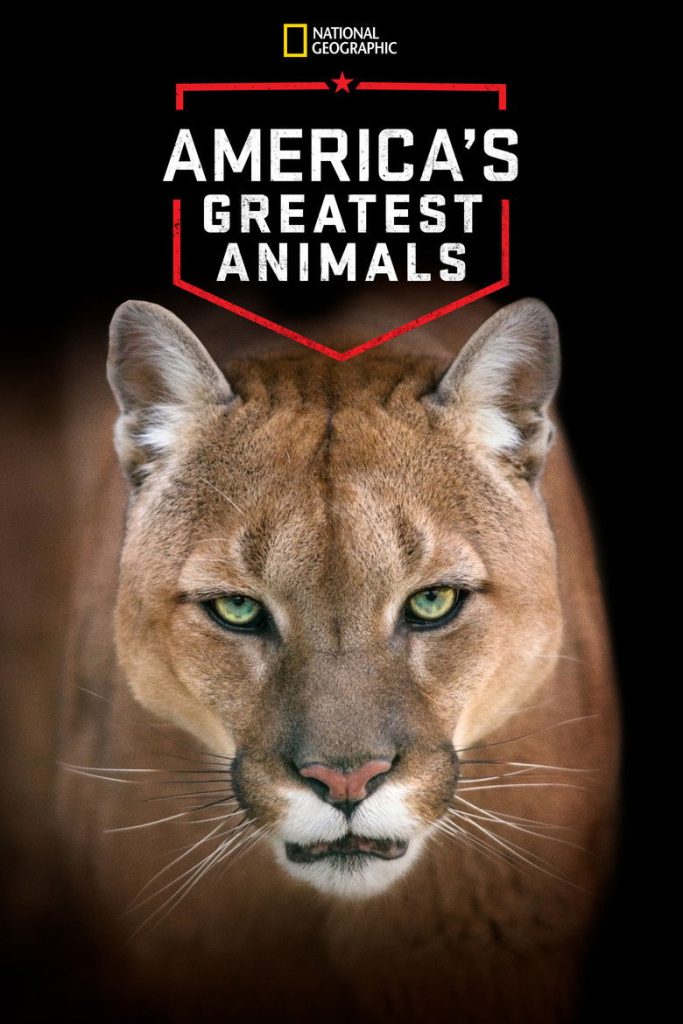
America's Greatest Animals is a 2012 documentary that explores North America's diverse wildlife, focusing on which animals are considered the continent's most remarkable. The film takes viewers on a journey across various habitats, showcasing different species and discussing their unique characteristics, behaviors, and ecological significance. It aims to educate and inspire appreciation for wildlife through stunning visuals and informative narration.
Parent Guide
Educational nature documentary suitable for most families. Contains typical wildlife footage including predator-prey interactions shown in a factual manner.
Content breakdown
Contains natural predator-prey interactions typical of wildlife documentaries, shown without graphic detail. Animals may be shown hunting or being hunted in their natural behaviors.
Some scenes of animals hunting or being hunted might be intense for very sensitive children, but are presented in an educational context without graphic violence.
No offensive language. Educational narration throughout.
No sexual content. Animals are shown in their natural state as typical for nature documentaries.
No substance use depicted.
Some scenes of animal survival might create mild tension, but overall the tone is educational and positive about wildlife appreciation.
Parent tips
This documentary is educational and family-friendly, with no concerning content. It's suitable for children interested in animals and nature. The runtime is 96 minutes, so consider attention spans for younger viewers. The film presents animals in their natural behaviors, which may include predator-prey interactions, but these are shown in a factual, non-graphic manner typical of nature documentaries.
Parent chat guide
Parent follow-up questions
- What was your favorite animal?
- What sounds do the animals make?
- Where do the animals live?
- Why do you think some animals were chosen as 'greatest'?
- How do animals survive in different environments?
- What did you learn about animal families?
- What criteria would you use to judge 'greatest animals'?
- How do human activities affect these animals?
- What conservation efforts are mentioned?
- How does the documentary balance entertainment and education?
- What biases might exist in selecting 'greatest' animals?
- How does this film compare to other nature documentaries?
🎭 Story Kernel
The film presents itself as a straightforward ranking of America's most impressive wildlife, but its true narrative emerges in the selection criteria and juxtapositions. The documentary isn't really about which animal is 'greatest'—it's about how we project human values onto nature. The bald eagle's section emphasizes national symbolism over actual ecological importance, while the bison sequence connects survival to historical trauma. The filmmakers subtly critique anthropomorphism by showing how we celebrate certain animals (wolves, bears) while vilifying others (coyotes, mountain lions) based on arbitrary human standards. The driving force isn't animal behavior but human psychology—our need to categorize, rank, and assign meaning to the natural world.
🎬 Visual Aesthetics
The cinematography employs two distinct visual languages that create tension. For 'celebrated' animals like eagles and wolves, the camera uses majestic wide shots with golden-hour lighting and slow-motion sequences that feel almost heroic. For 'problem' animals like urban coyotes or invasive species, the footage switches to handheld, documentary-style realism with cooler color palettes. This visual dichotomy reveals the film's unspoken argument: our perception of animals depends on how we frame them. The most striking visual choice comes during the prairie dog segment, where ground-level shots force viewers to experience the world from the animal's perspective—a rare moment where the film stops looking at animals and starts seeing through them.
🔍 Details & Easter Eggs
💡 Behind the Scenes
The film's director originally pitched it as a conservation documentary but was pressured by producers to create a more competitive, ranking-style format to appeal to broader audiences. Several scenes were shot at wildlife rehabilitation centers using trained animals, which the crew tried to conceal through careful editing. The most challenging sequence involved the urban coyote footage, which required three months of nighttime shooting in Los Angeles using specialized thermal cameras. Interestingly, the 'greatest animals' list changed multiple times during editing based on test audience reactions rather than biological significance.
Where to watch
Choose region:
- Disney Plus