
Amy (1981)
Story overview
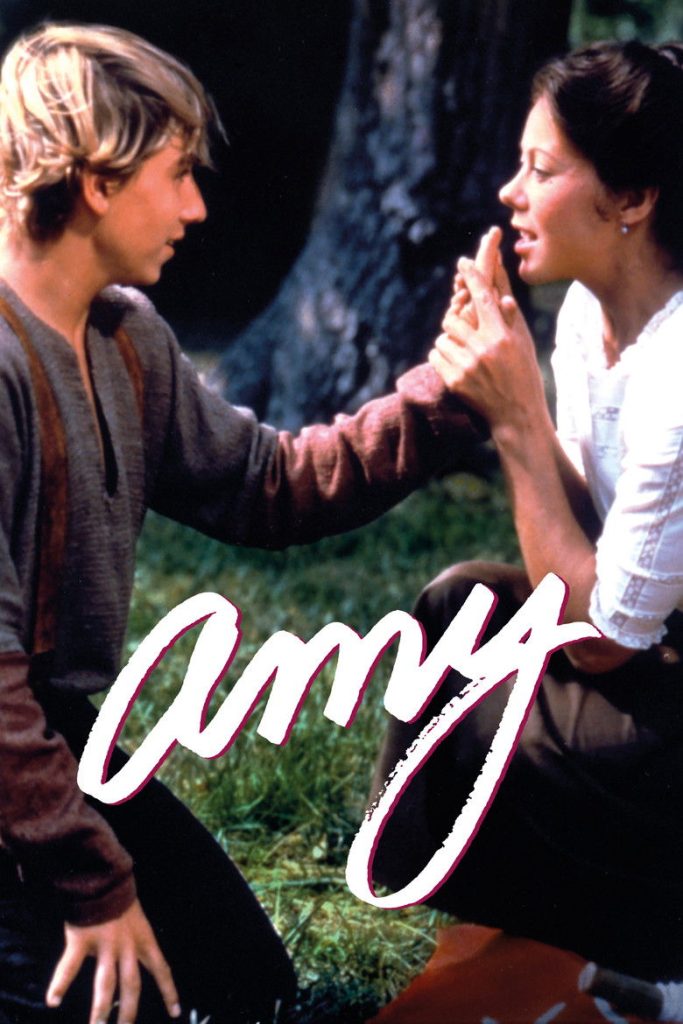
Amy is a 1981 family drama about a woman who, after losing her own deaf child, leaves her husband to teach speech to deaf children despite having no formal training. The film focuses on her emotional journey and her successful efforts to help one particular boy communicate, highlighting themes of grief, resilience, and the power of education.
Parent Guide
A gentle, inspirational drama about grief, resilience, and teaching deaf children to speak. While emotionally mature in themes, it's presented in a family-appropriate way with positive messages.
Content breakdown
No violence or peril depicted. The film focuses on emotional and educational challenges rather than physical danger.
Themes of child loss and family separation may be emotionally affecting for sensitive viewers, but these are handled with care and without graphic depiction.
No offensive language. The dialogue is clean and appropriate for all ages.
No sexual content or nudity. The film focuses on family and educational relationships.
No substance use depicted. Characters model responsible behavior.
The film deals with grief, loss, and emotional struggles, but balances these with hopeful, uplifting moments of teaching success and personal growth.
Parent tips
This G-rated film is suitable for most ages but deals with mature themes like child loss and family separation. It portrays a positive, inspiring story about overcoming challenges and helping others. Parents may want to watch with younger children to discuss the emotional aspects and the depiction of disability.
Parent chat guide
Parent follow-up questions
- What did you like about the teacher helping the boy?
- How do you think the boy felt when he learned to speak?
- What makes someone a good helper?
- Why do you think the teacher wanted to help deaf children?
- How did losing her child change the teacher's life?
- What challenges did the boy face in learning to speak?
- How does the movie show different ways people handle grief?
- What does the film teach us about overcoming personal limitations?
- How realistic do you think the teaching methods were?
- How does the film portray the social attitudes toward disability in its time period?
- What ethical questions does the teacher's unconventional approach raise?
- How does the film balance emotional drama with its educational message?
🎭 Story Kernel
At its core, 'Amy' is less about the tragic arc of Amy Winehouse and more about the systematic exploitation of talent in the celebrity-industrial complex. The film meticulously documents how her raw, confessional genius—the very thing that made her authentic—became a commodity to be extracted, packaged, and sold until the source was depleted. It's driven by the collision between her desperate need for personal, artistic honesty and the voracious demands of fame, family, and an enabling entourage. The real antagonist isn't addiction itself, but the ecosystem that normalized and profited from her disintegration, framing her downfall as an inevitable, almost cinematic tragedy rather than a preventable human failure.
🎬 Visual Aesthetics
The visual language is starkly archival, rejecting glossy reenactments for a raw, intimate collage. Director Asif Kapadia uses grainy home videos, paparazzi footage, and studio recordings to create a claustrophobic, first-person perspective. The early scenes are warm, saturated with color, mirroring Amy's playful, unguarded youth. As her fame escalates, the palette drains, and the frame is increasingly invaded by the harsh, invasive glare of camera flashes and the distorted lenses of tabloid photographers. The most powerful visual motif is the shrinking of personal space; we watch her physically recede within the frame, cornered by microphones and lenses, until she's just a haunted silhouette against a blinding spotlight.
🔍 Details & Easter Eggs
💡 Behind the Scenes
Director Asif Kapadia and his team reviewed over 100 hours of archival footage, much of it previously unseen, including personal videos from Amy's childhood friends. The film's powerful audio is built from a similar archive of voice notes, answering machine messages, and raw studio tapes. Notably, several key figures in Winehouse's life, including her father Mitch and former husband Blake Fielder-Civil, initially participated but later publicly criticized the film's portrayal, claiming it misrepresented events. The documentary was assembled without any direct narration, relying entirely on sourced audio and video to tell its story, a technique Kapadia pioneered in his earlier film 'Senna'.
Where to watch
Choose region:
- Disney Plus
- Amazon Video
- Apple TV Store
- Google Play Movies
- YouTube
- Fandango At Home
Trailer
Trailer playback is unavailable in your region.