
Anastasia (1997)
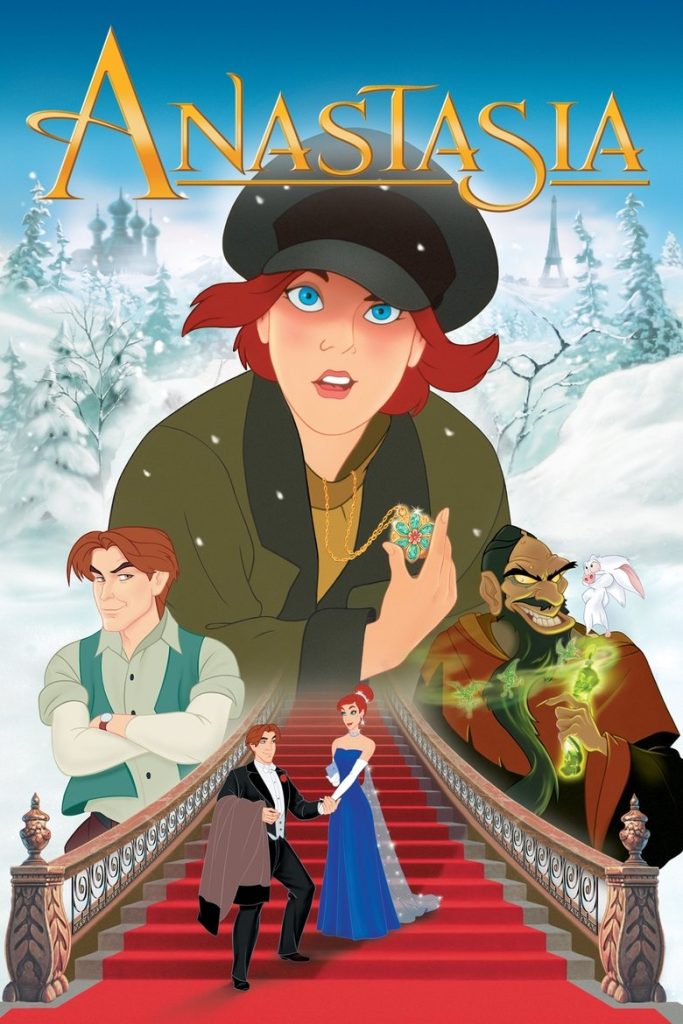
Story overview
Anastasia is an animated musical adventure that follows a young orphan who embarks on a journey to Paris with two companions, hoping to reconnect with her long-lost grandmother. Along the way, she discovers clues about her mysterious past while navigating the challenges of her companions' questionable motives. The film blends historical fantasy elements with themes of identity, family, and self-discovery in a visually engaging setting.
Parent Guide
A generally family-friendly animated adventure with some mild intense moments and themes of identity and family separation.
Content breakdown
Some fantasy peril involving a supernatural villain, brief historical violence in flashbacks (non-graphic), and chase scenes.
A supernatural villain might be frightening to very young children, plus themes of loss and separation.
No concerning language.
No sexual content or nudity.
No substance use depicted.
Themes of family separation, identity confusion, and emotional reunions may be impactful for sensitive viewers.
Parent tips
This G-rated animated film is generally family-friendly but contains some scenes that might be intense for very young viewers. The story includes mild peril with a supernatural villain, some emotional moments related to loss and separation, and brief depictions of historical violence in flashbacks. Parents should be aware that the plot involves deception and con artists, which could prompt discussions about honesty and trust.
For most children ages 6 and up, the film offers positive messages about perseverance, finding one's identity, and the importance of family connections. The musical numbers and animation style are engaging, and the overall tone remains hopeful despite some darker elements. Consider watching with younger children to provide reassurance during the more suspenseful sequences.
Parent chat guide
Focus conversations on the film's themes of identity and belonging rather than plot specifics. You might explore questions like 'What makes someone part of a family?' or 'How do we know who we really are?' For older children, you could discuss how the film portrays history versus fantasy, and the ethical questions raised by the characters' actions.
Parent follow-up questions
- Which character did you like best and why?
- What was your favorite song in the movie?
- How did the characters help each other?
- What made you feel happy in the story?
- What would you do if you were looking for your family?
- Why do you think the characters made the choices they did?
- What does it mean to be part of a family?
- How did the characters show courage?
- What lessons did the characters learn?
- How do you think the characters felt when they were unsure about their past?
- What does the film suggest about how we discover our identity?
- How does the film balance historical elements with fantasy?
- What ethical questions does the story raise about deception?
- How do the characters' motivations change throughout the story?
- What does the film show about perseverance through challenges?
- How does the film explore themes of belonging versus self-determination?
- What commentary does the film offer on how history is remembered versus how it's portrayed?
- How do the characters navigate moral ambiguity in their quest?
- What does the story suggest about the relationship between memory and identity?
- How does the film use its historical setting to explore universal themes?
🎭 Story Kernel
At its core, 'Anastasia' explores the trauma of erased identity and the human need for belonging. The film isn't really about historical accuracy—it's about the psychological aftermath of revolution. Anya's journey represents every person who has lost their past and must reconstruct themselves from fragments. Her conflict isn't whether she's royalty, but whether she wants to be. The movie cleverly uses the amnesia device to ask: if you don't remember who you were, can you choose who you become? Rasputin's supernatural vendetta serves as a metaphor for how history's ghosts haunt our present identities.
🎬 Visual Aesthetics
The film's visual language masterfully transitions from grim realism to lush fantasy. Early scenes use muted grays and blues to depict post-revolution Russia, creating a cold, oppressive atmosphere. As Anya journeys westward, the palette warms into golds and reds, mirroring her emotional thaw. The animation style shifts too—St. Petersburg is rendered with sharp angles and shadows, while Paris glows with soft curves and light. Particularly striking is the use of reflections: Anya constantly sees her past self in mirrors and water, visually reinforcing her fractured identity. The ballroom sequence's swirling choreography creates a dizzying sense of rediscovered grandeur.
🔍 Details & Easter Eggs
💡 Behind the Scenes
Meg Ryan recorded Anya's speaking voice but not her singing—Liz Callaway provided the singing voice in a common animation practice called 'voice double.' The film's controversial historical liberties stem from Fox's desire to differentiate from Disney's princess formula, leading to the supernatural Rasputin twist. Animators studied real Russian architecture for accuracy, then deliberately distorted it for the nightmare sequences. The ballroom scene required new software to render hundreds of dancing characters simultaneously—a technical breakthrough in 1997.
Where to watch
Choose region:
- Disney Plus
- Amazon Video
- Apple TV
- Google Play Movies
- YouTube
- Fandango At Home
- The Roku Channel
Trailer
Trailer playback is unavailable in your region.