
Anima (2019)
Story overview
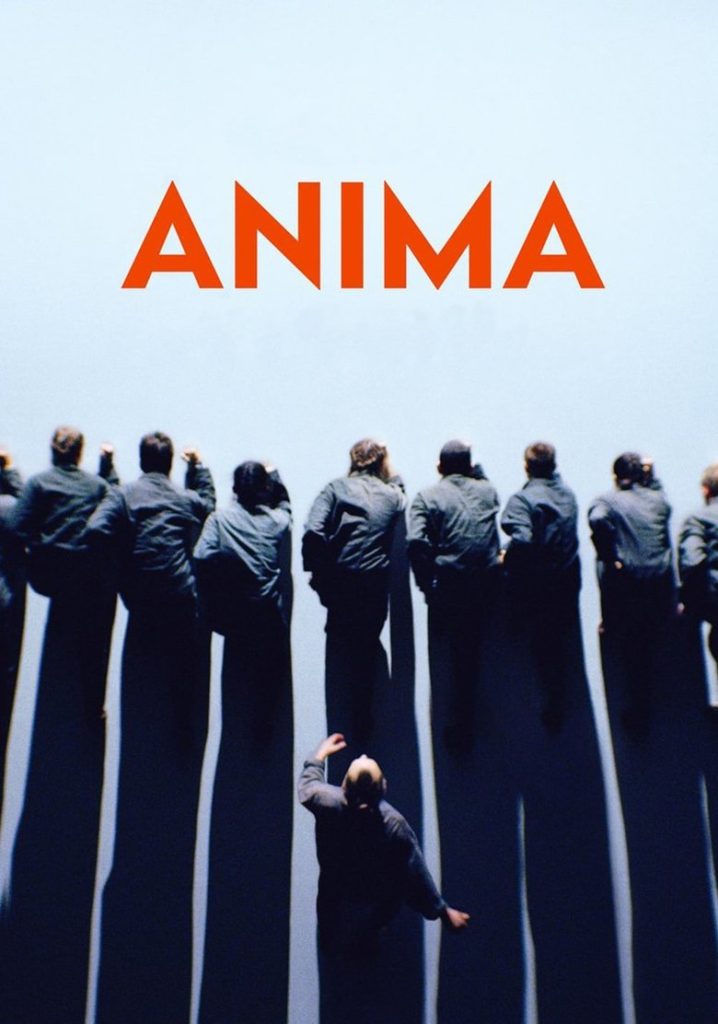
Anima (2019) is a 15-minute experimental musical short film directed by Paul Thomas Anderson, starring Thom Yorke of Radiohead. It's a visually striking, abstract piece set to Yorke's music from his album 'ANIMA,' featuring surreal, dreamlike sequences of movement and choreography in urban and industrial settings. The film has no dialogue or traditional narrative, focusing instead on atmospheric visuals and music.
Parent Guide
Anima is a visually experimental musical short film with no dialogue or traditional narrative. It features abstract, surreal imagery set to Thom Yorke's music. The content is generally appropriate for most ages, but younger children may find the lack of story confusing, and some surreal elements could be mildly unsettling for sensitive viewers.
Content breakdown
No violence, danger, or peril depicted. The film consists entirely of choreographed movement and musical sequences.
Contains surreal, abstract imagery that could be slightly disorienting or unsettling for very young or sensitive viewers. Some sequences feature unusual perspectives, rapid editing, and dreamlike scenarios that might confuse children expecting traditional storytelling.
No dialogue or spoken words in the entire film. The audio consists entirely of Thom Yorke's instrumental and vocal music.
No sexual content or nudity. All performers are fully clothed in everyday or stylized costumes.
No depiction or reference to alcohol, drugs, tobacco, or any substance use.
The film creates an atmospheric, sometimes melancholic mood through music and visuals, but there are no intense emotional scenes. The abstract nature might leave some viewers feeling contemplative or slightly disoriented.
Parent tips
This is an artistic, non-narrative musical film best suited for children who appreciate abstract visuals and experimental music. Since there's no plot or dialogue, younger children might find it confusing or boring. The film contains some surreal, slightly disorienting imagery that could be mildly unsettling for sensitive viewers. Consider watching it as a visual art experience rather than a traditional movie.
Parent chat guide
Parent follow-up questions
- What colors did you see in the movie?
- Did you like the music? How did it make you feel?
- What was your favorite part to watch?
- What did you think about the way people were moving in the film?
- How did the music match what you were seeing?
- What kind of places did they show in the movie?
- Why do you think the director chose to tell a story without words?
- How did the film make you feel emotionally?
- What artistic choices did you notice in the cinematography?
- How does this film use movement and music to create meaning?
- What themes or ideas do you think the director was exploring?
- How does this experimental approach compare to traditional narrative filmmaking?
🎭 Story Kernel
The film is a visceral expression of urban isolation and the desperate human need for connection within rigid systems. It follows a man (Thom Yorke) trapped in a monotonous, soul-crushing routine on a subway train, representing the daily grind of modern life. His escape into a dreamlike, synchronized dance with a woman is the core narrative—a pure, wordless yearning to break free from anonymity and find a kindred spirit. The driving force isn't a traditional plot, but an emotional impulse: the ache of disconnection and the euphoric, fleeting possibility of transcending it through shared, physical expression. The ambiguous ending leaves us questioning whether this connection is a temporary respite or a transformative escape.
🎬 Visual Aesthetics
Director Paul Thomas Anderson employs a stark, high-contrast black-and-white palette for the oppressive reality sequences, emphasizing the bleakness and uniformity of the daily commute. This sharply transitions into lush, saturated color during the dance sequences, visually manifesting the shift from alienation to emotional awakening. The camera work is fluid and often unbroken, using long, sweeping takes that mirror the continuous flow of the choreography by Damien Jalet. This creates a hypnotic, immersive quality, making the viewer feel the physical exhaustion and release alongside the dancers. The visual language is one of contrast: tight, confined frames in the train versus expansive, liberating movements in the industrial and natural landscapes.
🔍 Details & Easter Eggs
💡 Behind the Scenes
The 15-minute short film was created as a companion piece for Thom Yorke's 2019 solo album of the same name. It was directed by Paul Thomas Anderson, marking another collaboration after he directed Yorke's 'Daydreaming' video. The intricate choreography was devised by Damien Jalet, known for his work with the Paris Opera Ballet. It was shot on 35mm film in Prague and the Czech countryside over just a few days. The lead female dancer is acclaimed professional dancer and actress, Dajana Roncione. The film was first presented as a surprise screening before select showings of Anderson's film 'The Master' in 2019.
Where to watch
Choose region:
- Netflix
- Netflix Standard with Ads