
Anpanman: Star-Spirited Dollie (2006)
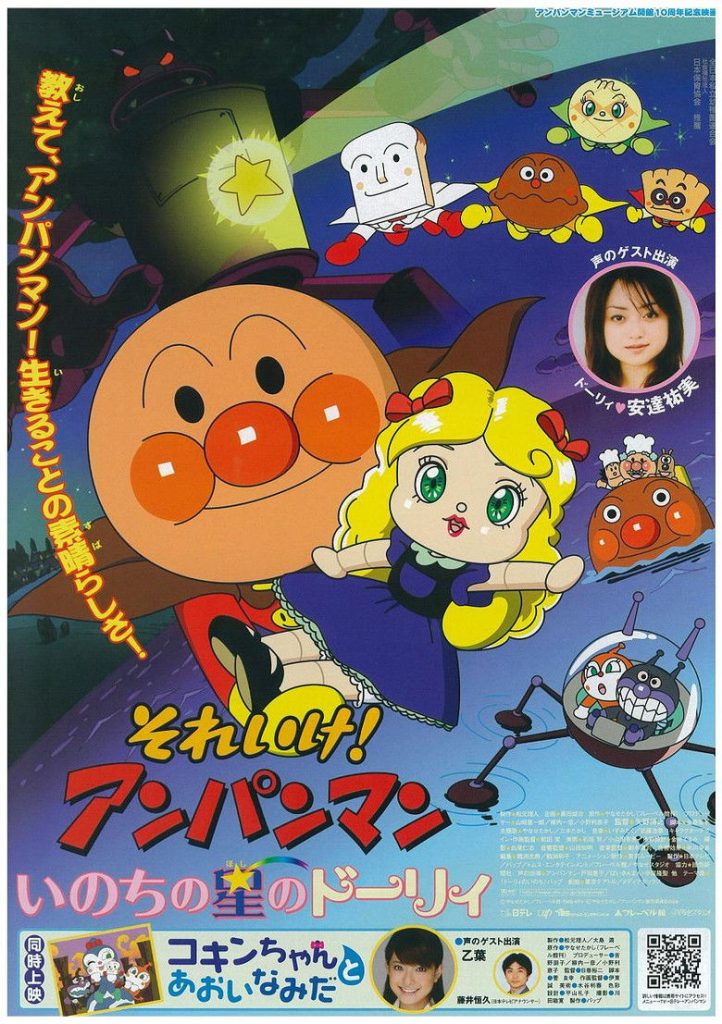
Story overview
Anpanman, the popular Japanese superhero made of bread, encounters a lively new character named Dollie who comes to life after being rescued. The film follows their adventures as Dollie's boundless energy and constant pursuit of fun create playful chaos in Anpanman's world. This animated family movie focuses on friendship, patience, and learning to appreciate different personalities through lighthearted situations. The story maintains the gentle, educational tone of the Anpanman series while introducing a new dynamic with the energetic Dollie character.
Parent Guide
A gentle animated film suitable for preschoolers and young children, featuring positive messages about friendship and patience with no concerning content.
Content breakdown
No violence or peril. The story involves playful mischief and lighthearted situations typical of children's programming.
Nothing scary or disturbing. The animation is bright, colorful, and cheerful throughout.
No inappropriate language. Dialogue is simple and child-appropriate.
No sexual content or nudity. Characters are animated in child-friendly designs.
No substance use of any kind.
Mild emotional moments related to friendship and understanding, but nothing intense or upsetting.
Parent tips
This is a gentle animated film suitable for young children, featuring the beloved Anpanman character from Japanese children's media. The story revolves around playful mischief rather than conflict, with Dollie's energetic behavior serving as the primary source of lighthearted trouble. Parents can expect positive messages about friendship, patience, and understanding different personalities throughout the film.
The animation style is colorful and simple, typical of children's programming, with no intense or frightening sequences. The 70-minute runtime is appropriate for young attention spans, though very young viewers might need breaks. Since this is a Japanese production, some cultural elements might be unfamiliar to international viewers, but the universal themes of friendship and kindness are clearly presented.
Parent chat guide
After the movie, talk about the friendship between Anpanman and Dollie. Ask what your child learned about being a good friend to someone who acts differently. You could also discuss how Dollie's search for fun sometimes caused problems and how she learned to consider others' feelings. Relate these themes to your child's own friendships and experiences with peers who have different personalities.
Parent follow-up questions
- What was your favorite part of the movie?
- How did Anpanman help Dollie?
- What made Dollie so much fun to watch?
- How do you think Dollie felt when she was looking for fun?
- What color was your favorite character?
- Why do you think Dollie was always looking for fun?
- How did Anpanman show he was a good friend to Dollie?
- What did Dollie learn about being considerate of others?
- How would you handle a friend who was as energetic as Dollie?
- What was the main lesson you learned from the movie?
- How does the movie show the importance of patience in friendships?
- What positive qualities did Dollie bring to the story despite her energetic behavior?
- How might the story be different if Anpanman wasn't so patient with Dollie?
- What does this movie teach about accepting people with different personalities?
- How do you balance having fun with being considerate of others?
- How does this children's film approach the theme of personality differences in relationships?
- What cultural elements from Japanese children's media did you notice in this film?
- How does the simple animation style support the story's messages?
- What makes Anpanman an effective character for teaching values to young children?
- How might this story be adapted for different age groups or cultures?
🎭 Story Kernel
At its core, 'Star-Spirited Dollie' explores the tension between predetermined purpose and individual identity. Dollie, a star-spirited doll created by the villain Baikinman, is programmed for mischief but develops her own consciousness and moral compass. The film asks: can one escape their programming? Anpanman faces this mirrored in his own existence—his head is literally consumable, defining him as nourishment for others. The resolution isn't about defeating evil through strength, but through Dollie's choice to reject her creator's design, suggesting that identity is forged through decisions, not origins. The driving force is each character's negotiation with their inherent nature versus their chosen actions.
🎬 Visual Aesthetics
The film employs a soft, pastel-heavy palette that contrasts sharply with the mechanical, metallic textures of Baikinman's creations. Dollie's design—a blend of celestial star motifs and crude doll stitching—visually represents her conflicted nature. Action sequences use dynamic, slightly exaggerated angles to emphasize the whimsical yet high-stakes confrontations, while quieter moments feature close-ups on characters' eyes to highlight emotional realization. Symbolism is direct but effective: the recurring imagery of stars (Dollie's origin) versus bread (Anpanman's essence) creates a visual dialectic between cosmic destiny and earthly, nurturing purpose.
🔍 Details & Easter Eggs
💡 Behind the Scenes
This 2015 film is part of the long-running 'Anpanman' series, based on Takashi Yanase's picture books. Voice actor Keiko Toda, who plays Dollie, is known for other anime roles like Satsuki in 'My Neighbor Totoro.' The movie was released to celebrate the series' enduring popularity in Japan, where Anpanman is a cultural icon for children. Production involved traditional 2D animation with enhanced digital coloring to achieve the distinctive vibrant yet gentle visual style characteristic of the franchise.
Where to watch
Choose region:
- Netflix
- Netflix Standard with Ads