Anthony Jeselnik: Thoughts and Prayers (2015)
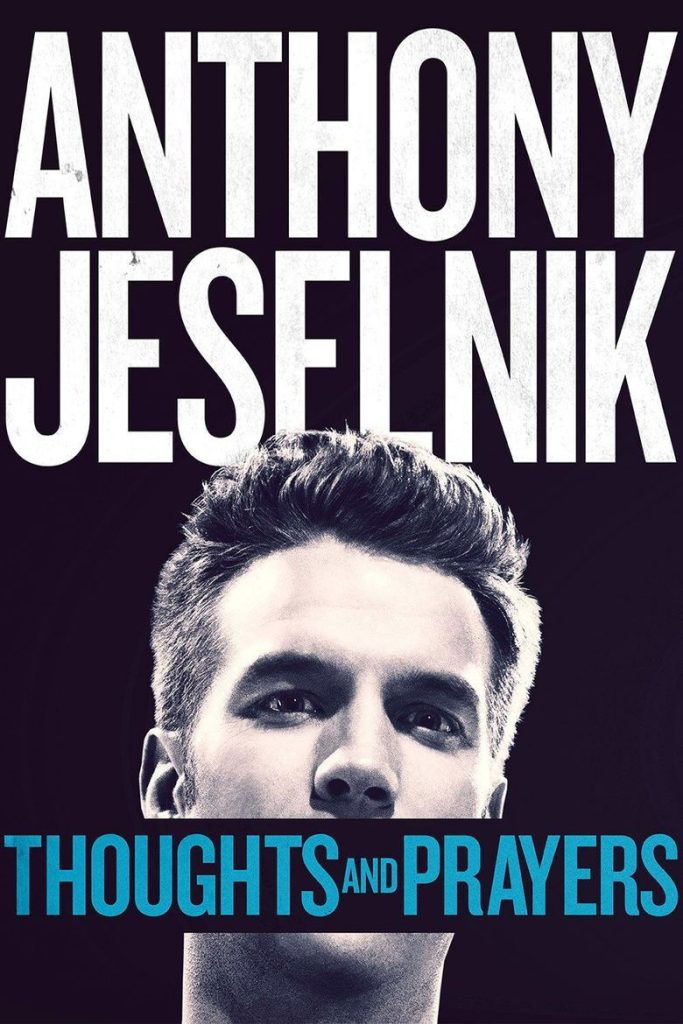
Story overview
Anthony Jeselnik: Thoughts and Prayers is a 2015 stand-up comedy special where the comedian delivers his signature dark, deadpan humor. The performance consists of Jeselnik sharing controversial jokes and stories with a deliberately provocative style. The special is known for its boundary-pushing content that frequently tackles sensitive subjects with irony and sarcasm.
Parent Guide
This stand-up special contains mature content unsuitable for children and younger teens. The TV-MA rating reflects strong language and adult themes throughout.
Content breakdown
No physical violence depicted, though some jokes may reference violent situations.
Contains dark humor about sensitive topics that some may find disturbing or offensive.
Frequent strong profanity and adult language throughout the performance.
Contains sexual references and adult themes in jokes and stories.
No depiction or discussion of substance use noted.
The provocative nature of the comedy may create discomfort or strong reactions in some viewers.
Parent tips
This comedy special is rated TV-MA, indicating it's intended for mature audiences only. The content contains strong language, adult themes, and dark humor that may be inappropriate for younger viewers. Parents should be aware that Jeselnik's comedy style deliberately challenges social norms and frequently addresses sensitive topics in ways that could be offensive or disturbing to some audiences.
Parent chat guide
Parent follow-up questions
- What makes you laugh when you watch funny shows?
- How do you know when something is a joke?
- What should we do if we hear words we don't understand?
- What's the difference between a joke that's funny and one that's mean?
- Why do some comedians talk about serious things?
- How can we tell when someone is being serious or just joking?
- What makes dark humor different from regular comedy?
- Why might some jokes be okay for adults but not kids?
- How do comedians use timing and delivery to make jokes work?
- What's the line between pushing boundaries and being offensive in comedy?
- How does Jeselnik's deadpan delivery affect the impact of his jokes?
- What social norms does this special challenge, and is that effective comedy?
🎭 Story Kernel
This stand-up special isn't about jokes in the traditional sense; it's about power dynamics in storytelling. Jeselnik positions himself as a narrative god, constructing elaborate setups where he controls every variable—the victim, the timing, the audience's expectations—only to reveal he was the villain all along. The driving force isn't humor for its own sake, but a clinical examination of how we process shock and grief. He uses the audience's own moral reflexes as his primary prop, baiting them with socially acceptable premises before detonating them with sociopathic punchlines. The real story is the audience's journey from comfortable laughter to horrified silence and back again, all orchestrated by a performer who treats empathy as a weakness to be exploited.
🎬 Visual Aesthetics
The visual language is deceptively simple and deliberately un-cinematic, which is its greatest strength. Shot in a classic, single-camera stand-up format at the Civic Theatre in New Orleans, the focus remains relentlessly on Jeselnik. The color palette is muted, with Jeselnik in his signature dark suit against a dark background, making him a stark, isolated figure. The camera rarely moves, creating a sense of a controlled experiment or a monologue from a villain in a thriller. This minimalist approach amplifies the impact of his words; there's no visual spectacle to distract from the verbal precision of each joke's construction and delivery. The lighting is harsh and direct, leaving no room for shadow or ambiguity, mirroring the blunt, unforgiving nature of his comedy.
🔍 Details & Easter Eggs
💡 Behind the Scenes
This special was filmed in 2015, a year marked by several high-profile mass shootings and public debates about 'thoughts and prayers' as a political response. Jeselnik has stated the material was honed over years on the road, with jokes being added, removed, and re-sequenced based on audience reaction to find the perfect, most uncomfortable rhythm. The choice of New Orleans, a city synonymous with celebration and mourning, was intentional. The Civic Theatre, while beautiful, is also known for its excellent acoustics, ensuring every carefully crafted pause and punchline landed with crystal clarity, which was paramount for this type of meticulously written comedy.
Where to watch
Choose region:
- Netflix
- Netflix Standard with Ads
Trailer
Trailer playback is unavailable in your region.