
Any One of Us (2019)
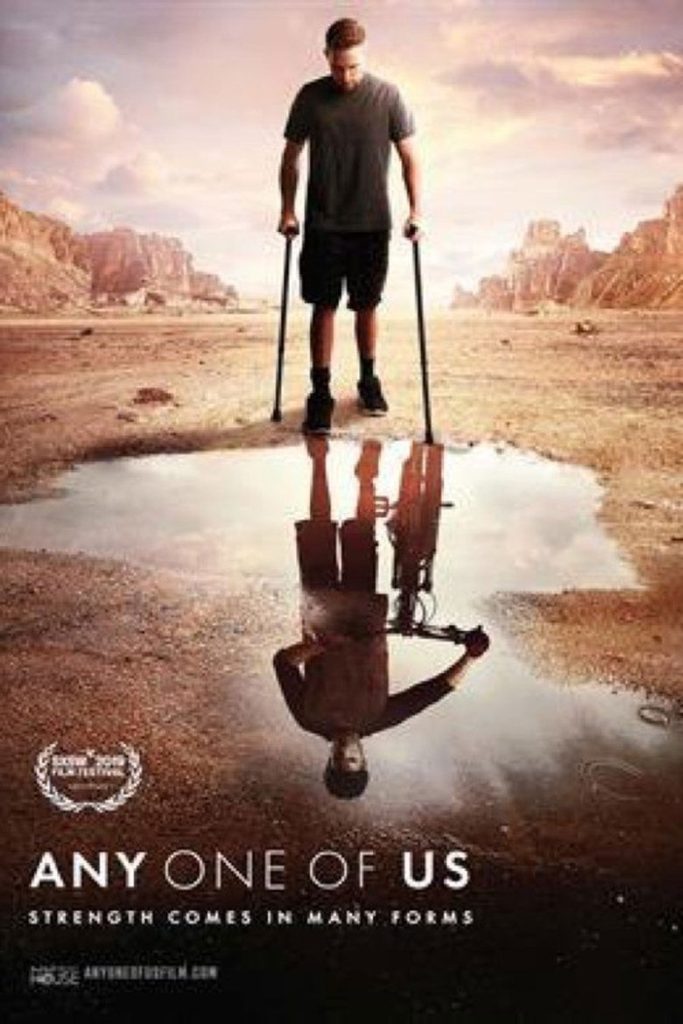
Story overview
This documentary follows professional mountain biker Paul Basagoitia as he confronts a life-altering spinal cord injury from a biking accident, leaving him paralyzed. The film chronicles his physical and emotional journey through rehabilitation, alongside stories from other spinal cord injury survivors, highlighting resilience, medical realities, and the psychological challenges of adapting to disability.
Parent Guide
A documentary about spinal cord injury recovery, focusing on resilience and medical realities without graphic content. Best for older children due to mature themes of trauma and disability.
Content breakdown
Includes discussion and brief footage of a mountain biking accident leading to injury, but no graphic visuals. Some peril related to medical procedures and rehabilitation challenges.
Themes of permanent disability and medical trauma might be unsettling for sensitive viewers. Scenes of emotional distress and frustration, but handled with a hopeful tone.
No offensive language noted; appropriate for general audiences.
No sexual content or nudity.
No depiction of substance use.
Emotional scenes of coping with life-altering injury, sadness, and determination. Uplifting moments of progress and support balance the intensity.
Parent tips
This documentary deals with serious injury and disability in a realistic but non-graphic way. It's suitable for mature children who can handle discussions about medical trauma and permanent physical changes. The film emphasizes perseverance and hope, but includes emotional moments of frustration and sadness. Consider watching together to discuss themes of resilience, healthcare, and disability awareness.
Parent chat guide
Parent follow-up questions
—
- What did Paul do to try to get better?
- How did his friends and family help him?
- What is a wheelchair for?
- What challenges did Paul face besides physical ones?
- How do spinal cord injuries affect the body?
- What can we learn from other survivors in the film?
- How does the film portray the psychological impact of disability?
- What role does hope play in rehabilitation?
- How does society view and support people with disabilities?
🎭 Story Kernel
The film's core isn't about the climbing accident itself, but about the radical redefinition of self that follows catastrophic injury. It expresses the brutal, non-linear journey of identity when the body you've built your life upon betrays you. Paul Pritchard's drive shifts from conquering physical peaks to navigating the terrifying, intimate peaks of rehabilitation, vulnerability, and finding purpose when your original life's script is torn up. The real tension isn't in the fall, but in the agonizingly slow climb back to a new version of personhood, questioning what makes 'us' when our primary tools are taken away.
🎬 Visual Aesthetics
The visual language masterfully contrasts two worlds. Pre-accident footage is all dynamic, handheld shots on El Capitan—vast, vertical, and color-saturated with the blues of sky and granite. Post-accident, the frame becomes static, clinical, and horizontally confined to hospitals and rehabilitation centers, dominated by sterile whites and beiges. This stark shift in composition and palette physically embodies the protagonist's loss of dimension and freedom. The camera often lingers on close-ups of Paul's face during therapy, capturing micro-expressions of frustration and determination that are more gripping than any action sequence.
🔍 Details & Easter Eggs
💡 Behind the Scenes
The film is a deeply personal project, with much of the pre-accident footage sourced from Pritchard's own climbing archives and home videos, lending an raw, unvarnished intimacy. Director James Newton worked closely with Paul over several years to document the rehabilitation process without intrusion, often using small, unobtrusive cameras to capture candid moments. Notably, some of the most powerful post-accident scenes were filmed by Paul's partner and carers when the director wasn't present, adding a layer of authentic, unguarded emotion to the narrative.
Where to watch
Choose region:
- HBO Max
- HBO Max Amazon Channel
Trailer
Trailer playback is unavailable in your region.