
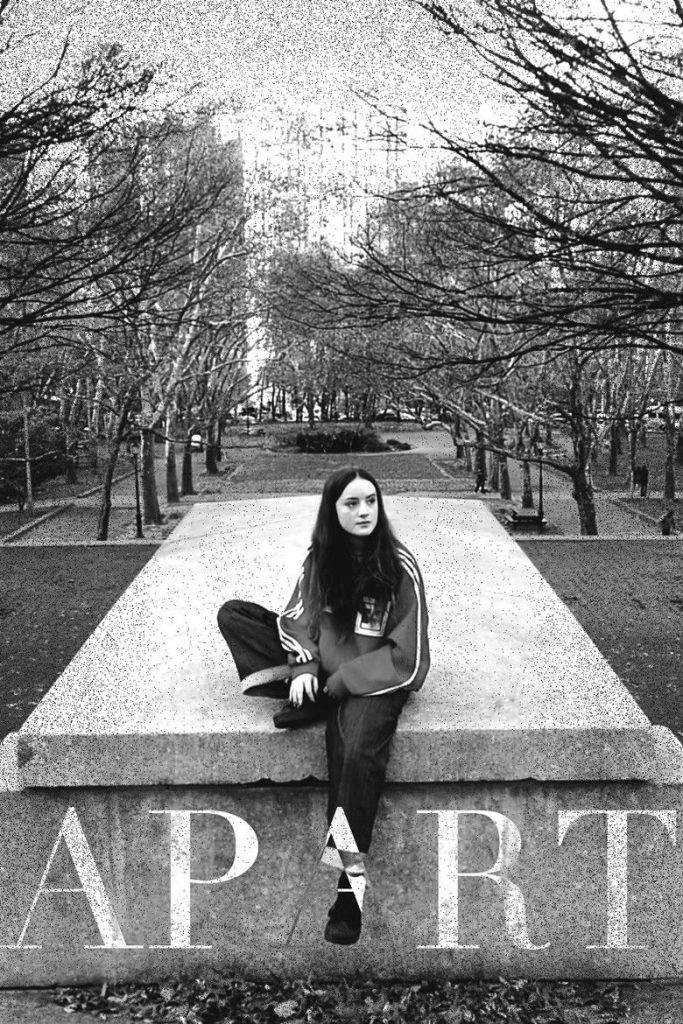
APART (2026)

Released: 2026-01-02 Recommended age: 8+ No IMDb rating yet
APART

Movie details

  • Genres: Drama, Comedy
  • Director: Isaac Lyon-Freedman
  • Main cast: Mia Hodge, Jaela Cooper, Menkhu Jones, Mia Hodge, Jaela Cooper
  • Country / region: United States of America
  • Original language: en
  • Premiere: 2026-01-02

Story overview

APART is a 2026 American drama-comedy film directed by Isaac Lyon-Freedman, starring Mia Hodge, Jaela Cooper, and Menkhu Jones. The story follows a young woman who, after having her thumb stolen, embarks on a quest to retrieve it, only to discover that her thumb has developed a mind of its own and is hesitant to return to her. This surreal premise explores themes of identity, autonomy, and the humorous absurdity of reclaiming a lost part of oneself, blending emotional depth with comedic elements.

Parent Guide

APART is a mild, family-friendly drama-comedy with a surreal premise suitable for ages 8 and up. It contains no significant content concerns, focusing on whimsical humor and light emotional themes. The short runtime of 3 minutes makes it an easy watch for children, with minimal risk of overstimulation or distress.

Content breakdown

Violence & peril
None

No violence or peril is depicted. The story involves a stolen thumb, but this is presented in a comedic, non-threatening manner without any aggressive or dangerous scenes.

Scary / disturbing
None

Nothing scary or disturbing is present. The concept of a detached thumb might be odd or silly, but it is not portrayed in a frightening way; it's handled with humor and lightness.

Language
None

No offensive or strong language is used. The dialogue is clean and appropriate for all ages, focusing on the comedic and dramatic elements of the story.

Sexual content & nudity
None

No sexual content or nudity is included. The film is entirely focused on the surreal plot without any romantic or suggestive themes.

Substance use
None

No substance use, such as alcohol, drugs, or smoking, is shown or referenced. The content remains family-appropriate throughout.

Emotional intensity
Mild

Emotional intensity is mild, centered on themes of identity and reclaiming lost parts of oneself, but presented in a humorous, low-stakes way. It may evoke light curiosity or amusement rather than strong feelings.

Parent tips

This film is suitable for children ages 8 and up, with minimal concerning content. It features a surreal, comedic plot about a stolen thumb that resists being reclaimed, which may be confusing or silly to younger viewers but is handled lightly. There is no violence, strong language, sexual content, or substance use. The emotional tone is mild, focusing on whimsy and self-discovery rather than intensity. Parents can use this as an opportunity to discuss themes of identity and humor in absurd situations. The short runtime of 3 minutes makes it easily digestible for family viewing.

Parent chat guide

APART offers a quirky, family-friendly story that can spark conversations about identity and humor. For younger children (ages 3-6), focus on the silly idea of a thumb having its own feelings—ask what they think the thumb might be thinking. For ages 7-9, discuss why the thumb doesn't want to return and what it means to 'own' a part of yourself. For ages 10-12, explore themes of autonomy and how the film uses comedy to talk about serious ideas. For teens (13-18), delve into the metaphorical aspects of the story, such as reclaiming lost parts of one's identity in a lighthearted way. Keep it fun and engaging, as the film is short and not intense.

Parent follow-up questions

  • What do you think the thumb is saying when it doesn't want to go back?
  • How would you feel if your thumb could talk?
  • What was the funniest part of the movie?
  • Why do you think the thumb doesn't want to be with the woman anymore?
  • What does it mean to have something that belongs to you not want to come back?
  • How did the movie make you laugh?
  • What message do you think the film is trying to send about identity?
  • How does the comedy help tell a story about something serious like losing a part of yourself?
  • Would you handle the situation differently than the main character?
  • In what ways does the thumb symbolize aspects of identity or autonomy?
  • How does the film use absurd humor to explore deeper themes?
  • What does this story say about the relationship between people and their possessions or body parts?
⚠️ Deep Film Analysis (Contains Spoilers) · Click to Expand
A haunting exploration of memory's architecture where every door leads to another version of yourself.

🎭 Story Kernel

At its core, 'APART' is less about a supernatural haunting and more about the psychological prison of unresolved trauma. The film's central tension doesn't come from external ghosts but from the protagonist's own fractured psyche, which manifests the apartment's shifting reality. Each room represents a compartmentalized memory or suppressed emotion, with the character literally navigating the architecture of their own denial. The driving force isn't survival but self-confrontation—the apartment becomes a therapeutic space where the protagonist must integrate their fragmented past to achieve wholeness. This transforms what appears to be a horror premise into a profound meditation on how we construct our identities through what we choose to remember and what we force ourselves to forget.

🎬 Visual Aesthetics

The film employs a claustrophobic visual language that mirrors the protagonist's mental state. Cinematographer uses deliberate, slow-tracking shots through doorways and corridors, creating a sense of being perpetually observed by the space itself. The color palette shifts subtly from warm, nostalgic sepia tones in memory sequences to cold, desaturated blues in present reality, visually distinguishing between comfort and confrontation. Most striking is the use of reflective surfaces—mirrors, windows, polished floors—that fragment the protagonist's image, visually representing their splintered identity. The camera often lingers on architectural details like peeling wallpaper or cracked tiles, suggesting that the apartment's decay parallels the protagonist's psychological deterioration.

🔍 Details & Easter Eggs

1
The protagonist's reflection briefly shows a different facial expression in early mirror shots, foreshadowing the revelation about dissociative identity long before it's explicitly revealed.
2
Background books on shelves consistently have titles about memory disorders and architectural theory, creating subtle thematic reinforcement without direct exposition.
3
The recurring pattern in the apartment's wallpaper subtly forms Rorschach-like images that change throughout the film, mirroring the protagonist's evolving psychological state.

💡 Behind the Scenes

The entire film was shot in a single, actual abandoned apartment building in Berlin that the production designer discovered while location scouting. Lead actor prepared by spending nights alone in the location to authentically capture the isolation. Director intentionally used practical effects over CGI for the spatial distortions, having carpenters build rotating sets and forced-perspective rooms. The haunting score was recorded using only sounds captured within the building itself—creaking floors, dripping pipes, wind through broken windows—processed and layered to create the film's distinctive atmospheric soundscape.

Where to watch

Streaming availability has not been announced yet.

Trailer

Trailer playback is unavailable in your region.

SkyMe App
SkyMe Guide Download on the App Store
VIEW