
Apocalypse Now (1979)
Story overview
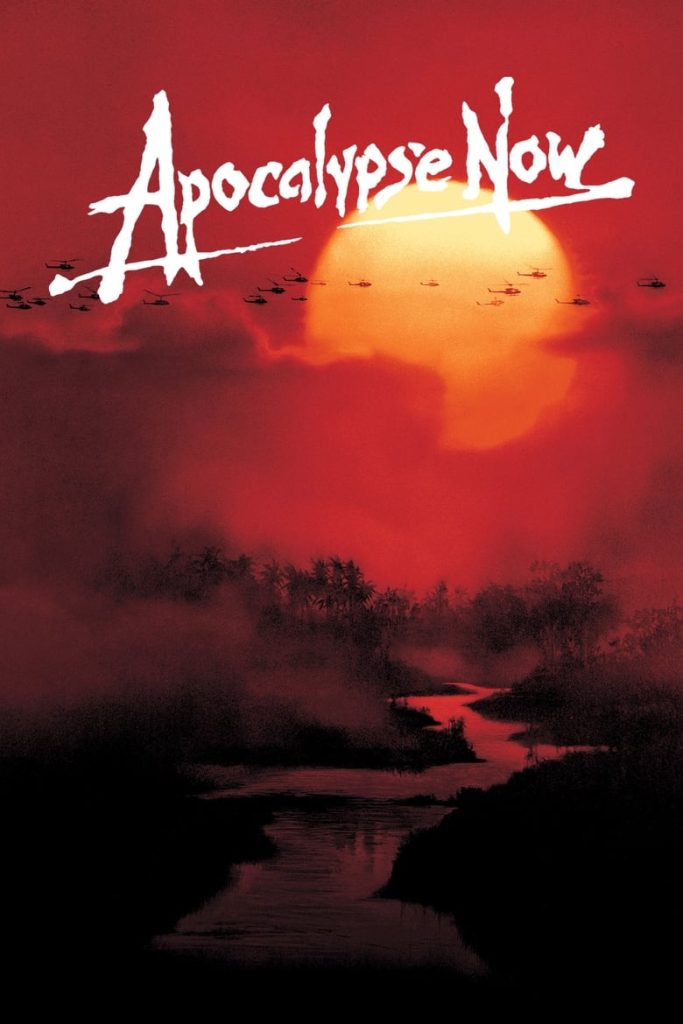
Apocalypse Now is a 1979 war drama set during the Vietnam War. The film follows a U.S. Army captain on a secret mission to locate and confront a renegade colonel who has established his own unauthorized military operations. The journey explores the psychological effects of war and the moral ambiguities of conflict. It presents a surreal and intense portrayal of the chaos and brutality of warfare.
Parent Guide
A psychologically intense war drama with graphic violence and mature themes, suitable only for mature older teenagers and adults.
Content breakdown
Graphic war violence including combat, explosions, gunfire, casualties, and disturbing scenes of conflict. Not suitable for younger viewers.
Intense psychological elements, surreal sequences, and disturbing portrayals of war's effects. Contains scenes that may be emotionally unsettling.
Strong language typical of war settings, including profanity and military terminology. Not excessive but present throughout.
Some suggestive content and brief non-explicit sexual references in the context of war zone entertainment.
Depictions of alcohol consumption and drug use among soldiers, reflecting wartime conditions.
High emotional intensity throughout, exploring psychological trauma, moral dilemmas, and the stress of combat situations.
Parent tips
This film is rated R for strong violence, disturbing content, and language. It contains graphic depictions of war violence including combat scenes, explosions, and casualties. There are intense psychological elements and surreal sequences that may be disturbing. The film explores mature themes about the nature of war, morality, and the human psyche under extreme conditions.
Parents should be aware that this is not a typical war movie but rather a psychological exploration of the Vietnam War experience. The film contains strong language, substance use (alcohol and drugs), and scenes of emotional intensity. The runtime of nearly 2.5 hours may also be challenging for younger viewers.
This film is best suited for mature teenagers and adults who can process its complex themes. The R rating should be taken seriously, and parents are encouraged to watch the film themselves before deciding if it's appropriate for their older teenagers.
Parent chat guide
During viewing, be available to pause and discuss particularly intense scenes. The film contains surreal sequences that may confuse younger viewers - explain that these represent psychological states rather than literal events. Pay attention to your child's reactions to violent or disturbing content and be prepared to take breaks if needed.
After watching, discuss the film's themes about the effects of war on soldiers and the moral questions raised. Ask open-ended questions about what your child found most impactful or confusing. Connect the film's messages to broader discussions about conflict, leadership, and human behavior under pressure.
Parent follow-up questions
- What did you see in the movie?
- How did the movie make you feel?
- What was your favorite part?
- Did anything in the movie seem scary?
- What colors did you see most in the movie?
- What was the main character trying to do?
- How do you think soldiers feel during war?
- What parts of the movie seemed real versus made up?
- Why do you think people go to war?
- What would you do if you saw someone being treated unfairly?
- What message do you think the movie was trying to send about war?
- How did the setting affect the story?
- What choices did characters have to make?
- How does this movie compare to other war stories you know?
- What responsibilities do leaders have during difficult times?
- How does the film explore the psychological effects of war?
- What commentary does the movie make about military command and morality?
- How does the surreal imagery contribute to the film's themes?
- What historical context is important for understanding this film?
- How does this film challenge traditional war movie conventions?
🎭 Story Kernel
At its core, 'Apocalypse Now' is not about the Vietnam War, but about the thin membrane separating civilization from primal chaos. Captain Willard's mission to terminate Colonel Kurtz is a pretext for the film's true exploration: how systems of order (the military) create the very monsters they seek to destroy. Kurtz hasn't gone rogue; he's achieved a terrifying clarity by shedding the hypocrisy of 'civilized' warfare. Willard's journey upriver is a descent into this psychological truth, where he must confront the Kurtz within himself. The film argues that the true 'apocalypse' isn't an external event, but the internal revelation of our capacity for boundless horror when all societal constraints are removed.
🎬 Visual Aesthetics
Coppola employs a hypnotic, sensory-overload visual language. The opening sequence—ceiling fan blades morphing into helicopter rotors over Willard's tormented face—establishes the film's dreamlike, dissociative tone. Cinematographer Vittorio Storaro's use of theatrical, expressionist lighting (Kurtz's compound as a shadowy stage) contrasts with the hellish, napalm-orange skies of battle. The famous 'Ride of the Valkyries' attack is shot with a bizarre, operatic grandeur, making war feel both horrifying and absurdly spectacular. The color palette often separates worlds: the cool blues of military bureaucracy versus the oppressive, humid greens and blood reds of the jungle, which itself becomes a consuming, characterless entity.
🔍 Details & Easter Eggs
💡 Behind the Scenes
The production became a legendary disaster mirroring the film's themes. Shooting in the Philippines lasted 238 days over 16 months, plagued by a typhoon that destroyed sets, Martin Sheen suffering a heart attack, and Marlon Brando arriving massively overweight and unprepared. Director Francis Ford Coppola famously declared, 'We were in the jungle, there were too many of us, we had access to too much money, too much equipment, and little by little, we went insane.' The surreal, fever-dream quality of the film is inextricably linked to the real-life chaos and existential peril of its making.
Where to watch
Choose region:
- Apple TV
- Google Play Movies
- YouTube
- Fandango At Home
- Fandango at Home Free
- Plex
Trailer
Trailer playback is unavailable in your region.