
Apocalypto (2006)
Story overview
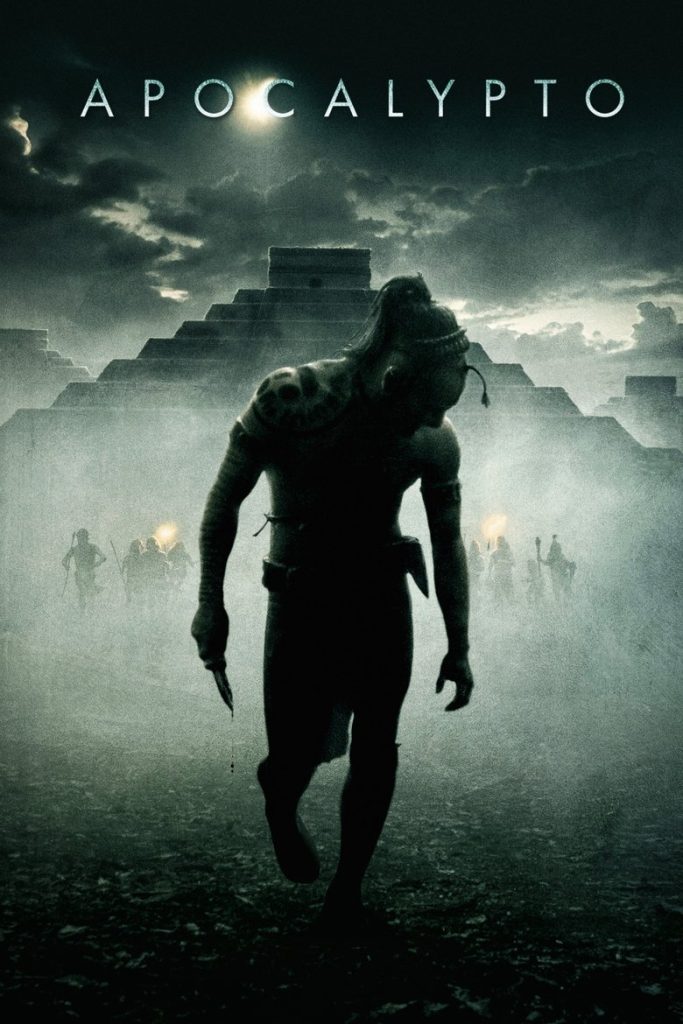
Apocalypto is a 2006 historical action-drama set in the declining Maya civilization. The film follows a young hunter who must escape capture and return to his family after his village is raided. It depicts the brutal realities of ancient Mesoamerican society, including human sacrifice and warfare. The story focuses on survival, courage, and cultural collapse during this turbulent period.
Parent Guide
This film is appropriate only for mature audiences due to intense, graphic violence and disturbing themes. Not suitable for children or younger teens.
Content breakdown
Prolonged, graphic violence including human sacrifice, warfare, captivity, and brutal injuries. Central to the plot.
Disturbing scenes of ritual violence, peril, and cultural collapse. May be intense for sensitive viewers.
No strong language; dialogue is in Yucatec Maya with subtitles.
No sexual content or nudity.
No substance use depicted.
High emotional intensity due to survival themes, violence, and peril throughout.
Parent tips
This film is rated R for intense, prolonged sequences of graphic violence and disturbing content. It is not suitable for children or younger teens. The violence includes depictions of human sacrifice, warfare, and brutal treatment of captives, which are central to the plot. Parents should be aware that the film presents a harsh, unflinching look at ancient civilizations without modern sensibilities.
Due to the graphic nature and mature themes, this film is best reserved for older teens and adults who can contextualize the historical setting. The R rating is strongly justified, and parents should consider their child's sensitivity to violence before viewing. The film has no sexual content or strong language, but the pervasive violence and peril make it inappropriate for younger audiences.
Parent chat guide
Use the film as a springboard to explore real history, comparing the movie's depiction to archaeological evidence. Discuss the ethical implications of portraying violence in media and how filmmakers balance historical accuracy with cinematic impact. Encourage critical thinking about why such stories are told and what we can learn from them.
Parent follow-up questions
- What did you think about the people in the movie?
- How did the characters help each other?
- What was your favorite part of the story?
- Did you see any animals in the movie?
- How did the movie make you feel?
- What challenges did the main character face?
- How did the setting of the movie look different from today?
- Why do you think the characters were running or hiding?
- What did you learn about how people lived long ago?
- How did the music or sounds make the movie feel?
- What historical period do you think this movie represents?
- How did the film show the differences between civilizations?
- What survival skills did the characters use?
- Why might filmmakers choose to tell a story like this?
- How did the movie handle themes of family and community?
- How accurately do you think the film portrays ancient Maya culture?
- What commentary does the film make about societal collapse or violence?
- How does the cinematography or direction impact the storytelling?
- What ethical questions does the film raise about historical depiction?
- How does this film compare to other historical dramas you've seen?
🎭 Story Kernel
At its core, 'Apocalypto' is a brutal allegory for societal collapse, using the decline of the Mayan civilization as a mirror. The film argues that when a society turns inward, consuming its own people through ritual sacrifice and resource depletion, it sows the seeds of its own destruction. Jaguar Paw's desperate flight is not just a personal survival story, but a symbolic escape from a dying system. His journey from captive to survivor parallels the civilization's trajectory from grandeur to ruin, suggesting that resilience lies not in monumental architecture or religious dogma, but in the primal will to protect family and community. The arrival of the Spanish ships at the end completes the cycle, showing one collapsing civilization about to be overrun by another.
🎬 Visual Aesthetics
Mel Gibson employs a visceral, immersive visual language that feels almost documentary-like. The camera stays low and intimate, often handheld, placing us directly in the mud, blood, and panic of the chase. The color palette undergoes a deliberate transformation: the lush, vibrant greens of the jungle village give way to the sickly yellows and grays of the decaying city, before returning to the life-affirming green as Jaguar Paw escapes. Action is shot with chaotic, kinetic energy—the famous chase sequence uses rapid cuts and practical effects to create unbearable tension. Symbolism is raw: the jaguar represents both primal fear and untamed freedom, while the solar eclipse serves as a literal and metaphorical darkening of a corrupt civilization.
🔍 Details & Easter Eggs
💡 Behind the Scenes
The entire film was shot in the Yucatán, Mexico, using a cast of entirely indigenous actors, most of whom spoke Yukatek Maya, a language Mel Gibson learned phonetically to direct. The infamous chase sequence through the jungle was filmed over months, with the actors performing most of their own stunts. To achieve the film's gritty authenticity, Gibson limited the use of CGI, opting for practical effects, including real beehives for the attack scene and constructing the massive Mayan city set by hand, which later became a tourist attraction.
Where to watch
Choose region:
- Amazon Prime Video
- Peacock Premium
- Amazon Prime Video with Ads
- Peacock Premium Plus
- The Roku Channel
- Pluto TV
- Tubi TV
- Amazon Video
- Apple TV
- Google Play Movies
- YouTube
- Fandango At Home
Trailer
Trailer playback is unavailable in your region.