
Apollo 10½: A Space Age Childhood (2022)
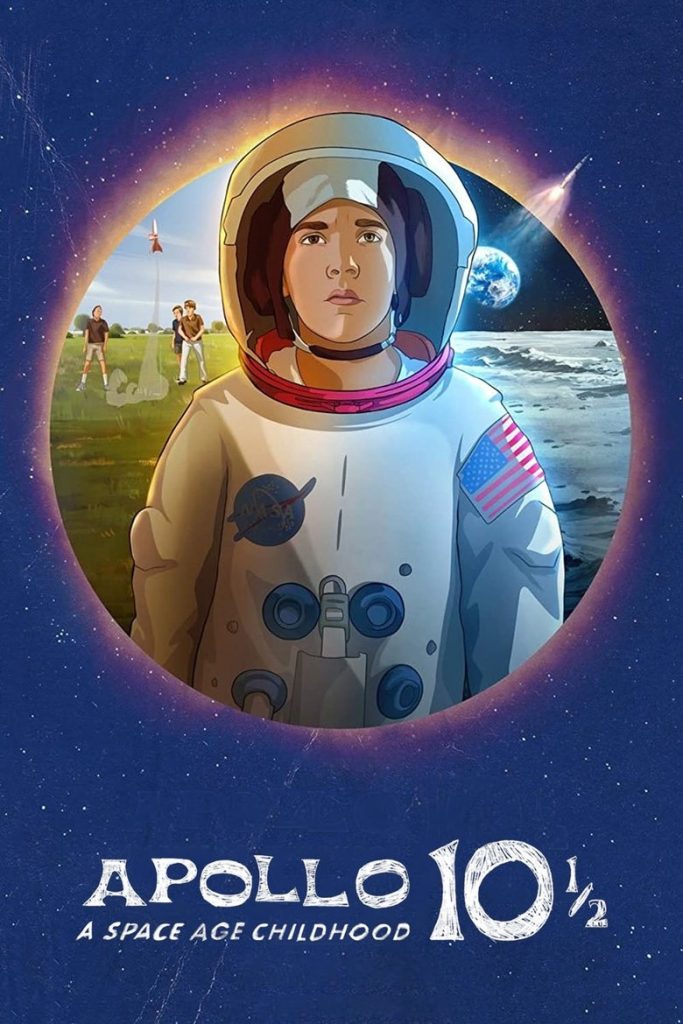
Story overview
Apollo 10½: A Space Age Childhood is an animated film that blends nostalgic storytelling with imaginative fantasy. Through the eyes of a 10-year-old boy in 1969 Houston, it captures the wonder and excitement of the space race era. The narrative weaves together childhood memories with a fictional moon mission, creating a heartfelt exploration of growing up during a pivotal historical moment.
Parent Guide
A gentle, nostalgic animated film that blends childhood memories with space-age fantasy, suitable for most school-aged children with some parental guidance for historical context.
Content breakdown
Some mild peril during imagined space sequences, but no real violence or physical conflict.
No scary or disturbing content; the tone is consistently warm and nostalgic.
Occasional mild language typical of the PG-13 rating, but nothing severe or frequent.
No sexual content or nudity present in the film.
No depiction of substance use or references to drugs or alcohol.
Gentle nostalgic tone with some reflective moments about childhood and growing up.
Parent tips
This film offers a gentle, reflective look at childhood and the 1960s space era, making it suitable for most school-aged children. The PG-13 rating primarily reflects some mild language and the film's nostalgic tone, which may be less engaging for very young viewers. Parents should note that while there's no intense action or violence, the contemplative pace and historical references might require some explanation for younger audiences.
Parent chat guide
Parent follow-up questions
- What was your favorite part of the movie?
- Did you like the drawings in the movie?
- What do you think it would be like to go to the moon?
- What games do you like to play outside?
- What makes you feel excited like the boy in the movie?
- What do you think was real and what was pretend in the story?
- How do you think life was different in 1969 compared to now?
- What would you do if you could go on a space adventure?
- Why do you think people were so excited about going to the moon?
- What memories do you think you'll remember when you're grown up?
- How does the film show the difference between childhood imagination and adult reality?
- What historical events from the movie have you learned about in school?
- How does the animation style help tell this particular story?
- What does the film say about how we remember our childhoods?
- Why do you think the director chose to mix real memories with fantasy?
- How does the film use nostalgia as a storytelling device?
- What commentary does the film make about American culture during the space race?
- How does the animation style contribute to the film's themes of memory and imagination?
- What connections can you draw between the historical events shown and current events?
- How does the film explore the transition between childhood wonder and adult perspective?
🎭 Story Kernel
The film's core isn't about the fabricated moon mission but about memory's fluid nature. It explores how personal nostalgia (Stan's 1969 Houston childhood) and collective cultural memory (the Apollo 11 mission) intertwine to create identity. Characters are driven by the tension between mundane reality and extraordinary aspiration—Stan's fantasy mission allows him to process the overwhelming technological optimism and anxiety of the Space Age. The movie suggests our personal histories are always partly fictionalized, edited like film reels to find meaning in retrospect.
🎬 Visual Aesthetics
Linklater's signature rotoscope animation creates a dreamlike texture where memory feels both vivid and elusive. The color palette shifts between sun-bleached Texas realism and vibrant, surreal space sequences. Camera movements often mimic home movie footage—slightly shaky, intimate pans across suburban landscapes—contrasting with the smooth, majestic tracking shots of NASA operations. This visual duality mirrors the story's central conflict: grounded childhood versus boundless imagination. The animation style itself becomes a metaphor for memory, where real footage (archival NASA material) is transformed through the subjective lens of recollection.
🔍 Details & Easter Eggs
💡 Behind the Scenes
Director Richard Linklater filmed live-action sequences in Texas with actors (including Jack Black as adult Stan), then animators rotoscoped over 100,000 frames. The production combined archival NASA footage with animated recreations, requiring meticulous research into 1969 Houston suburbia. Many childhood details are autobiographical from Linklater's own Texas upbringing during the Apollo era.
Where to watch
Choose region:
- Netflix
- Netflix Standard with Ads
Trailer
Trailer playback is unavailable in your region.