Artemis I: Going Back to the Moon (2023)
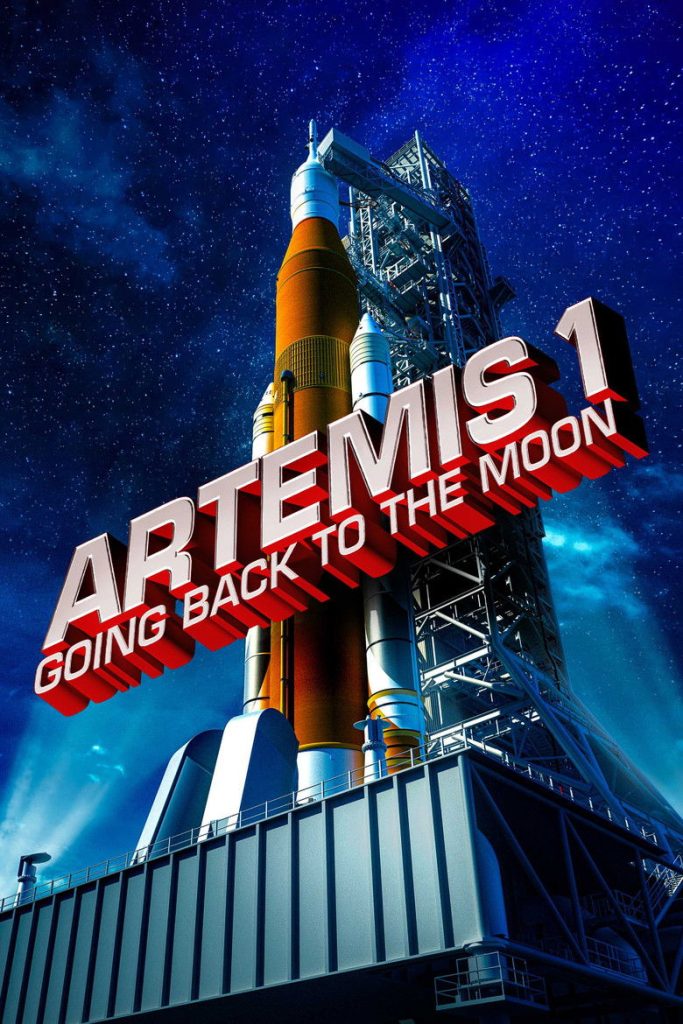
Story overview
This documentary chronicles NASA's Artemis I mission, an uncrewed test flight that marked humanity's return to lunar exploration. It follows the preparation, launch, and journey of the Orion spacecraft as it orbits the Moon, paving the way for future crewed missions. The film highlights the scientific and engineering achievements while emphasizing the mission's role in advancing space exploration goals.
Parent Guide
Educational documentary about a NASA lunar mission with no concerning content. Suitable for elementary school ages and up.
Content breakdown
No violence. Mission involves inherent risks of spaceflight but presented factually without dramatic peril.
No scary or disturbing content. Launch sequences are exciting but not frightening.
No offensive language. Professional technical and scientific terminology used throughout.
No sexual content or nudity.
No substance use depicted.
Mild excitement during launch and mission milestones. No intense emotional scenes.
Parent tips
This documentary is suitable for most school-aged children interested in space and science. It focuses on factual reporting of a historical space mission without dramatic reenactments or fictional elements. Parents can use it as an educational tool to discuss space exploration, teamwork in science, and technological progress.
Younger viewers might find some technical discussions or launch sequences intense but not frightening. The pacing is deliberate, focusing on mission milestones rather than entertainment-style action. It's an excellent choice for family viewing to spark curiosity about STEM fields.
Parent chat guide
For older children, consider discussing the international collaboration involved in space missions or the environmental considerations of rocket launches. The documentary provides a concrete example of long-term scientific planning and execution that can lead to conversations about perseverance and innovation.
Parent follow-up questions
- What was your favorite part of the rocket?
- What do you think the Moon looks like up close?
- How do you think the spacecraft knew where to go?
- What sounds did you hear during the launch?
- Would you like to visit the Moon someday?
- Why do you think NASA wants to go back to the Moon?
- What was the most challenging part of the mission shown?
- How do astronauts prepare for space missions?
- What scientific instruments were on the spacecraft?
- What might we learn from missions like this?
- How does this mission compare to the original Apollo missions?
- What engineering problems had to be solved for Artemis I?
- Why is testing without crew important before sending astronauts?
- What international partnerships were involved in this mission?
- How might this mission help future Mars exploration?
- What are the political and economic implications of returning to the Moon?
- How does Artemis I address safety concerns that earlier missions faced?
- What environmental impacts do rocket launches have, and how are they mitigated?
- How might lunar exploration benefit scientific research on Earth?
- What ethical considerations surround space exploration and resource use?
🎭 Story Kernel
The documentary transcends a mere technical logbook to explore the philosophical shift in space exploration. It centers on the Artemis I mission—an uncrewed test flight of the Space Launch System and the Orion spacecraft. The core theme is sustainability and preparation; unlike the 'flags and footprints' era of Apollo, this film emphasizes building a permanent infrastructure. It articulates the immense pressure on NASA to prove the viability of the SLS after years of delays, framing the mission as a bridge between the nostalgic past and a multi-planetary future. The narrative highlights the collaborative effort of thousands of engineers, positioning the Moon not as a final destination, but as a vital proving ground for eventual human missions to Mars.
🎬 Visual Aesthetics
Ranson utilizes a blend of sterile, high-contrast laboratory cinematography and the raw, visceral power of the SLS launch. The most striking visual elements are the 'space selfies' captured by cameras mounted on the Orion spacecraft's solar array wings, providing unprecedented views of the Earth and Moon in the same frame. This perspective creates a profound sense of scale and isolation. The film also employs sophisticated CGI to explain the complex Distant Retrograde Orbit, which would otherwise be abstract to the viewer. The color palette transitions from the industrial grays and whites of the Kennedy Space Center to the deep, oppressive black of the lunar far side, emphasizing the harsh reality of deep space exploration.
🔍 Details & Easter Eggs
💡 Behind the Scenes
Director Tom Ranson, working closely with NASA’s digital media teams, had access to over 10 terabytes of raw mission footage. The film was produced to coincide with the surge in public interest following the successful splashdown in December 2022. It features authentic mission control audio that wasn't broadcast on the primary public feeds, providing a more intimate look at the flight controllers' reactions. The production also utilized historical Apollo footage for side-by-side comparisons to demonstrate the massive scale difference between the Saturn V and the modern Space Launch System.
Where to watch
Choose region:
- HBO Max
- Discovery +