
Article 15 (2019)
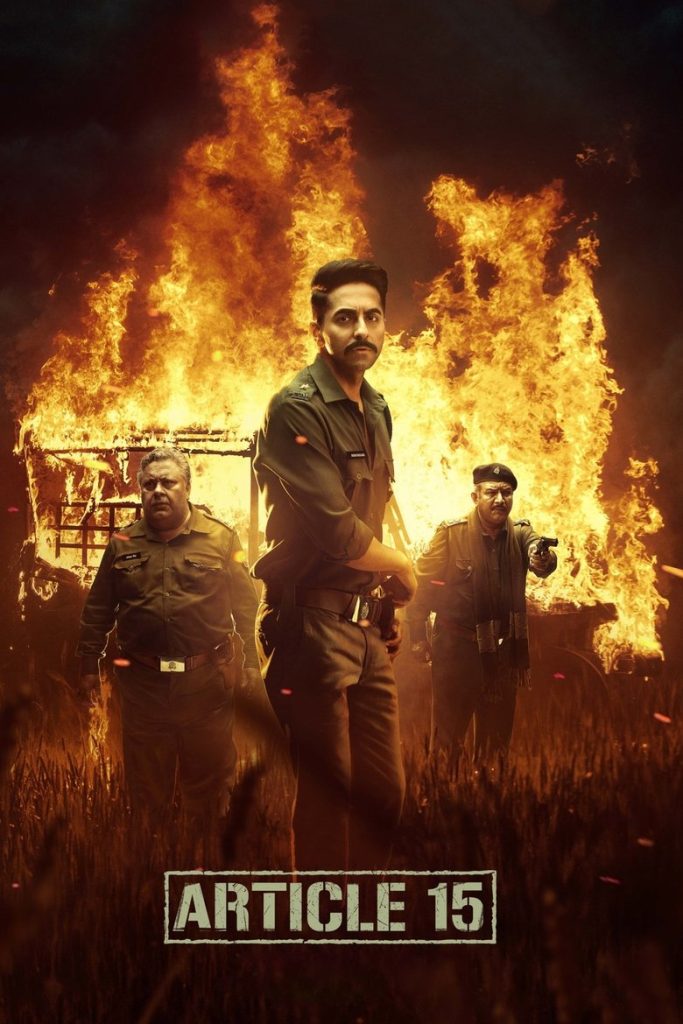
Story overview
Article 15 is a 2019 Indian crime drama thriller that explores social justice themes through a police investigation. The film follows an officer uncovering systemic discrimination and corruption while addressing serious societal issues. It presents a gritty, realistic portrayal of law enforcement challenges in confronting deep-rooted inequalities.
Parent Guide
Mature crime drama with serious social justice themes suitable for teens and adults.
Content breakdown
Contains crime investigation scenes with tense situations and implied violence related to criminal activities.
Themes of social injustice and systemic discrimination may be emotionally challenging. Crime-related situations create atmospheric tension.
May contain occasional strong language consistent with crime drama genre and tense situations.
No significant sexual content or nudity based on available information.
No significant substance use content based on available information.
Deals with heavy themes of inequality and justice that may provoke strong emotional responses.
Parent tips
This film deals with mature themes including social injustice, discrimination, and systemic corruption that may be difficult for younger viewers to process. The crime thriller elements create tense situations that could be disturbing for sensitive audiences. Parents should be prepared to discuss the film's serious social commentary with older children who view it.
Parent chat guide
Parent follow-up questions
- What did you notice about how people treated each other in the movie?
- How did the police officer try to help people?
- What colors or sounds did you remember from the movie?
- Did you see anyone being kind to others?
- What was your favorite part of the story?
- What problem was the police officer trying to solve?
- Why do you think some people were treated unfairly in the story?
- How did the characters show courage in difficult situations?
- What did you learn about how police help communities?
- How would you help make things fair if you saw someone being treated unfairly?
- What social issues did the film highlight through its investigation storyline?
- How did the main character balance personal ethics with professional duties?
- What systemic challenges did the characters face in seeking justice?
- How does the film portray the relationship between law enforcement and communities?
- What messages about equality and fairness did you take from the story?
- How does the film critique social hierarchies and discrimination systems?
- What commentary does the investigation provide about institutional corruption?
- How are themes of justice and morality developed through the narrative structure?
- What realistic challenges to social change does the film present?
- How does the film use the crime thriller genre to explore serious societal issues?
🎭 Story Kernel
At its core, 'Article 15' is less a whodunit and more a 'why-dunit,' dissecting the systemic inertia that upholds caste-based violence. The plot is driven not by a singular villain but by a collective moral failure. Protagonist Ayan Ranjan's journey is one of disillusionment; his initial faith in procedural justice collides with a reality where the law is a tool of oppression, not liberation. The characters are propelled by fear—of social ostracization, of losing privilege, of challenging a centuries-old hierarchy. The film's real tension lies in whether institutional reform can ever dismantle a prejudice so deeply woven into the social fabric.
🎬 Visual Aesthetics
The film employs a desaturated, grimy color palette of muddy browns and dull greens, visually mirroring the moral decay and stagnation of the village. Cinematographer Ewan Mulligan uses handheld cameras to create a sense of urgent, immersive unease, often placing the viewer alongside Ayan as a witness. Key sequences, like the discovery of the hanged girls, are shot with stark, unflinching stillness, making the horror inescapable. Symbolism is potent but grounded: the recurring image of murky water represents both the obscured truth and the societal filth everyone is mired in.
🔍 Details & Easter Eggs
💡 Behind the Scenes
Director Anubhav Sinha conducted extensive research with Dalit rights activists to ensure authenticity. Ayushmann Khurrana, who plays Ayan, reportedly spent time with IPS officers to understand their demeanor and challenges. The film was shot in real villages around Lucknow and Mumbai to capture the authentic, oppressive atmosphere. Notably, the script avoided naming the specific caste of the perpetrators, focusing instead on the systemic nature of the crime, a deliberate choice to universalize the narrative of oppression.
Where to watch
Choose region:
- Netflix
- Netflix Standard with Ads