
Asphalt Goddess (2020)
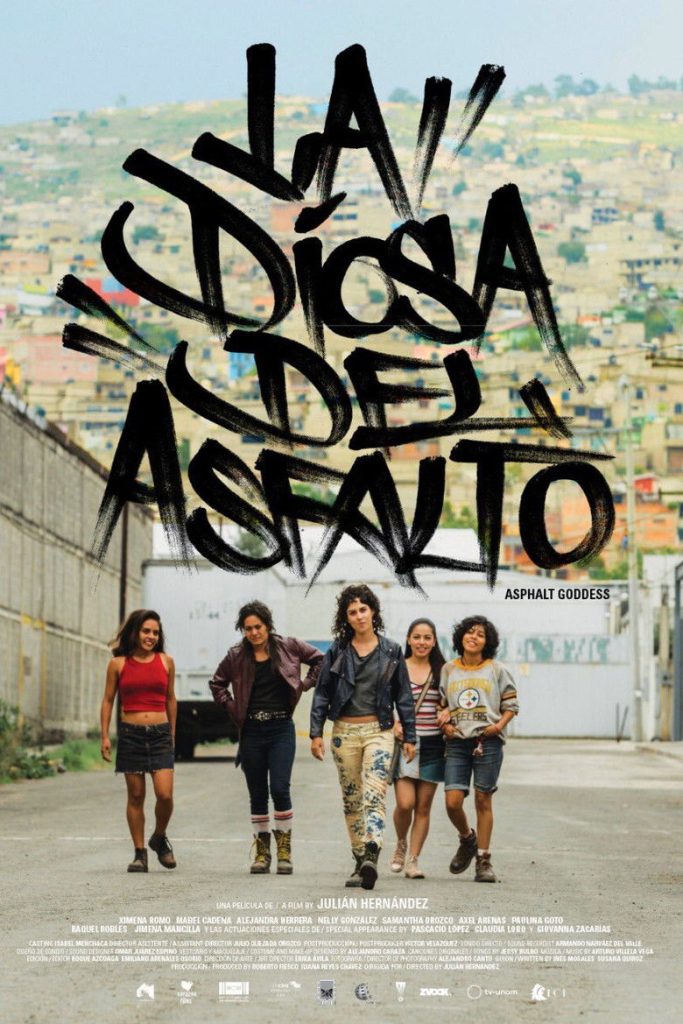
Story overview
Max returns to her impoverished neighborhood as the lead singer of a rock band, where she confronts past memories, recent developments, and long-silenced truths, including the haunting presence of Sonia, a voice speaking from beyond death.
Parent Guide
A contemplative drama with supernatural elements that explores mature themes of memory, poverty, and artistic expression. Best suited for mature teenagers who can handle atmospheric storytelling and complex emotional themes.
Content breakdown
No physical violence shown, but there are themes of poverty and implied difficult living conditions that create a sense of peril. The supernatural element involving a voice from death may create psychological tension.
The central supernatural element of a voice speaking from death could be disturbing to some viewers. Atmospheric tension and themes of poverty and memory may create an unsettling mood. Not graphically scary but psychologically intense.
Spanish language film with subtitles. May contain occasional mild language appropriate to dramatic situations, but no excessive profanity expected given the artistic nature of the film.
As a dramatic film, there may be romantic themes or mild sexual references, but no explicit sexual content or nudity is expected based on the description and director's style.
Possible depiction of alcohol consumption in social settings typical of rock band environments, but not a central focus of the film.
High emotional intensity dealing with themes of memory, poverty, death, and returning to one's roots. The supernatural element adds psychological depth. Characters grapple with complex emotions and past traumas.
Parent tips
This Mexican drama explores themes of memory, truth, and returning to one's roots with a supernatural element. It contains mature themes including poverty, death, and emotional intensity that may be challenging for younger viewers. The film's atmospheric tone and complex narrative require emotional maturity to appreciate.
Parent chat guide
Parent follow-up questions
—
- What do you think it means when someone 'speaks from death'?
- How do you think Max felt returning to her old neighborhood?
- What kind of music do you think the rock band played?
- Why do you think Max returned to her old neighborhood after becoming a singer?
- How does the film show the difference between past and present?
- What might Sonia's voice represent in the story?
- How does the film explore the tension between personal success and community roots?
- What commentary might the film be making about poverty and artistic expression?
- How does the supernatural element enhance the themes of memory and truth?
🎭 Story Kernel
At its core, 'Asphalt Goddess' is a raw exploration of liberation through transgression. The film argues that true freedom isn't found in escaping systems of control, but in mastering their language to forge a new, personal identity. The protagonist isn't driven by a simple goal of winning races or wealth; she's driven by the need to reclaim her agency in a world that has commodified her image and spirit. Every illegal street race is a ritual where she sheds another layer of societal expectation, using the adrenaline and danger as a crucible for self-creation. The narrative's tension comes not from whether she'll be caught, but whether the powerful, autonomous self she's forging on the midnight asphalt can survive the dawn.
🎬 Visual Aesthetics
The film's visual language is a character in itself, defined by a high-contrast, synthetic color palette. Neon blues and corrosive pinks don't just illuminate the night; they seem to bleed from the city's circuitry, reflecting the characters' heightened, electric emotions. The camera work during race sequences is intensely subjective, using tight, shaky close-ups on hands shifting gears and eyes reflected in rearview mirrors, making the audience feel the vibration of the engine and the tunnel vision of focus. This contrasts sharply with static, wide, and coldly composed shots of the daytime world, emphasizing its sterile oppressiveness. The asphalt itself is often filmed to look wet and reflective, like a dark river, turning the city into a labyrinth of liquid light and shadow.
🔍 Details & Easter Eggs
💡 Behind the Scenes
To achieve the film's distinctive, immersive racing sounds, the sound design team didn't rely solely on library effects. They recorded the actual lead car's engine and exhaust system with over 30 different microphones placed in, on, and around the vehicle at varying distances. The lead actress, who performed many of her own driving stunts, underwent intensive training with a professional drifter to make the steering and gear-shifting movements look authentically forceful and precise. Several of the most iconic neon-lit alleyway scenes were shot in a practical location, with the production team working with the city to temporarily install custom, cinematic lighting that enhanced the existing urban glow without creating a digitally artificial look.
Where to watch
Choose region:
- Netflix
- Netflix Standard with Ads