
Babette’s Feast (1987)
Story overview
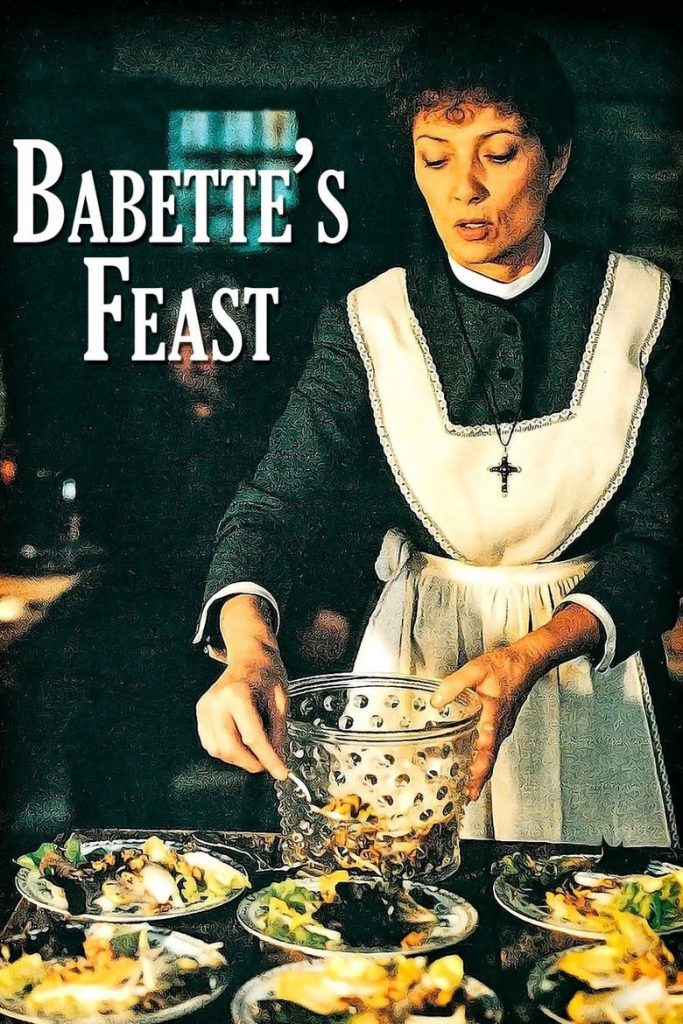
Babette's Feast is a 1987 Danish drama set in a remote 19th-century village, where two elderly sisters lead a strict religious community. Their lives are transformed when Babette, a French refugee, becomes their housekeeper and prepares an extravagant gourmet meal that challenges the villagers' austere beliefs and brings unexpected joy and reconciliation.
Parent Guide
A gentle, thoughtful film suitable for most families, though younger children may find it slow. Its themes of generosity and cultural exchange offer valuable discussion points.
Content breakdown
No violence or peril. The only tension is emotional, stemming from the villagers' initial resistance to the feast.
Nothing scary or disturbing. The tone is contemplative and uplifting, with mild sadness in Babette's backstory handled delicately.
No offensive language. Dialogue is in Danish and French with subtitles, all polite and reflective.
No sexual content or nudity. Relationships are chaste, with only brief, mild romantic references from the past.
Wine is served at the feast, consumed moderately by adults in a celebratory context. No drunkenness or abuse depicted.
Emotional moments involve themes of loss, sacrifice, and redemption, but are portrayed subtly. The climax is joyful and unifying.
Parent tips
This film explores themes of sacrifice, art, and spiritual awakening through food. It's dialogue-heavy with subtitles, requiring patience from younger viewers. The G rating makes it family-friendly, but its philosophical depth is best appreciated by ages 8+. Discuss how food can express love and bridge cultural differences.
Parent chat guide
Parent follow-up questions
- What foods did Babette cook?
- Were the sisters kind to Babette?
- Did you like the big dinner party?
- Why did Babette want to cook the feast?
- How did the villagers feel before and after the meal?
- What does 'sacrifice' mean in the story?
- How does the film contrast French and Danish cultures?
- What role does religion play in the villagers' lives?
- Why is the general's speech important?
- Analyze the symbolism of the feast as an artistic act.
- How does the film critique religious austerity?
- Discuss the theme of exile and belonging through Babette's character.
🎭 Story Kernel
At its heart, 'Babette's Feast' explores the tension between ascetic spirituality and earthly grace. The two pious sisters, Martine and Philippa, live in a world of self-denial, believing spiritual purity requires rejecting worldly pleasures. Babette, the French refugee, embodies a different theology: grace can be experienced through creation, not just renunciation. Her feast isn't merely food; it's a sacrament that heals old wounds, reconciles estranged community members, and demonstrates that divine love can manifest through earthly beauty. The film argues that true spirituality embraces both sacrifice and celebration, with Babette's artistic offering becoming an act of worship that transforms everyone present.
🎬 Visual Aesthetics
The film's visual language masterfully contrasts restraint with abundance. Early scenes employ muted colors, static compositions, and tight framing that mirror the villagers' constrained lives. The landscape shots of Jutland's harsh beauty reflect their austere spirituality. Then comes the feast sequence: the camera becomes fluid, lingering on textures—the sheen of turtle soup, the ruby glow of wine, the delicate pastry of the cailles en sarcophage. Warm candlelight replaces cold northern light. Close-ups on faces show transformation as taste unlocks memory and emotion. The visual progression from gray restraint to golden abundance parallels the characters' spiritual awakening.
🔍 Details & Easter Eggs
💡 Behind the Scenes
The film is based on a story by Karen Blixen (Isak Dinesen), who also wrote 'Out of Africa.' Director Gabriel Axel fought for years to make it, finally securing funding when he was 68. Stéphane Audran (Babette) was director Claude Chabrol's wife and a major French star, while the Danish cast were largely theater actors. The feast took a week to film with real food prepared by a French chef; actors had to eat multiple takes. It was the first Danish film to win the Academy Award for Best Foreign Language Film, creating surprise in Denmark where it was initially considered 'too simple.'
Where to watch
Choose region:
- HBO Max
- HBO Max Amazon Channel
- Criterion Channel
- Amazon Video
- Apple TV Store
- Fandango At Home
Trailer
Trailer playback is unavailable in your region.