
Bad Boys (2014)
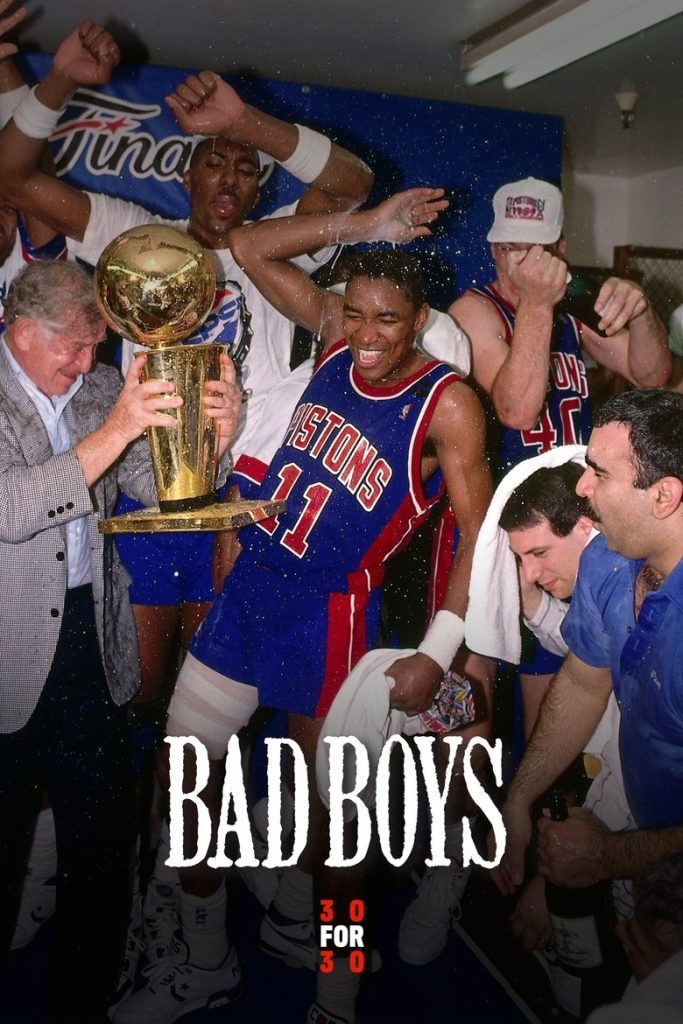
Story overview
This documentary explores the Detroit Pistons basketball team of the late 1980s and early 1990s, known as the 'Bad Boys' for their aggressive, win-at-all-costs playing style. The film examines how their intense competitiveness made them both beloved by fans and controversial figures in the sport, featuring interviews with key players like Isiah Thomas, Dennis Rodman, and Bill Laimbeer.
Parent Guide
A sports documentary suitable for most families that examines competitive basketball culture without explicit content concerns.
Content breakdown
Discusses aggressive basketball play and physical competition; may show game footage with hard fouls and confrontations typical of professional sports.
No frightening or disturbing content beyond competitive sports intensity.
TV-G rating indicates no offensive language; interviews maintain professional tone.
No sexual content or nudity; focuses entirely on basketball history.
No depiction or discussion of substance use.
Moderate emotional intensity related to sports competition, rivalries, and team dynamics; may include passionate discussions about winning and legacy.
Parent tips
This TV-G rated sports documentary is generally family-friendly but discusses competitive intensity and controversial basketball tactics. The 'Bad Boys' nickname refers to their aggressive playing style, not criminal behavior. Consider watching together to discuss sportsmanship, competition, and how teams can be perceived differently by various audiences.
Parent chat guide
Parent follow-up questions
- Did you see the basketball players?
- What colors were their uniforms?
- Was it fun to watch them play?
- What made the Pistons different from other teams?
- Why were they called 'Bad Boys'?
- Do you think playing aggressively is okay in sports?
- How did the Pistons' style change basketball?
- What's the difference between being competitive and being unsportsmanlike?
- Why do you think they're still remembered today?
- How did the 'Bad Boys' era reflect broader cultural attitudes about competition?
- What ethical questions does their playing style raise?
- How do documentaries shape our understanding of sports history?
🎭 Story Kernel
At its core, 'Bad Boys' explores the tension between duty and identity through its mismatched protagonists. Mike Lowrey's wealth and playboy lifestyle mask a deep commitment to justice, while Marcus Burnett's family-man persona conflicts with his thrill-seeking nature. The film suggests that true partnership requires embracing your partner's strengths rather than trying to change them. Their investigation into stolen heroin becomes secondary to their journey of mutual acceptance - Marcus learns to appreciate Mike's unorthodox methods, while Mike discovers the value of Marcus's stability. The real resolution isn't catching the villain, but the moment they finally function as a cohesive unit.
🎬 Visual Aesthetics
Michael Bay establishes his signature style here - sweeping crane shots, Dutch angles during tension, and rapid-fire editing that makes Miami feel like a pressure cooker. The color palette shifts from vibrant daytime Miami pastels to moody nighttime blues during the serious investigation scenes. Action sequences are choreographed like dance numbers, particularly the club shootout where the camera swirls with the chaos. Notice how close-ups during emotional moments contrast with wide shots during action - visually separating character development from spectacle. The film's visual language constantly reminds us we're watching a heightened reality where everything moves faster and looks shinier.
🔍 Details & Easter Eggs
💡 Behind the Scenes
Will Smith was initially reluctant to take the role, fearing being typecast after 'The Fresh Prince.' The iconic 'bad boys, bad boys' chant was improvised by Smith and Lawrence during a break. Most car chases were filmed without permits on actual Miami streets, causing genuine panic among bystanders. The production's $19 million budget was considered modest for an action film even in 1995, forcing Bay to get creative with practical effects. Martin Lawrence's hospital freakout scene required 27 takes because he kept making the crew laugh with improvisations.
Where to watch
Choose region:
- Disney Plus
- Netflix Standard with Ads